
Commercial landscaping was once viewed primarily as a maintenance service. Property owners hired contractors to mow lawns, trim hedges, remove weeds, and keep outdoor areas presentable. Although those responsibilities remain…
Read More...


Automation has become a cornerstone of modern business operations. From AI chatbots managing customer inquiries to automated workflows handling logistics and marketing, it has transformed efficiency and reduced human error. However, as automation becomes increasingly pervasive, many companies are discovering a side effect they did not anticipate: alienation of their most loyal customers.
When technology replaces too much of the human connection that once defined a brand’s relationship with its clients, it risks creating distance, frustration, and even distrust. The challenge for today’s entrepreneurs and business owners lies not in whether to automate, but in how to implement automation in a way that enhances rather than replaces the personal touch that keeps customers engaged.
Automation was initially seen as a game changer. Businesses quickly embraced it to streamline operations and cut costs. What began as simple task automation, like scheduling emails or updating CRM systems, evolved into sophisticated processes driven by artificial intelligence and machine learning.
Companies such as Zendesk and HubSpot revolutionized customer service through intelligent automation, enabling faster responses and improved efficiency. Yet, this technological leap has also led to an unintended consequence: depersonalization. Customers accustomed to personal interactions now find themselves talking to machines that do not always understand their needs.
In sectors like banking, hospitality, and retail, this shift has been especially noticeable. Many consumers express frustration when automated systems fail to comprehend context, provide generic answers, or trap them in endless loops of digital prompts. When efficiency becomes the sole focus, empathy and emotional intelligence fall by the wayside.
Human connection has always been at the heart of brand loyalty. When people feel heard, valued, and respected, they develop emotional bonds with a business. Over-automation disrupts that bond by reducing genuine human interaction to algorithmic decisions.
Behavioral psychologists point out that emotional reciprocity, feeling understood or appreciated, is a key component of customer satisfaction. When automated systems fail to demonstrate empathy or adaptability, customers perceive the interaction as dismissive. Over time, this erodes trust and diminishes loyalty.
Consider the airline industry, where automation now handles nearly every stage of the customer journey. Automated check-ins, text updates, and chatbots may streamline the process, but when a passenger faces a problem like a missed connection or canceled flight, they often struggle to reach a real person. A study by PwC found that 82% of U.S. consumers prefer more human interaction, particularly in moments of stress or when dealing with complex issues.
Automation is meant to make businesses more efficient, but there is a tipping point where efficiency begins to feel impersonal. Many companies fall into this trap by automating every step of the customer journey without considering the emotional aspects of brand experience.
Take the case of online retailers that rely entirely on automated customer service platforms. When something goes wrong, such as a delayed shipment, incorrect order, or defective item, customers are often forced to communicate with bots that cannot deviate from a scripted response. Instead of resolving the problem, the automation amplifies it.
Over-automation can also backfire in marketing. Personalized messaging powered by algorithms can feel intrusive when it becomes too predictive or repetitive. Over time, customers recognize the lack of genuine intent behind these interactions. Instead of building engagement, automation risks being perceived as manipulation.
The goal of automation should be to enhance, not replace, human interaction. Companies that get it right use automation to handle routine tasks while preserving opportunities for authentic engagement.
Zappos offers a strong example of this balance. While their systems handle order processing and tracking efficiently, their customer support remains deeply human-centered. Representatives are encouraged to spend as much time as needed to resolve customer concerns, leading to memorable interactions that strengthen brand loyalty.
Similarly, Salesforce uses automation to streamline sales processes but still prioritizes personalized outreach from account managers. By combining data insights with human intuition, they maintain a balance that customers appreciate.
This balance requires intention and design. Businesses must identify which aspects of customer experience benefit from automation, like transactional processes, and which demand human empathy, such as complaint resolution or relationship building.
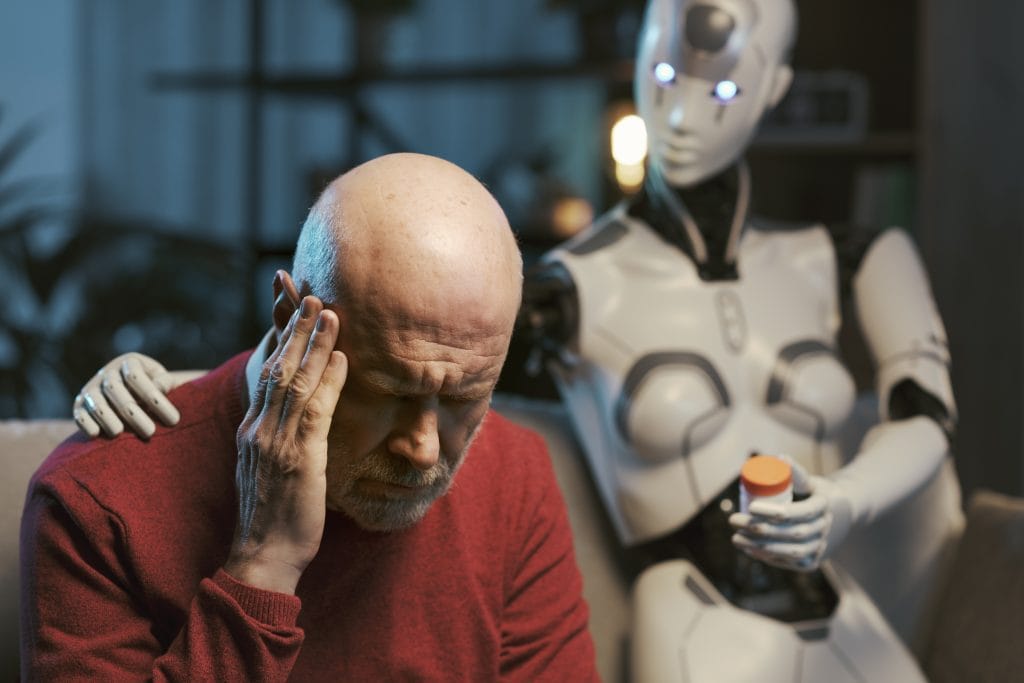
Recognizing the signs of over-automation early can prevent serious brand damage. Businesses should regularly evaluate customer feedback to detect dissatisfaction stemming from impersonal interactions.
Common indicators include:
– A noticeable increase in complaints about unhelpful customer service.
– Declining repeat purchase rates despite competitive pricing.
– Negative reviews referencing “robotic” or “impersonal” experiences.
– Employees expressing frustration over rigid automated systems that limit their ability to help customers.
When these warning signs appear, it is often a signal that automation is being used as a replacement for genuine communication rather than as a tool to support it.
In an age of digital convenience, the human element has become a differentiator. Businesses that prioritize empathy and authentic connection stand out precisely because automation has made those qualities scarce.
Restaurants like Shake Shack and Chick-fil-A blend technology with personal service. While they use mobile apps and automated ordering systems, they maintain attentive in-person interactions that reinforce warmth and reliability. Their success illustrates that automation and humanity can coexist effectively.
In contrast, brands that remove the human layer entirely risk commoditizing their customer experience. Once a product or service becomes purely transactional, price often becomes the only differentiator. At that point, loyalty erodes and customer churn accelerates.
Restoring human connection in an automated business environment does not mean abandoning technology. It means using it strategically. One effective approach is implementing human-in-the-loop systems, where technology handles repetitive tasks but humans oversee or intervene in critical touchpoints.
For instance, American Express employs AI-driven fraud detection to monitor transactions in real time, but when anomalies arise, human analysts review them before contacting customers. This method combines the speed of automation with the discernment of human judgment.
Similarly, businesses can redesign automated processes to reflect empathy in tone and interaction design. A chatbot that acknowledges frustration or offers to connect with a human representative shows that the company values emotional context. The result is a more natural, human-like experience that maintains efficiency without alienation.
The next frontier of automation lies in emotional intelligence. Advances in natural language processing and sentiment analysis are making it possible for systems to detect tone, mood, and intent. However, emotional intelligence in automation is only effective when guided by ethical design and human oversight.
Companies adopting AI-driven automation must be mindful of the fine line between personalization and intrusion. For instance, overuse of predictive algorithms in customer engagement can feel invasive if not applied with discretion. Businesses must always preserve a sense of authenticity in every automated message or interaction.
Startups and established enterprises alike should adopt a principle-based approach: automation should serve the relationship, not dominate it. Each interaction should reinforce, not replace, the sense that a real person and a real brand stand behind the experience.
Customer loyalty is not just about product quality or price, it is about trust, consistency, and human connection. When companies over-automate, they jeopardize these foundations. Once lost, rebuilding trust takes considerable time and effort.
The long-term cost of over-automation often exceeds its short-term savings. Customers who feel alienated will not only leave but may also discourage others from engaging with the brand through word of mouth or online reviews. Meanwhile, companies that maintain a thoughtful balance between automation and personal engagement build resilience and a reputation for care.
As automation technology continues to advance, the businesses that thrive will be those that maintain empathy as a core operating principle. Efficiency may attract new customers, but empathy retains them.
Automation is indispensable in today’s business landscape, but over-reliance on it can erode the very relationships that sustain growth. Entrepreneurs and business leaders should view automation as an enhancement tool, one that supports human effort, not replaces it.
Maintaining customer loyalty requires more than technological efficiency. It demands authentic communication, emotional intelligence, and the humility to recognize when a human touch is needed. In a world increasingly dominated by algorithms, the companies that preserve genuine connection will stand out as the most human and ultimately the most successful.