
Commercial landscaping was once viewed primarily as a maintenance service. Property owners hired contractors to mow lawns, trim hedges, remove weeds, and keep outdoor areas presentable. Although those responsibilities remain…
Read More...


The growth of EV Charging infrastructure has been one of the most visible symbols of the energy transition. Public announcements often highlight ambitious installation targets, federal incentives, and multi state buildouts. Yet behind the ribbon cuttings and press releases, operators are confronting a more complicated reality centered on utilization.
For entrepreneurs and business owners studying the sector, utilization is not just a technical metric. It is the difference between an attractive long term asset and an underperforming capital investment. Charging networks across the country are learning that simply installing more chargers does not automatically translate into sustainable revenue. The market is demanding discipline, site intelligence, and patience.
In the first wave of expansion, many networks prioritized footprint over profitability. Capital flowed into companies such as ChargePoint, Electrify America, and EVgo as investors anticipated rapid EV adoption. The strategic thinking was straightforward. Control the real estate early, capture drivers as they switch from gasoline to electric, and build brand recognition before competitors arrive.
That expansion mentality made sense in theory. EV adoption was accelerating, automakers were committing billions to electrification, and policymakers were rolling out infrastructure funding. The assumption was that vehicle growth would quickly catch up with charger supply.
In many markets, that alignment did not happen as quickly as expected. Certain urban areas saw reasonable usage, but suburban and secondary locations often experienced low daily charging sessions. A DC fast charger that costs a significant amount to install cannot rely on a handful of sessions per day and still satisfy investor expectations. Networks began to see the gap between theoretical demand and real world behavior.
The economics of EV Charging revolve around fixed costs and variable demand. Installation expenses include equipment, construction, permitting, utility upgrades, and sometimes transformer replacements. On top of that come maintenance contracts, network software fees, and lease payments to site hosts.
Revenue, however, is dependent on kilowatt hours dispensed and session frequency. If drivers primarily charge at home or at work, public chargers can sit idle for long stretches. A charger that operates at 10 percent utilization produces a dramatically different return profile than one operating at 40 percent or more.
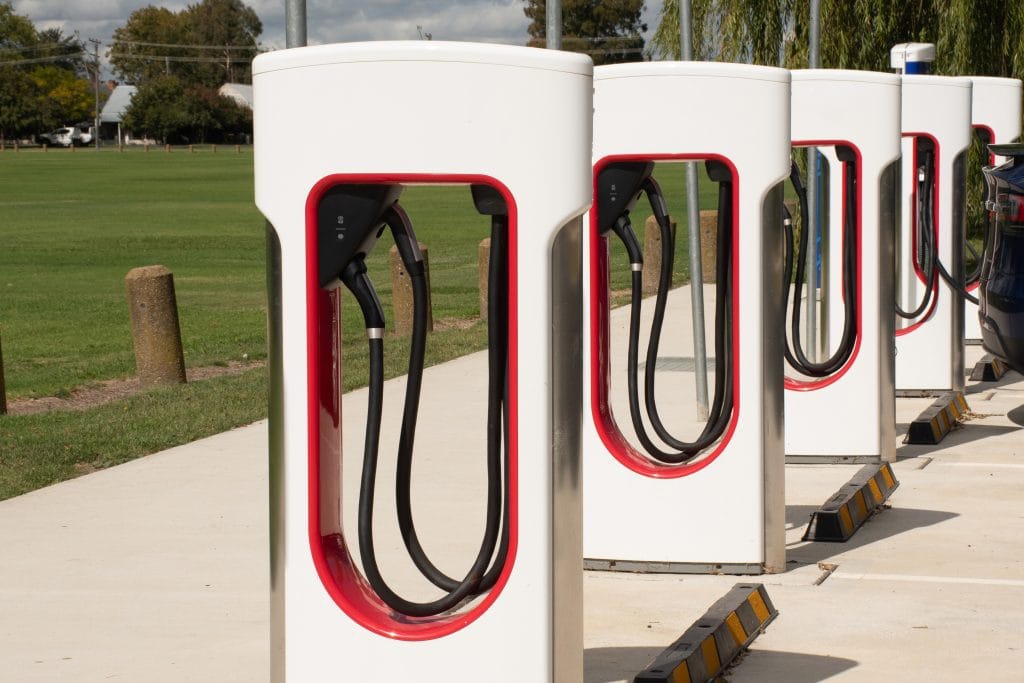
Companies like Tesla approached this challenge differently by tightly integrating vehicles and charging infrastructure through its Supercharger network. By controlling both the supply and demand side, Tesla could strategically place stations along heavily traveled corridors and near high traffic retail centers. Even then, pricing and location strategy have required constant refinement to balance congestion and idle capacity.
For independent network operators, the lesson has been clear. Utilization modeling must be conservative, data driven, and location specific. Broad national averages are not sufficient. Micro market analysis is becoming the new standard for serious operators.
Entrepreneurs often focus on hardware specifications and software platforms, but in EV Charging, real estate selection frequently determines success. A charger located near a busy highway interchange, adjacent to grocery anchors and quick service restaurants, has a fundamentally different demand profile than one placed in a lightly trafficked office park.
Companies such as Volta recognized early that high visibility retail environments could create a secondary revenue stream through advertising. In that model, chargers functioned not only as energy assets but also as digital media platforms. That approach partially offset lower utilization in certain markets.
Advertising revenue alone, however, cannot compensate for consistently low charging activity. Investors and operators are reexamining site selection criteria with greater rigor. Traffic counts, dwell times, nearby amenities, and local EV penetration rates now carry more weight than ambitious rollout targets.
For property owners considering hosting chargers, this evolution is important. A charger is not a guaranteed traffic magnet. It must align with the behavior of EV drivers in that specific region and demographic.
Federal and state incentives have supported EV Charging deployment, particularly through infrastructure legislation and utility rebate programs. Grants can reduce upfront capital costs and improve projected returns.
However, incentives can create an illusion of safety. Subsidies lower installation expenses, but they do not change ongoing utilization patterns. Once grant funds are deployed, the operator still needs consistent driver activity to generate meaningful cash flow.
Utilities have also played a role in shaping project economics. Organizations such as Pacific Gas and Electric Company have experimented with rate structures that reduce the burden of demand charges during early adoption phases. These measures can help stabilize early operations, yet they do not eliminate the need for sustained usage.
Entrepreneurs should view incentives as accelerators rather than permanent supports. Long term success depends on disciplined site selection, cost management, and reliable customer behavior.
A central assumption behind early EV Charging expansion was that drivers would rely heavily on public infrastructure. In reality, many EV owners charge at home overnight. Residential Level 2 charging satisfies daily commuting needs for a large share of drivers.
Public DC fast charging tends to be used during road trips, emergencies, or by those without home charging access. This creates a demand curve that is uneven and geographically concentrated. Urban apartment dwellers and ride share drivers may rely heavily on public charging, while suburban homeowners rarely use it.
Companies like Blink Charging have diversified across workplace, multifamily, and fleet segments in response to these patterns. Fleet charging, in particular, offers more predictable utilization because vehicles operate on scheduled routes and charging cycles can be planned in advance.
Understanding user behavior is not glamorous, but it is central to sustainable EV Charging economics. The gap between projected demand and actual driver habits has forced networks to refine their business models.
Public market performance has sent a clear message. After periods of optimism, many charging network stocks experienced volatility as profitability timelines extended. Investors began scrutinizing utilization rates, operating losses, and capital expenditure intensity more closely.
Private capital has also become more selective. Infrastructure funds remain interested in EV Charging, yet they are demanding detailed projections and stronger underwriting assumptions. The narrative has shifted from rapid growth to disciplined deployment.
This pattern mirrors other infrastructure sectors. Early expansion is often driven by enthusiasm and strategic positioning. Over time, fundamentals regain prominence. Charging networks that can demonstrate improving utilization and operational efficiency are better positioned to attract long term investment.
For business professionals evaluating partnerships or investments, reviewing utilization data is now a core diligence step rather than an optional metric.
One positive development is that networks are learning from early deployments. Software analytics now provide granular data on session frequency, dwell time, and energy throughput. Operators can identify underperforming sites and adjust pricing or marketing strategies accordingly.
Some networks are experimenting with dynamic pricing to encourage off peak usage. Others are co locating chargers with amenities that motivate drivers to spend time on site. Partnerships with retailers, hotels, and entertainment venues are becoming more strategic rather than opportunistic.
There is also a shift toward higher power DC fast chargers. Faster charging can increase throughput and potentially raise utilization per stall, assuming demand exists. However, higher power installations require more robust grid connections and can increase construction complexity.
Technology alone does not solve the utilization challenge, but data driven optimization is gradually improving performance across many markets.
For entrepreneurs, the story of EV Charging utilization offers broader lessons about infrastructure strategy. Supply does not automatically create demand. Adoption curves rarely move in perfect alignment with capital deployment.
Location intelligence can outweigh technological sophistication. The most advanced hardware cannot compensate for poor real estate selection. Incentives and subsidies may support early stages, yet they do not replace a sustainable operating model built on recurring usage.
Diversification can mitigate volatility. Networks that serve fleets, multifamily housing, retail environments, and highway corridors are less exposed to any single demand segment. Conservative financial modeling and flexible capital structures can provide resilience during slower adoption periods.
Patience is equally important. EV adoption continues to grow, and public charging will likely play an expanding role over time. Entrepreneurs who model realistic utilization scenarios and maintain operational discipline are more likely to benefit from long term industry growth.
EV Charging networks are discovering that growth without utilization is fragile. The early years of expansion were fueled by optimism and policy support. The next phase will be defined by operational excellence, smarter site selection, and realistic financial modeling. For business leaders and investors, the sector offers opportunity, but only for those willing to confront the numbers behind the plugs and build strategies grounded in disciplined execution.