
Commercial landscaping was once viewed primarily as a maintenance service. Property owners hired contractors to mow lawns, trim hedges, remove weeds, and keep outdoor areas presentable. Although those responsibilities remain…
Read More...


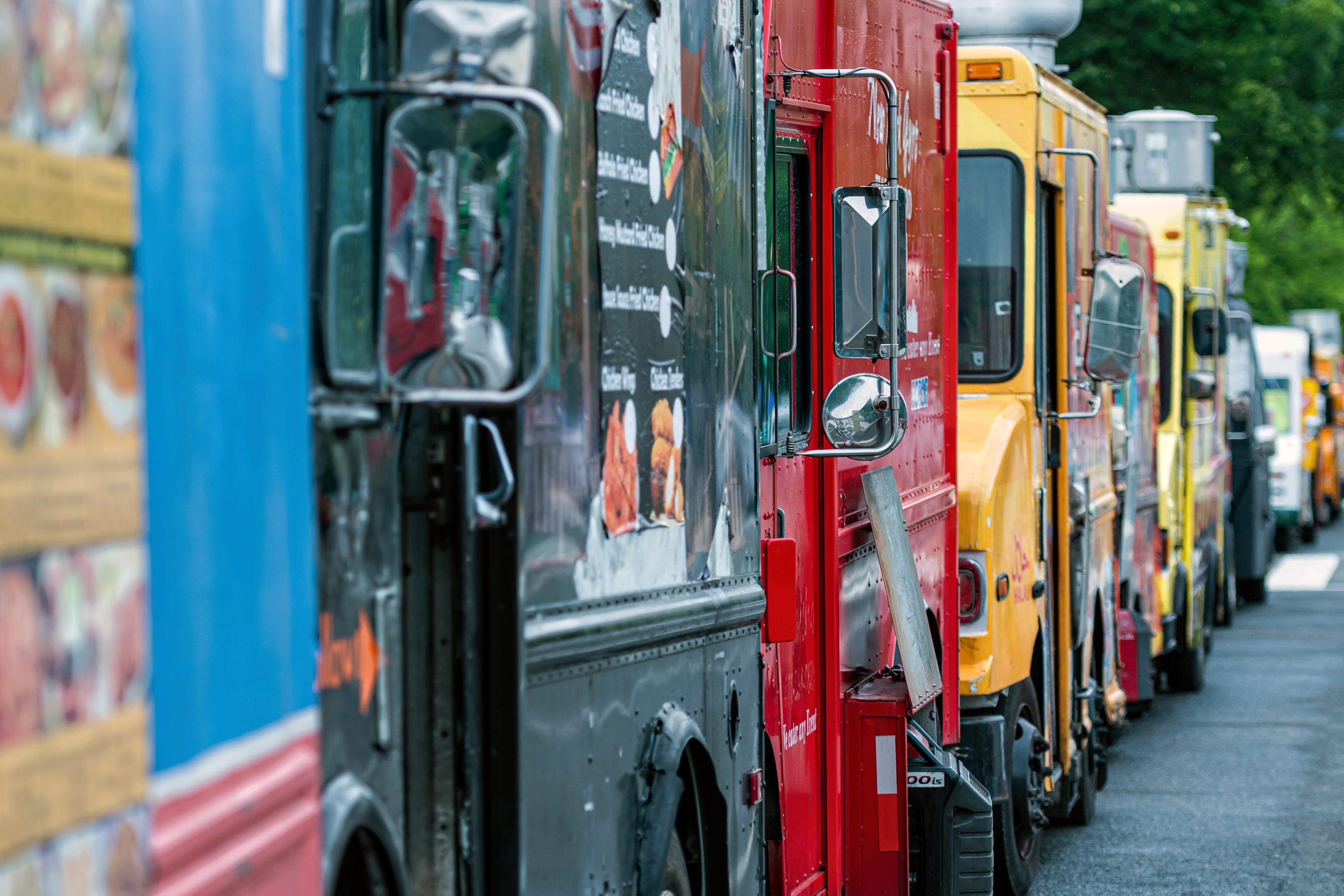


The Food Truck business has earned its place in the modern food economy. It is flexible, visible, creative, and often more approachable than opening a traditional restaurant. For entrepreneurs who love food, branding, and direct customer interaction, a truck can feel like a practical entry point into hospitality without the burden of signing a long commercial lease or building out a full dining room.
That appeal is real, but it can also be misleading. A Food Truck is not simply a restaurant on wheels with fewer headaches. It has its own economics, rules, risks, and operating pressures. In some ways, it can be leaner than a brick and mortar restaurant. In other ways, it can be more demanding because the business depends on location access, weather, events, permits, vehicle reliability, prep space, staffing, fuel, maintenance, and daily mobility.
The better question for entrepreneurs is not whether a Food Truck is cheaper than a restaurant. The better question is whether the Food Truck model creates the right balance of capital requirements, revenue opportunity, lifestyle demands, brand growth, and long term scalability.
The Food Truck model attracts entrepreneurs because it appears to lower the barrier to entry. Compared with a full restaurant buildout, a truck usually requires less square footage, fewer front of house employees, less furniture, and a smaller physical footprint. That matters, especially in a business climate where borrowing costs still affect the cost of equipment financing, working capital, leasehold improvements, and expansion decisions.
The model also offers mobility. A restaurant owner may spend years tied to one address, hoping the location continues to generate traffic. A Food Truck operator can test business districts, breweries, festivals, college areas, industrial parks, apartment communities, and private events. If one location underperforms, the business can move. That flexibility has real value because it allows an owner to gather market feedback before committing to a larger footprint.
Food trucks can also be strong brand builders. A well designed truck is a moving billboard. The menu can be tight, the visual identity can be memorable, and the customer experience can feel more personal than a counter service restaurant. Businesses such as Kogi BBQ helped show how a mobile food concept could create cultural attention, loyal customers, and a strong following without starting as a conventional restaurant.
That said, the visibility of a Food Truck can make the business look easier than it is. Customers see the truck, the menu, the logo, and the food. They do not see the early morning prep, commissary requirements, permitting process, generator maintenance, route planning, slow events, weather cancellations, parking restrictions, and cash flow pressure.
Many people assume a Food Truck is inexpensive to launch. It can be less expensive than opening a restaurant, but it is rarely cheap. A compliant, reliable, fully outfitted truck can require a serious investment before the first customer is served. The truck may need refrigeration, cooking equipment, ventilation, fire suppression, plumbing, water tanks, electrical systems, point of sale technology, signage, wrapping, storage, and health department approval.
That investment changes the entrepreneur’s financial calculation. A person who expected to start with a used truck and a few pieces of equipment may discover that a dependable vehicle with commercial kitchen capability is a much larger commitment. Cutting corners can be costly. A cheaper truck that breaks down, fails inspection, or cannot handle volume can quickly become more expensive than buying the right equipment from the beginning.
There are also costs that do not feel dramatic individually but add up quickly. Permits, commissary kitchen agreements, insurance, propane, fuel, maintenance, storage, uniforms, packaging, software, marketing, and repairs can place steady pressure on working capital. If the owner finances the truck, monthly payments become part of the fixed cost structure, even when rain, cold weather, or poor event turnout reduces sales.
A brick and mortar restaurant usually requires more capital upfront. Leasehold improvements, seating, design, kitchen buildout, signage, architectural work, deposits, utility upgrades, equipment, grease traps, restrooms, furniture, and pre opening payroll can become a major undertaking. However, the Food Truck owner should not mistake a smaller investment for a small risk. The investment may be lower, but the margin for error can still be thin.
A physical restaurant gives an owner something a Food Truck may lack: a consistent address. Customers know where to find it. Delivery platforms can list it more easily. The business can build neighborhood habits. Employees report to the same place every day. Vendors deliver to one location. The dining room creates an atmosphere that can become part of the brand.
That stability has value, especially for concepts built around hospitality, ambiance, beverage service, catering, private events, or a menu that requires more complex preparation. A restaurant can create a broader customer experience than most trucks. It can also support higher average tickets if the concept, location, and service model are strong.
The tradeoff is overhead. Rent does not care whether Tuesday was slow. Utilities, insurance, payroll, repairs, pest control, cleaning, software, trash removal, and loan payments keep coming. In a higher cost financing environment, owners also face more expensive borrowing for equipment, renovations, and expansion. When debt costs rise, a restaurant has less room to absorb slower sales, wage increases, food inflation, or landlord negotiations.
The restaurant industry remains large and resilient, but demand does not protect every operator. Restaurant owners still need to manage cost pressure, labor challenges, changing customer behavior, delivery economics, review culture, and competition from both local and national brands. A brick and mortar restaurant can be a strong asset, but only when the economics of the location support the concept.
A Food Truck can have strong sales days that look incredible on paper. A busy festival, office park, concert, brewery night, or catered event can produce impressive revenue in a short period of time. The ability to go where customers are gathered is one of the model’s greatest strengths.
The problem is consistency. A truck may perform well on Friday night and struggle on Monday afternoon. Weather can destroy a day’s revenue. Event organizers may overbook vendors. A high traffic area may not convert into paying customers. A private event may cancel. A city may change parking rules. A generator issue can shut down service at the worst possible time.
Brick and mortar restaurants have their own revenue swings, but they are built around a fixed location and repeat patterns. Lunch, dinner, takeout, delivery, reservations, regular customers, and neighborhood traffic can create a rhythm. That rhythm is not always profitable, but it is easier to measure over time.
The Food Truck operator must become skilled at scheduling, forecasting, and evaluating location economics. A location that produces strong sales may sound good, but the owner must subtract food cost, labor, fuel, event fees, prep time, travel time, packaging, waste, and wear on the truck. The real question is not gross sales. The real question is how much cash remains after the day is finished.
Food Truck menus work best when they are focused. A truck does not have unlimited storage, equipment, refrigeration, or prep space. The strongest concepts often have a clear identity and a menu that can be executed quickly under pressure. Speed matters because a long line only helps if the truck can move orders efficiently.
A brick and mortar restaurant has more room to build a broader menu, but that can become a weakness if the menu becomes too large. More ingredients mean more inventory, more waste, more prep labor, more training, and more operational complexity. A smaller menu can be a financial advantage in both models.
Companies like Sweetgreen and CAVA show the power of focused food concepts that can be repeated, branded, and operationally disciplined. They are not Food Truck companies, but their growth reflects an important lesson for mobile and fixed restaurant operators: clarity scales better than confusion.
For a Food Truck, the menu must also travel well. Food should be easy to prepare, hold, package, and serve in changing environments. A dish that works in a restaurant kitchen may not work inside a truck during a crowded event. The operator must think about speed, consistency, margins, and customer memory. A customer may not remember every menu item, but they should remember what the truck is known for.
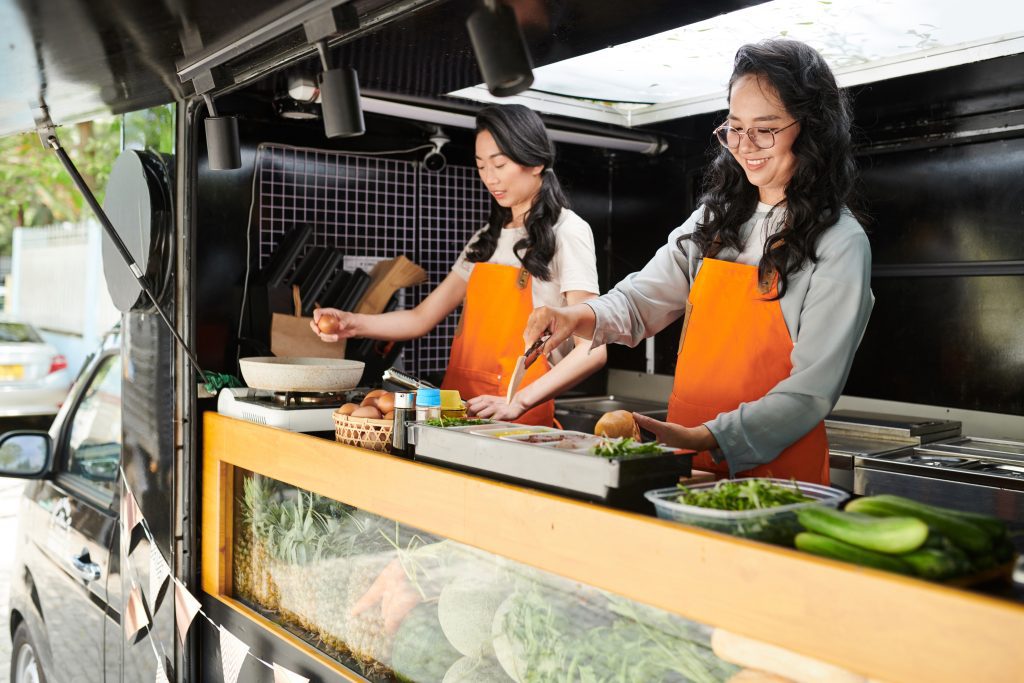
Some entrepreneurs look at a Food Truck and assume it solves the staffing problem. It may reduce headcount, but it does not remove labor pressure. A truck still needs prep, cooking, service, cleaning, inventory, setup, breakdown, driving, maintenance coordination, social media updates, event booking, and administrative work.
The smaller team can make the business more manageable, but it also creates dependency. If one key person calls out, the truck may not be able to operate. If the owner is also the driver, cook, scheduler, marketer, bookkeeper, and repair coordinator, burnout becomes a real business risk.
Brick and mortar restaurants usually need more employees, which raises payroll and management complexity. However, they can also distribute responsibilities across a larger team. A manager can open. A prep cook can support service. A host can handle guests. A bartender can increase revenue. The challenge is that every additional employee increases scheduling, training, payroll tax, insurance, and compliance obligations.
Labor planning must be treated as part of the business model, not an afterthought. A Food Truck that depends entirely on the owner’s physical presence may be a job more than a company. A restaurant with too many employees for its sales volume may look busy but still lose money. The right structure depends on volume, service style, menu complexity, hours of operation, and the owner’s long term goals.
Interest rates can change the math for both models. When financing is inexpensive, owners may feel more comfortable borrowing for a buildout, equipment, a second truck, or a larger location. When rates are higher, every monthly payment becomes more important.
A Food Truck operator may finance the truck, equipment, generator, wrap, and startup expenses. A brick and mortar operator may finance construction, kitchen equipment, furniture, signage, and opening inventory. In both cases, debt creates pressure before the business has proven itself.
This is where many entrepreneurs underestimate working capital. Opening the doors is not the same as reaching stability. A Food Truck may need months to identify profitable locations and build repeat customers. A restaurant may need time to train staff, refine service, attract reviews, and build neighborhood awareness. Underfunded businesses often fail not because the concept is bad, but because they run out of cash before the model has enough time to mature.
Platforms such as Square and Clover have made payments and point of sale systems more accessible for small food operators, but technology does not replace financial discipline. Sales reports are useful only if the owner understands food cost, labor cost, contribution margin, and cash flow.
For a brick and mortar restaurant, location is one of the biggest decisions. The lease term, rent, visibility, parking, demographics, foot traffic, neighboring businesses, zoning, signage rights, delivery access, and landlord relationship can shape the business for years.
For a Food Truck, location risk is more fluid. The operator may not be trapped in one bad location, but access to good locations can be competitive. Municipal rules, private property permissions, event fees, distance from commissary kitchens, and conflicts with nearby restaurants can all affect where the truck can operate.
The mobility of a Food Truck is an advantage only when the owner has a reliable pipeline of profitable places to sell. A truck sitting idle is not much different from a restaurant with an empty dining room. In both cases, the asset has to produce revenue.
Some operators use the Food Truck model as a testing ground. If a truck gains loyal customers in a specific market, the owner may later open a permanent location. The Halal Guys is one of the better known examples of a food cart concept that grew into a larger restaurant brand. That path is attractive, but it requires disciplined systems. Popularity alone does not create a scalable company.
Food Truck branding can be powerful because the truck itself becomes part of the customer experience. The name, wrap, menu board, packaging, uniforms, social media, and service style all work together. A strong truck can develop a following faster than a hidden restaurant in a weak location.
However, a Food Truck brand must be easy to understand quickly. Customers often decide in seconds. They may be walking through an event or scanning several trucks in a row. The concept must communicate what it sells, why it is different, and why someone should stand in line.
Brick and mortar branding can be deeper. The space, music, lighting, seating, service, restrooms, bar, menu design, and neighborhood presence can shape the identity. A restaurant can become part of someone’s routine. It can host business lunches, date nights, family meals, and community events.
The best entrepreneurs understand that brand is not just a logo. It is the customer’s memory of the experience. Did the food taste right? Was service fast? Was the price fair? Was the order accurate? Would the customer come back? Whether the business is mobile or fixed, the economics improve when customers return without the owner having to constantly pay to attract them.
At first glance, scaling a Food Truck business seems simple. Buy another truck, hire another team, and serve another area. In practice, scaling can be difficult because every truck becomes its own operating unit. Each one needs staff, maintenance, supplies, storage, routing, permits, and management oversight.
A second truck may double opportunity, but it can also double complexity. If the owner was the reason the first truck worked, the second truck may expose gaps in training, quality control, scheduling, and leadership. A business is not scalable just because it has demand. It is scalable when the systems can produce consistent results without the owner personally controlling every detail.
Brick and mortar scaling has its own issues. A second restaurant requires site selection, lease negotiation, buildout, hiring, training, management, vendor coordination, and more capital. The risk is larger, but the potential infrastructure may be stronger if the concept is repeatable.
Brands such as Five Guys and Raising Cane’s show how operational consistency can become a growth engine. Their models are different from food trucks, but the lesson applies: growth depends on systems, not just appetite for expansion.
There is no universal answer. A Food Truck may be better for an entrepreneur who wants lower initial overhead, market testing, event based sales, a focused menu, and a more flexible path into the food business. It can also make sense for catering, brand activation, private events, breweries, and seasonal markets.
A brick and mortar restaurant may be better for an operator who wants a permanent location, a fuller customer experience, a larger menu, alcohol sales, delivery integration, private dining, and a long term neighborhood presence. It may also be more attractive when the concept depends on atmosphere, service, or repeat local habits.
The risk is assuming one model is automatically safer. A Food Truck can fail because it lacks reliable locations, proper permits, operating discipline, or enough cash. A restaurant can fail because rent is too high, labor is too expensive, the menu is unfocused, or the location does not produce enough traffic.
Entrepreneurs should run both models through the same basic questions. What is the total startup cost? What are the fixed monthly obligations? How much revenue is needed to break even? What happens if sales are lower than expected? How much working capital is available? How will customers find the business? Who runs the operation when the owner is not there?
The Food Truck model deserves respect because it has opened the door for creative food entrepreneurs who may not have the capital or desire to start with a traditional restaurant. It can be flexible, exciting, and financially attractive when the concept is focused and the operator understands the true economics. Brick and mortar restaurants remain powerful because they offer permanence, deeper customer experience, and long term brand presence, but they also come with heavier fixed costs and larger capital commitments. The smartest path is not about chasing the cheaper option. It is about matching the business model to the concept, the owner’s resources, the customer base, and the financial reality. A Food Truck can be the beginning of a great food business, but only when treated as a serious operating company, not a shortcut around the hard parts of hospitality.