
Commercial landscaping was once viewed primarily as a maintenance service. Property owners hired contractors to mow lawns, trim hedges, remove weeds, and keep outdoor areas presentable. Although those responsibilities remain…
Read More...





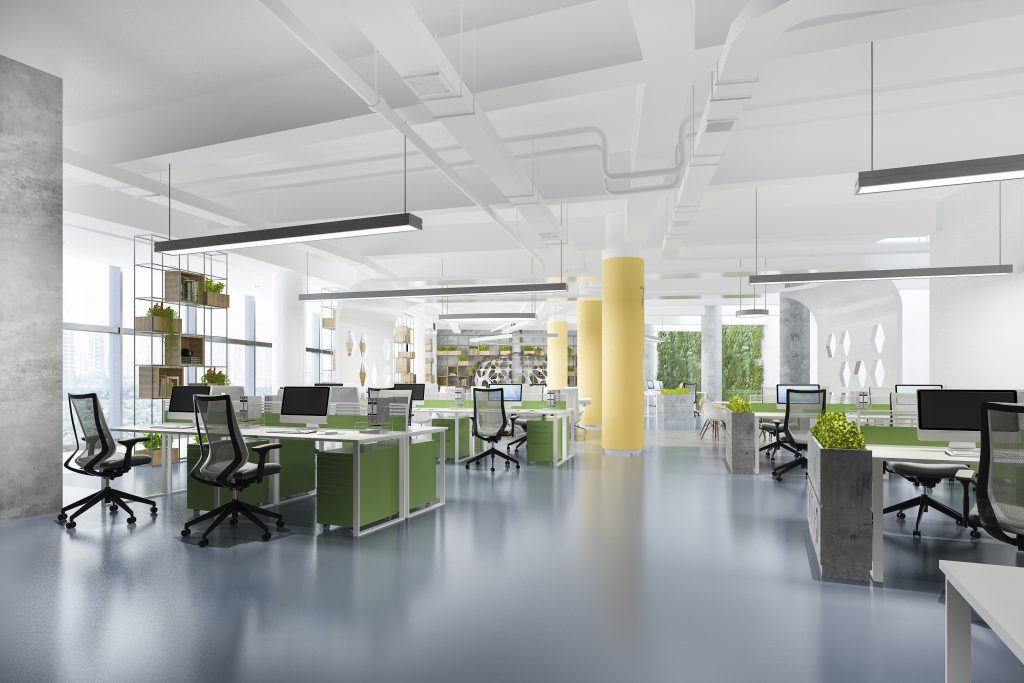
The Open Office was once treated as the future of workplace design. Walls would come down, collaboration would rise, and companies would save money by fitting more people into less space. It sounded efficient, modern, and democratic. Instead of private offices and long hallways, employees would sit in bright, shared environments where ideas could move quickly. For business owners watching rent, utilities, furniture, and expansion costs, the model had obvious appeal.
Over time, however, the promise became more complicated. Many companies discovered that the savings on square footage were easier to measure than the hidden costs that followed. Lost concentration, constant interruptions, lower privacy, higher stress, and employee dissatisfaction often became part of the real price. The Open Office did not fail because collaboration is bad. It failed because many businesses confused visibility with productivity and proximity with teamwork.
The timing matters even more now. With interest rates still affecting borrowing costs, expansion decisions, commercial leases, and capital planning, business owners are under pressure to watch every dollar. The Federal Reserve has continued to signal caution around inflation and economic uncertainty, which means workplace decisions carry real financial weight. In that environment, a floor plan that looks cheaper on paper can become expensive if it reduces output, weakens retention, or makes employees less effective during the workday.
The early appeal of the Open Office was not difficult to understand. Office space is expensive, especially in major markets where rent can become one of the largest fixed costs on a company’s books. By removing walls and shrinking individual work areas, companies could place more employees into the same footprint. That reduced the cost per employee and made office planning appear more flexible.
There was also a cultural argument. Business leaders wanted workplaces that felt less hierarchical. Private offices were often associated with old corporate structures, while open layouts suggested transparency, movement, and shared purpose. Younger companies, especially in technology and creative industries, liked the image. A founder sitting at the same table as a designer, developer, or account manager sent a message that everyone was working side by side.
Companies such as Steelcase and Herman Miller helped shape many conversations about modern workplace design, offering furniture and planning concepts built around flexibility, collaboration, and changing work styles. The problem was not that these ideas lacked value. The problem was that many businesses adopted the surface level concept without fully understanding how different types of work require different environments.
Sales teams, marketing departments, product groups, customer support teams, finance personnel, software developers, and executives do not all work the same way. Some roles benefit from constant interaction. Others require deep concentration, confidentiality, or long periods of uninterrupted thinking. When one floor plan is forced across every department, the business may save money on construction but lose value in the way people actually work.
One of the largest hidden costs of an Open Office is distraction. A business owner may look at rent, furniture, and buildout costs because those numbers are visible. Lost focus is harder to place on a spreadsheet, but it is no less real. Every phone call, side conversation, keyboard noise, impromptu meeting, and movement across the room creates small interruptions that add up throughout the day.
For employees doing concentrated work, the damage is often larger than the interruption itself. When a person is writing, analyzing numbers, reviewing legal terms, coding software, preparing a proposal, or solving a complex customer issue, the mind needs time to settle into the work. Once interrupted, it can take meaningful time to return to the same level of focus. In an Open Office, that cycle may happen repeatedly before lunch.
This can quietly reduce the quality of work. Employees may rush through tasks because they know they will be interrupted. They may avoid difficult work during office hours and save it for early mornings, evenings, or home. That creates a different kind of cost: burnout. When the office is too noisy for serious work, employees may still be present, but the most valuable thinking happens outside the official workday.
That is a serious issue for entrepreneurs and business owners. Payroll is usually more expensive than office furniture. If a company saves ten percent on real estate but loses meaningful productivity from highly paid employees, the math can turn negative quickly. A less expensive layout may produce a more expensive operating model.
The Open Office was sold partly on the idea that collaboration would happen naturally when people sat near each other. In some cases, that was true. Quick questions became easier. Casual conversations helped teams stay informed. New employees could observe how others worked. For fast moving teams, proximity can create energy.
But constant access is not the same as productive collaboration. In many open layouts, employees interrupt each other because there is no natural boundary. A question that could have been handled by email, project management software, or a scheduled meeting becomes a tap on the shoulder. Over time, the workplace rewards availability more than progress.
That can weaken accountability. When everyone is always nearby, people may default to verbal updates instead of clear systems. Decisions get made in passing conversations, but not documented. Important context gets lost. Employees who were not sitting nearby may be left out. Ironically, a workplace designed for communication can create confusion if the company does not have strong processes underneath it.
Companies such as Atlassian and Slack built tools around structured communication, team visibility, and project coordination. Those tools became important because modern work requires more than proximity. A team does not need to hear every conversation to stay aligned. It needs clear ownership, accessible information, and thoughtful meeting habits.
Open layouts also created problems around privacy. Not every conversation belongs in the middle of a shared workspace. Human resources discussions, salary conversations, customer disputes, legal issues, financial reviews, performance feedback, and sensitive business negotiations all require discretion. When private rooms are limited, employees either postpone important conversations or conduct them in ways that feel uncomfortable.
This affects more than employee preference. It can create operational risk. A business may deal with confidential client information, proprietary strategy, acquisition discussions, investor materials, or internal financial data. In an open layout, screens are visible, calls are overheard, and sensitive discussions may be softened because the room is not private.
For startups and small businesses, this can be especially challenging. Early stage companies often operate with lean teams, limited office space, and constant urgency. Yet those same companies may be discussing fundraising, product roadmaps, hiring decisions, and customer agreements. A workspace that does not provide privacy can make leadership less effective.
Privacy is also tied to trust. Employees who know that confidential conversations may be overheard are less likely to speak openly. Managers may avoid direct feedback because the physical environment does not support it. Clients may feel uneasy if calls sound like they are taking place in a crowded room. Those issues are not always visible on a lease summary, but they shape how professional the business feels.
The Open Office also changed how employees felt about the workplace. Some people enjoy movement, conversation, and energy. Others find constant noise draining. A layout that looks vibrant to leadership may feel exhausting to the people sitting in it all day. The difference matters because workplace satisfaction can affect retention, recruiting, and morale.
When employees feel they have no control over their environment, frustration builds. They may dislike the lack of personal space, the difficulty of taking calls, the noise level, or the feeling of being watched. Even when management does not intend to monitor people closely, open layouts can create that perception. Employees may feel that every break, conversation, or moment away from the desk is visible.
The result can be a workplace that appears busy but feels uncomfortable. People wear headphones not only to listen to music, but to create a barrier. They book conference rooms just to concentrate. They work from home whenever possible because the office does not help them do their best work. When that happens, the company has paid for a workplace that employees try to avoid.
Companies such as Airbnb and Dropbox have both had to think carefully about the role of the office as work habits changed. The broader lesson for business owners is that the office must earn its place. People will come to a workspace that helps them work better, connect better, or solve problems faster. They will resist a workspace that simply places everyone together and calls it culture.
Hybrid work made the Open Office question even more important. Before remote work became common, many companies could treat the office as the default. Employees came in because that was the structure. Now, if workers are expected to commute, the office needs to provide a clear benefit. A noisy desk in a crowded room may not be enough.
This shift exposed a flaw in the old Open Office logic. If the main advantage of the office is collaboration, then the office must be designed around intentional collaboration, not constant interruption. If the main advantage is culture, the space must support real connection, not just shared seating. If the office is needed for training, mentoring, client meetings, or creative work, the design should reflect those priorities.
Many companies are now rethinking space around activity rather than status. Instead of giving everyone the same setup, they create a mix of focus areas, meeting rooms, private call spaces, lounge areas, training rooms, and team zones. This approach accepts that work changes throughout the day. A person may need quiet concentration in the morning, a team discussion after lunch, and a private client call in the afternoon.
Office providers such as WeWork and workplace planning firms have helped popularize the idea that flexibility has value, even though each business still needs to evaluate cost carefully. Flexibility does not mean adding trendy furniture. It means designing space around actual work patterns.
The financial case for Open Office layouts often focused on real estate efficiency. However, real estate savings can be misleading if they are viewed in isolation. A smaller footprint may reduce rent, but it can also create higher spending elsewhere. Companies may need more phone booths, noise management systems, booking software, wellness programs, offsite meeting space, or employee retention efforts to fix problems created by the layout.
There is also the cost of turnover. If a talented employee leaves because the workplace is frustrating, the business faces recruiting costs, training time, lost institutional knowledge, and possible disruption to client relationships. Replacing skilled employees is rarely cheap. Even when the reason for leaving is not listed as office design, the daily environment can contribute to the decision.
Interest rates add another layer. When borrowing costs are elevated, companies become more cautious about expansion, renovation, and long term commitments. A business taking on debt for a buildout or signing a multi year lease has to think beyond the lowest immediate cost. The right question is not just, “How many employees can we fit?” The better question is, “Will this space help our people produce work that justifies the cost?”
That question changes the conversation. A slightly larger office with better acoustic control, private spaces, and thoughtful collaboration areas may produce stronger returns than a compressed layout that drains productivity. The cheapest office is not always the most profitable office.
For entrepreneurs and business owners, the Open Office lesson is not that private offices must return for everyone. The lesson is that workplace design needs to be evaluated like any other business investment. A floor plan should support revenue, productivity, retention, customer experience, and management effectiveness. If it does not, the savings may be cosmetic.
Better workplace math includes more than rent per square foot. It should consider the type of work being performed, the level of confidentiality required, the cost of employee distraction, the frequency of meetings, the need for client calls, and the importance of focused output. A company with a call heavy sales team may need a different setup from a company filled with analysts, engineers, writers, or legal professionals.
It also means asking employees practical questions before major design decisions are made. What work is hardest to do in the current office? Where do interruptions happen most often? Are meeting rooms available when needed? Are people taking calls in hallways or cars? Are employees working from home because they prefer flexibility or because the office makes concentration difficult?
These questions can reveal whether the office is helping or hurting the business. They also help leadership avoid copying workplace trends from larger companies with different cultures, budgets, and operating needs. A design that works for one company may be completely wrong for another.
The answer is not necessarily to spend more money or lease more space. A smarter office may come from better zoning, clearer policies, and more intentional use of the space already available. Some businesses can improve the work environment by adding quiet rooms, acoustic panels, reservation systems, or clear rules around where certain types of conversations should happen.
Others may benefit from assigned quiet hours, better meeting discipline, or a hybrid schedule that brings teams together on specific days for collaboration while protecting other days for focused work. The best solution depends on the business model. A company should not adopt a design simply because it looks modern on a website or feels popular in a certain industry.
Furniture and layout still matter. Companies such as ROOM have built products around office privacy and acoustic needs, reflecting how many workplaces are trying to correct the shortcomings of fully open environments. But products alone will not solve a management problem. A business also needs clarity around how people are expected to communicate, meet, focus, and use shared space.
The smartest office strategy is usually balanced. It recognizes that people need connection and quiet. It provides room for teamwork without making every employee available for interruption all day. It treats the workplace as a business tool, not just a real estate expense.
Open Office plans promised lower costs, stronger collaboration, and a more modern workplace. For some teams, parts of that promise were real. But many businesses learned that removing walls did not automatically create better communication, and reducing square footage did not always reduce total cost. The hidden price appeared in distraction, lost privacy, weaker focus, employee frustration, and sometimes turnover.
In a business climate where interest rates, lease commitments, and operating costs remain major concerns, workplace decisions deserve closer financial analysis. The office should not be judged only by how many desks fit into the room. It should be judged by how well it supports the work that drives the business forward. The Open Office may have saved money on paper, but for many companies, the real cost was paid in productivity, trust, and performance.