Slower Supply Chains Are Changing the Transportation Landscape
Over the past several years, global supply chains have faced congestion, port backlogs, labor shortages, geopolitical disruptions, and unpredictable demand cycles. What once functioned as a finely tuned network of ocean carriers, trucking fleets, distribution centers, and warehouses now operates under a different reality. Delays have become part of the planning process rather than an unexpected exception.
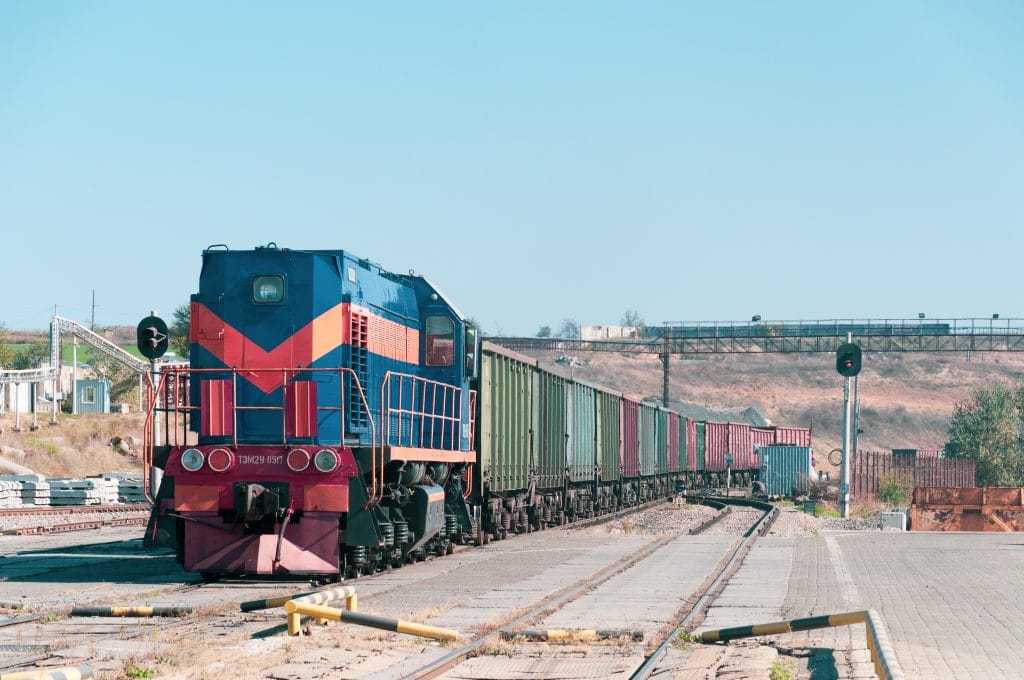
In that environment, rail freight has quietly moved from being a traditional backbone of heavy industry to a strategic asset for modern commerce. Entrepreneurs and business leaders who once focused primarily on just in time trucking models are reexamining rail as a stabilizing force. Slow supply chains have shifted the value equation. Predictability and scale now matter as much as speed.
Major rail operators such as Union Pacific, BNSF Railway, CSX, and Norfolk Southern have reported strong intermodal volumes during periods when trucking capacity tightened and fuel costs climbed. Instead of being squeezed by delays, many rail carriers have benefited from customers seeking alternatives to volatile road freight markets.
For business owners, the lesson is straightforward. When supply chains slow down, companies that offer consistency, scale, and cost efficiency gain leverage. Rail freight sits at the intersection of all three.
The Economics Behind Rail Freight Advantage
When supply chains run smoothly, companies tend to prioritize speed. Air freight and expedited trucking become attractive despite higher costs because rapid delivery supports lean inventories. However, when bottlenecks appear at ports or warehouses, faster modes do not necessarily solve the problem. If containers are already delayed upstream, incremental trucking speed downstream provides limited benefit.
Rail freight becomes compelling in these conditions because of its cost structure and capacity. A single train can move the equivalent of hundreds of trucks in one trip. That scale translates into lower per unit transportation costs, especially across long distances. As fuel prices fluctuate, rail fuel efficiency per ton mile often outperforms road transport.
Intermodal rail has expanded its role in bridging ocean shipping and inland distribution. Companies such as J.B. Hunt have built business models around rail intermodal partnerships, integrating trucking and rail to move containers from ports to inland hubs. This hybrid approach allows businesses to balance cost and transit time without overexposing themselves to highway congestion.
From a strategic planning perspective, rail freight benefits when supply chains are slow because businesses shift from reactive shipping decisions to portfolio thinking. They evaluate transportation modes as part of a broader cost management strategy rather than as isolated transactions.
Infrastructure Investment Is Amplifying Rail Position
Slow supply chains have triggered increased focus on infrastructure resilience. Governments and private companies alike are channeling capital into port modernization, terminal expansion, and rail corridor upgrades. In the United States, rail networks already cover extensive geographic territory, and incremental upgrades can unlock significant capacity.
Rail operators have invested in automation, advanced signaling systems, and precision scheduled railroading models. Precision scheduled railroading emphasizes disciplined train scheduling and asset utilization, improving reliability and lowering operating ratios. While controversial at times, it has forced rail companies to operate with sharper financial discipline.
Meanwhile, port operators such as Port of Los Angeles and Port of Long Beach have expanded on dock rail capabilities. When containers move directly from ship to rail, bypassing long truck queues, supply chain friction declines. Even in a slower global trade environment, that efficiency creates competitive advantages.
For entrepreneurs building logistics startups or evaluating transportation investments, infrastructure matters. Rail networks represent high barrier to entry assets. Tracks, terminals, and rights of way require decades to assemble. That structural scarcity supports pricing power when demand tightens.
Rail Freight and Inventory Strategy
One of the most important shifts in recent years has been the move away from extreme just in time inventory models. Companies experienced firsthand the risk of running inventories too lean. As a result, many businesses now hold higher safety stock levels.
This change plays directly into rail freight strengths. Rail is well suited for predictable, high volume shipments of raw materials, finished goods, and components. Instead of depending on last minute trucking, manufacturers can schedule consistent rail shipments aligned with production cycles.
Large retailers such as Target and Home Depot have expanded the use of inland distribution centers connected by rail. Inland ports and intermodal hubs allow goods to move away from coastal congestion and into regional fulfillment networks more efficiently.
For small and mid sized business owners, the opportunity lies in collaboration. By pooling shipments or partnering with third party logistics providers that leverage rail, companies can access the cost savings of scale without owning railcars or managing complex routing directly.
Slow supply chains have reminded executives that resilience often outweighs marginal speed gains. Rail freight aligns well with that recalibrated mindset.

Sustainability Pressures Are Reinforcing the Trend
Environmental considerations have become a strategic factor in transportation decisions. Rail freight typically produces lower greenhouse gas emissions per ton mile than trucking. As corporations set carbon reduction targets, modal shifts become part of sustainability roadmaps.
Companies such as Canadian National Railway and Canadian Pacific Kansas City have promoted fuel efficiency initiatives and alternative locomotive technologies. Investors increasingly evaluate transportation providers not only on profitability but also on environmental performance.
For entrepreneurs in sectors ranging from manufacturing to consumer goods, sustainability messaging intersects with logistics choices. Selecting rail freight can support environmental reporting objectives while simultaneously lowering transportation costs.
Slow supply chains have created space for strategic reflection. Rather than rushing products through expensive expedited channels, businesses can design transportation networks that align with long term environmental and financial goals.
Risk Diversification in an Uncertain Global Economy
Global trade patterns are shifting. Companies are diversifying suppliers, reshoring some production, and building regional hubs. These changes increase the complexity of logistics networks.
Rail freight supports risk diversification in several ways. First, it provides an alternative to congested trucking lanes. Second, it connects inland manufacturing regions directly to ports. Third, it integrates well with cross border trade, particularly between the United States, Canada, and Mexico.
The integration of networks by companies like Canadian Pacific Kansas City has created single line service from Canada through the United States into Mexico. For manufacturers participating in nearshoring trends, that continuity simplifies routing and reduces handoffs.
From a business strategy standpoint, diversification of transportation modes reduces vulnerability. Companies that rely exclusively on trucking or ocean freight are exposed to concentrated risk. Incorporating rail creates optionality. When one channel slows or spikes in cost, another can absorb volume.
Slow supply chains have highlighted the importance of redundancy. Rail freight provides a built in buffer against volatility.
Opportunities for Entrepreneurs and Investors
Rail freight resurgence is not limited to legacy operators. It extends to technology startups, data analytics firms, terminal developers, and equipment lessors. Digital platforms that optimize rail scheduling and visibility are emerging alongside traditional infrastructure investments.
Entrepreneurs exploring opportunities in logistics technology can look to partnerships with rail carriers. Improved tracking, predictive maintenance, and demand forecasting tools can increase network efficiency. As rail operators modernize, they become more open to digital collaboration.
Investors also view rail assets as attractive long term holdings. The combination of physical infrastructure, regulatory protections, and durable demand creates relatively stable cash flow profiles. During periods of economic slowdown, rail often maintains baseline volume through essential commodities such as grain, energy products, and industrial materials.
Companies such as GATX, which specializes in railcar leasing, benefit when shippers seek flexible access to equipment without committing to ownership. In a slow supply chain environment, flexibility has tangible value.
For business leaders evaluating strategic partnerships, rail freight is no longer just a background utility. It is a potential differentiator in cost control and operational resilience.
Closing Remarks
Slow supply chains have reshaped how businesses think about transportation. Instead of chasing marginal speed gains at high cost, many companies are prioritizing stability, scale, and strategic flexibility. Rail freight operators have found themselves well positioned in this new environment.
With extensive infrastructure, strong fuel efficiency, growing intermodal integration, and alignment with sustainability objectives, rail freight has moved closer to the center of corporate logistics strategy. For entrepreneurs and business professionals, the broader lesson is about adaptability. When external conditions change, advantages shift. Those who recognize structural strengths in overlooked sectors often capture meaningful opportunities.
Rail freight is benefiting from slow supply chains not because delays are ideal, but because the market now values resilience. Businesses that incorporate rail into their long term planning may find that what once seemed like a traditional mode of transport has become a modern competitive asset.