For years, venture capital has dominated conversations about growth and innovation. Headlines often highlight massive funding rounds and rapid expansion, creating the impression that outside capital is a requirement for…
Read More...


When people think about business strategy, they often focus on revenue streams, pricing models, and operational efficiency. Yet, one of the most overlooked aspects of a company’s economic footprint sits right at the front door: the lobby or waiting room. Whether it is a law firm, medical office, hotel, or corporate headquarters, the lobby serves as more than just a transitional space. It is a physical and psychological environment that influences how clients feel, how employees behave, and even how much money a business makes.
The economics of lobbies may seem invisible, but they are powerful. They shape first impressions, guide the flow of traffic, and communicate brand values before a single word is spoken. The best-designed lobbies are not just beautiful—they are strategic assets that enhance reputation, productivity, and profitability.
Every business sends messages through design, intentionally or not. A lobby communicates what a company values and how it positions itself in the marketplace. A cramped or poorly maintained waiting area suggests indifference or instability, while a modern, well-lit space with comfortable seating and subtle branding conveys trust and competence.
Companies such as Ritz-Carlton and WeWork understand this well. Ritz-Carlton’s grand hotel lobbies communicate timeless luxury and reliability, while WeWork’s flexible workspaces use bold art and communal seating to project creativity and community. Each space tells a story about the business behind it—and customers often decide within seconds whether they want to engage based on that impression.
These impressions translate into real economic outcomes. A polished lobby can lead to longer client relationships, higher conversions, and stronger employee morale. It functions as a silent salesperson—one that never clocks out.
Commercial real estate is expensive, which means every square foot must justify its cost. For many companies, dedicating large portions of prime property to a waiting area may seem inefficient. However, when viewed through the lens of marketing and psychology, the investment can make sense.
Consider how Tesla showrooms operate. Their minimalist, gallery-like spaces are designed to make customers feel part of an exclusive experience. The waiting area does not simply hold visitors—it keeps them immersed in the brand narrative. This emotional connection increases perceived value and willingness to spend.
In a professional office environment, a well-designed lobby can have a similar effect. Clients who feel comfortable and respected in the waiting area are more likely to trust the company’s expertise. The perceived quality of the experience can justify higher fees or strengthen long-term loyalty. In short, a beautiful lobby can indirectly boost margins by elevating brand equity.
It is easy to think of lobbies as spaces for visitors, but they also play an important role for employees. The entrance of a workplace is the transition zone between public and private life. A clean, thoughtfully designed lobby can influence employee mindset, signaling professionalism and calm before the workday begins.
Research in environmental psychology suggests that physical surroundings have measurable effects on behavior and cognition. For instance, studies have shown that exposure to natural light and greenery improves focus and mood. Many modern companies are applying these findings. Salesforce integrates biophilic design into its offices, incorporating plants, natural textures, and open sightlines from the lobby onward. These investments contribute to employee well-being and lower turnover rates—both measurable economic benefits.
When employees move through a space that feels intentional and uplifting, it reinforces pride in their workplace. That, in turn, enhances productivity and reduces absenteeism, generating real financial returns.
The hospitality industry has long mastered the art of monetizing comfort and design. A luxury hotel understands that every touchpoint—from scent to seating—contributes to perceived value. Increasingly, corporate offices are learning from that playbook.
For instance, Regus and Spaces have turned lobby experience into a competitive advantage. Their coworking centers often feature lounge-style waiting areas with ambient music, designer furniture, and complimentary coffee. The result is a hybrid of hospitality and productivity—a welcoming environment that clients associate with professionalism and comfort.
This crossover between hospitality and corporate design reflects a broader economic shift. Businesses are recognizing that customers and clients are not only buying products or services—they are buying experiences. The lobby is the first act of that experience. It sets expectations, influences behavior, and builds a psychological connection that can lead to repeat business.
Waiting is often viewed as a negative experience, but how it is managed can determine how customers perceive value. Studies in behavioral economics show that perceived waiting time matters more than actual waiting time. A customer sitting in a clean, well-decorated space with pleasant background music perceives time differently than someone waiting in a noisy or uncomfortable area.
Consider how Disney manages waiting. Even in lines for attractions, Disney invests heavily in environment design—color, sound, interactive elements—to make the wait feel shorter. Businesses can apply similar logic to lobbies and waiting rooms. When the environment engages the senses or communicates professionalism, customers feel cared for. That positive emotional state makes them more receptive during their interaction, leading to higher satisfaction and better word-of-mouth.
This dynamic directly ties into revenue. A law firm that invests in a high-quality lobby might find that clients are less likely to negotiate fees downward, as the perceived professionalism justifies the rate. The subtle economics of comfort often play out in ways spreadsheets cannot fully quantify—but they are real and measurable over time.
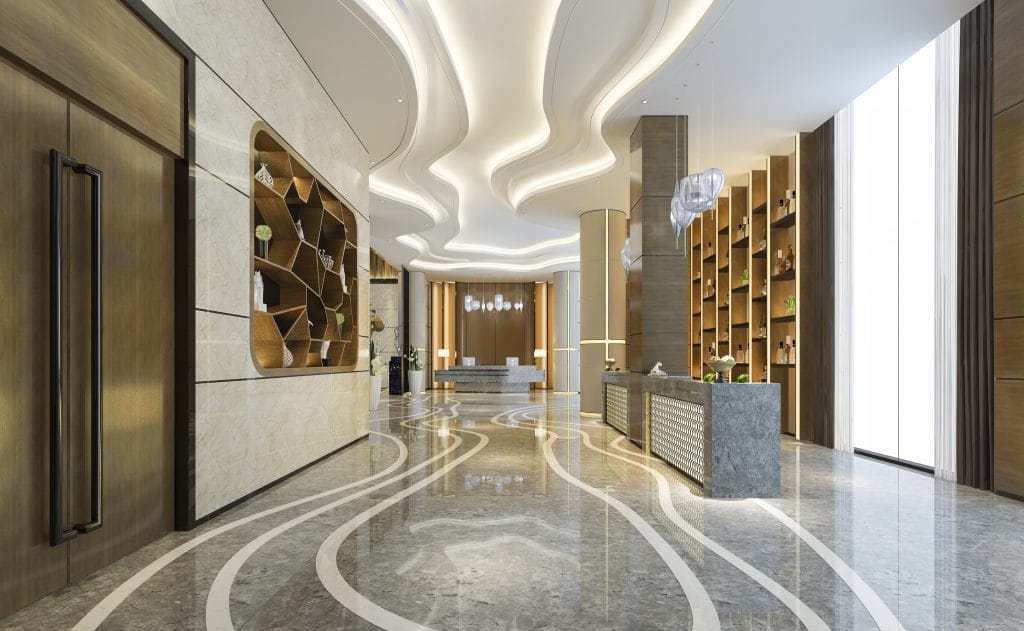
For many organizations, the lobby is a branding tool as important as a website or ad campaign. It tells visitors who the company is before any formal presentation begins. The visual cues—logo placement, artwork, lighting—work together to establish a sense of identity and reliability.
Adobe, for instance, integrates art installations that showcase creativity and innovation in its corporate lobbies. The message is clear: this is a company that values imagination and forward thinking. In contrast, Goldman Sachs employs minimalist, sleek design in its lobby to convey authority, confidence, and financial stability. Each aesthetic choice serves as silent marketing.
The economic impact is not limited to client-facing impressions. Visitors share photos of visually striking spaces on social media, effectively turning the lobby into free marketing. These organic mentions contribute to digital visibility, which has quantifiable value in brand awareness metrics.
Some industries, such as healthcare and legal services, have waiting rooms that directly affect operational efficiency and satisfaction metrics. For instance, patients who feel anxious in a sterile, impersonal waiting area may perceive longer wait times and lower quality of care. In contrast, clinics that adopt warmer tones, comfortable furniture, and ambient music often report higher satisfaction scores and better online reviews.
One Medical and Parsley Health have reimagined medical waiting rooms as extensions of the care experience. These spaces resemble wellness lounges more than doctor’s offices. The economic payoff comes through higher patient retention, premium membership models, and lower staff burnout rates.
The same principle applies to law firms, accounting offices, and consulting firms. The waiting area shapes how clients evaluate the expertise and reliability of the firm. When handled strategically, it can be a competitive differentiator that influences client acquisition and retention.
Designing or maintaining a high-quality lobby does not always mean high ongoing costs. In fact, sustainability can reduce operational expenses while reinforcing a positive brand image. Companies like Interface and Steelcase supply eco-conscious flooring and furniture options that blend aesthetics with environmental responsibility.
Natural lighting, energy-efficient HVAC systems, and modular design can all lower utility bills and long-term maintenance costs. More importantly, these features appeal to a growing demographic of environmentally conscious customers and employees. A sustainable lobby can reflect corporate values, which increasingly factor into purchasing and partnership decisions.
Moreover, real estate developers and property managers are recognizing the long-term ROI of adaptive lobbies—spaces that can be easily reconfigured for different tenants or uses. This flexibility preserves asset value and aligns with modern hybrid work patterns.
Beyond design and aesthetics, lobbies represent the economics of time. They are holding spaces that manage flow—of people, of information, and of emotion. The efficiency with which they do this can have cascading effects throughout a business. When clients or visitors are comfortable, they interact more positively with staff, meetings start smoother, and transactions move faster.
Even small operational choices, such as offering digital check-ins or touchless refreshments, can streamline processes and reduce friction. The cumulative impact of these efficiencies—faster appointments, fewer complaints, better reviews—translates into measurable economic gains.
Lobbies and waiting rooms are far more than aesthetic luxuries. They are active participants in the economic life of a business. Their design influences perception, productivity, and profitability. From a minimalist tech lobby to a cozy healthcare waiting area, each decision—lighting, layout, furniture, scent—sends a message about value and trust.
Entrepreneurs and business owners who view these spaces strategically can uncover new forms of ROI that go beyond rent and square footage. The smartest investments are those that transform ordinary spaces into silent brand ambassadors—places that welcome, persuade, and perform.