
For years, venture capital has dominated conversations about growth and innovation. Headlines often highlight massive funding rounds and rapid expansion, creating the impression that outside capital is a requirement for…
Read More...


Throughout history, art collecting has often been viewed as a passion-driven pursuit—an emotional investment in beauty, meaning, and legacy. Yet in recent years, the world of art has evolved into a sophisticated marketplace, where collectors are blending aesthetic appreciation with entrepreneurial strategy. Art collecting is no longer confined to museums or the elite few. It has become a legitimate investment channel for those who recognize that creativity can yield both cultural and financial rewards.
Many art collectors start with emotional motivations rather than financial ones. They buy what moves them—paintings that tell stories, sculptures that evoke thought, or digital pieces that reflect innovation. Over time, as collections expand and market values rise, some realize they have accumulated significant assets. The shift from passion to profit often occurs organically, driven by increased awareness of the art market’s potential returns and a growing network of collectors and investors who view art as a form of alternative wealth.
According to research from the Art Basel and UBS Global Art Market Report, the global art market reached over $65 billion in 2024. High-net-worth individuals are increasingly allocating portions of their portfolios to art, not only for potential appreciation but also for diversification. Art behaves differently from traditional investments such as stocks or bonds—it can hold value during inflationary cycles and act as a tangible store of wealth.
The growing legitimacy of art as an asset class is due in part to the rise of data analytics and financial platforms that have made valuation more transparent. Companies like Masterworks have created fractional ownership models allowing investors to buy shares in blue-chip artworks. This democratization of access means that collectors and investors alike can participate in markets that were once exclusive to insiders.
Art funds and private equity vehicles are also contributing to the institutionalization of art investment. They analyze artist performance metrics, auction trends, and global market indicators, much like hedge funds track equities. This level of sophistication allows collectors to make informed decisions—balancing passion with profit in a way that previously required deep insider connections.
For serious collectors, turning art into profit involves far more than buying and selling. It requires strategic planning similar to any other investment business. Key elements include provenance verification, authentication, storage, insurance, and market timing. A collector might acquire a piece early in an artist’s career and hold it for a decade until the artist’s reputation grows, creating exponential appreciation. Others may leverage relationships with galleries, auction houses, or advisors to identify undervalued works that align with emerging trends.
There is also a growing emphasis on curatorial strategy. Collectors who specialize in certain genres or artists—whether postwar abstraction or contemporary digital art—build coherent collections that attract institutional attention. Museums and corporate buyers are often interested in cohesive collections rather than scattered pieces, which can significantly raise a collector’s profile and potential resale value.
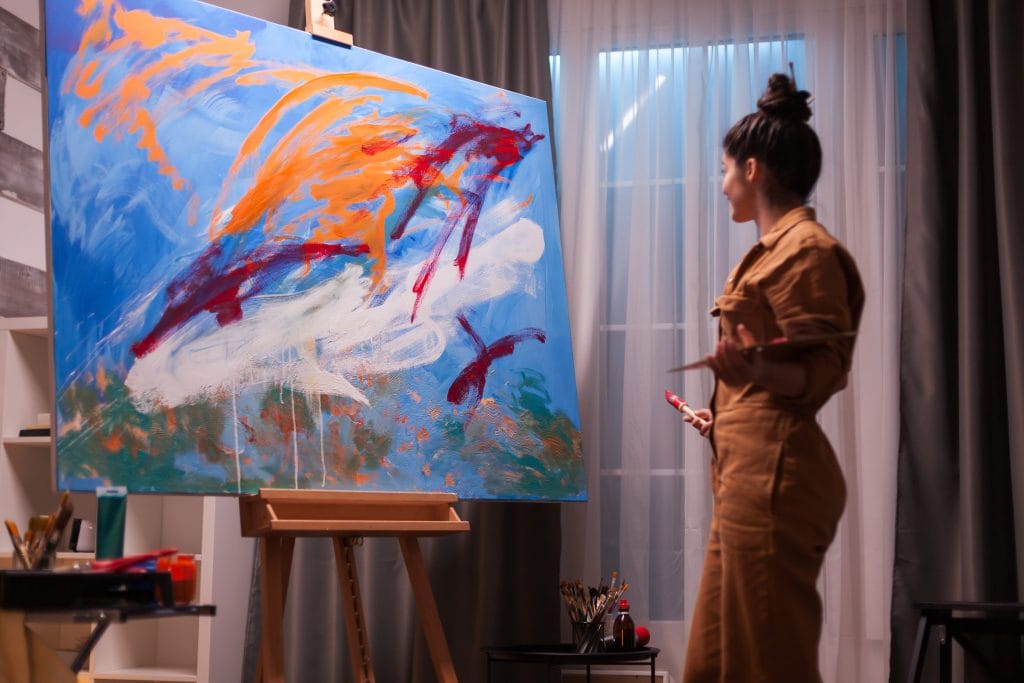
The digital revolution has dramatically expanded the definition of what constitutes art ownership. The introduction of blockchain-based NFTs (non-fungible tokens) has created a new ecosystem where authenticity and ownership are recorded permanently on the blockchain. Collectors who were once limited by geography or access can now invest in digital works that appreciate just like traditional art, with verifiable provenance and global liquidity.
Platforms such as SuperRare and Foundation have introduced new opportunities for collectors to acquire digital art directly from creators, bypassing traditional intermediaries. While the NFT boom has cooled since its 2021 peak, it left behind a foundational infrastructure that continues to evolve. Many serious art investors now include digital works in their portfolios as part of a forward-looking diversification strategy.
Some collectors have gone beyond personal investment and turned their collections into businesses of their own. They open private galleries, lend works to institutions, or create online platforms that merge curation with commerce. Entrepreneurs such as Eli Broad and Mera Rubell demonstrated that building a collection can also mean building a brand—one that reflects vision, taste, and long-term commitment to culture.
Others have monetized their collections through strategic partnerships. Collaborations with luxury brands, interior designers, and corporate art programs can generate additional revenue streams. A collector might lease artwork to hospitality companies or real estate developers who use art to enhance high-end properties. Companies like Art Leasing & Finance and Art Money have developed business models around helping collectors and buyers manage liquidity while keeping art in circulation.
Turning art into profit requires an understanding of both risk and liquidity. Unlike stocks, art cannot be sold instantly, and market demand can fluctuate. Factors such as condition, provenance, and current artistic trends all influence value. Collectors who treat art as a business often maintain detailed records of acquisitions, appraisals, and valuations to guide decision-making and estate planning.
Liquidity solutions are improving, however. Online marketplaces like 1stDibs and Saatchi Art offer global reach for selling works, while specialized art lenders provide financing against collections. These developments have given art collectors the ability to unlock capital without liquidating their most prized assets.
As art collecting becomes more financially sophisticated, the need for professional guidance has grown. Wealth managers now collaborate with art advisors to integrate collections into broader financial strategies. Firms such as Artory provide blockchain-secured registries to document provenance and reduce fraud, while analytics platforms like Artprice track global sales data to help collectors make informed decisions.
These insights are transforming art collecting into an evidence-based field. Predictive analytics can estimate the future trajectory of an artist’s value based on auction performance, critical reviews, and institutional recognition. Collectors who apply these tools are bridging the gap between the art world and the financial sector, creating a hybrid space where creativity and commerce intersect.
Beyond financial returns, many collectors view art as a form of legacy building. By donating works to museums or establishing foundations, they contribute to cultural preservation while receiving tax advantages. Philanthropic collecting can also enhance reputation and influence, creating opportunities for networking and public recognition. The interplay between legacy and liquidity is what makes art collecting distinct—it is as much about meaning as it is about money.
Moreover, art collecting has become a symbol of identity for business leaders. Executives often display collections in their offices or corporate headquarters as a reflection of creativity and innovation. In a business culture increasingly defined by differentiation, art can be both an asset and a statement of values.
The intersection of art and business continues to evolve, reflecting a broader cultural shift toward viewing creativity as capital. Art collectors who approach their collections strategically are not merely curating beauty—they are shaping financial ecosystems that support artists, fuel innovation, and generate real economic value. As technology continues to redefine access and ownership, the line between passion and profit will blur even further, opening new pathways for entrepreneurial visionaries who see opportunity in every canvas, sculpture, or digital creation.