
Commercial landscaping was once viewed primarily as a maintenance service. Property owners hired contractors to mow lawns, trim hedges, remove weeds, and keep outdoor areas presentable. Although those responsibilities remain…
Read More...


Across the global telecommunications landscape, one investment theme has become increasingly clear: fiber networks are at the center of long term strategy. Telecom providers are allocating billions of dollars toward fiber infrastructure even as economic conditions shift and interest rates remain elevated. For entrepreneurs and business leaders observing large scale infrastructure investments, the fiber buildout represents a powerful case study in patience, capital planning, and technological inevitability.
Fiber networks carry internet traffic using pulses of light rather than electrical signals. The result is dramatically faster speeds, greater reliability, and significantly higher bandwidth capacity compared with traditional copper networks. While cable and wireless technologies still play important roles in connectivity, fiber has become widely recognized as the gold standard for modern broadband infrastructure.
The scale of investment underway is significant. Major telecommunications companies are racing to expand their fiber footprints in both urban and suburban markets. Companies such as AT&T, Verizon, and Lumen Technologies have made fiber expansion a central pillar of their long term strategies. These projects require substantial upfront capital, yet executives across the industry continue moving forward with confidence that demand will justify the investment over time.
For business leaders studying infrastructure economics, fiber deployment demonstrates how companies make decisions when the payoff horizon stretches years or even decades into the future.
The push toward fiber networks is largely driven by one fundamental factor: demand for data continues to grow at an extraordinary pace. Streaming video, cloud computing, remote work platforms, and connected devices all require high bandwidth connections. As households and businesses rely on internet connectivity for more critical functions, expectations for speed and reliability continue to rise.
Companies operating digital platforms have accelerated the pressure on telecom providers. Streaming services such as Netflix and cloud providers like Google Cloud have helped reshape consumer behavior, pushing data consumption far beyond what earlier infrastructure was designed to handle.
Fiber provides the technical foundation needed to support this growing demand. Unlike legacy copper systems, fiber networks can handle enormous volumes of data with minimal signal degradation. Once installed, they are also easier to upgrade. Increasing capacity often involves upgrading equipment at the endpoints rather than replacing the physical cable itself.
This long term adaptability is one reason telecom executives view fiber as a generational investment. The infrastructure being installed today may still be serving communities decades from now.
One of the most interesting aspects of fiber expansion is the extended payback timeline. Building fiber networks requires trenching streets, running cables through neighborhoods, installing distribution cabinets, and connecting individual homes or businesses. The cost per household can be substantial, especially in less densely populated areas.
Unlike many technology investments that produce immediate revenue growth, fiber infrastructure often takes years before profitability appears. Telecom companies must sign up enough customers to recover their capital expenditures, and adoption tends to increase gradually as networks expand.
Despite these long timelines, telecom providers remain committed to fiber because the revenue stream can last for decades. Once a neighborhood is connected, the network becomes extremely difficult for competitors to replicate due to cost and logistical challenges.
Executives often compare fiber infrastructure to utilities such as electricity or water. Once the pipes are installed, the infrastructure becomes a permanent part of the economic landscape. This durable competitive advantage is one reason companies continue investing even during periods of financial uncertainty.
The global shift toward higher interest rates has introduced a new layer of complexity to infrastructure planning. Borrowing costs have risen sharply compared with the ultra low rate environment that dominated the previous decade.
Fiber networks require enormous amounts of capital, which means financing costs can materially impact project economics. When interest rates rise, the cost of funding those projects increases as well. Telecom providers must carefully analyze how debt financing affects their long term returns.
Yet many companies continue moving forward with fiber investments despite this challenge. One reason is that delaying infrastructure upgrades can create strategic disadvantages. If a competitor installs fiber first in a given market, it may capture a large share of customers before rivals have a chance to respond.
Another factor involves the expectation that fiber will remain essential infrastructure regardless of economic cycles. Telecommunications executives understand that demand for connectivity is unlikely to slow. As businesses rely more heavily on digital platforms, broadband access becomes less of a luxury and more of a basic requirement.
Some telecom companies have also partnered with infrastructure investment firms to manage the financial burden. Infrastructure funds and pension investors view fiber networks as attractive long term assets with relatively stable cash flows. Firms such as KKR and Blackstone have increasingly participated in digital infrastructure investments, bringing additional capital into the sector.
Another reason telecom providers are accelerating fiber deployments is competitive pressure. Cable companies, wireless carriers, and municipal networks are all competing for broadband customers. Fiber provides a powerful way for telecom companies to differentiate their services.
Cable providers such as Comcast and Charter Communications have historically dominated residential broadband markets in many regions. By installing fiber directly to homes, telecom providers attempt to reclaim market share with faster and more reliable connections.
At the same time, wireless companies are exploring how fiber supports the rollout of next generation mobile networks. 5G infrastructure relies heavily on fiber connections to move data between cellular towers and network hubs. As a result, fiber expansion supports both broadband services and mobile networks simultaneously.
This dual role increases the strategic importance of fiber infrastructure. Telecom companies that control extensive fiber networks gain an advantage not only in home broadband but also in wireless backhaul and enterprise connectivity.
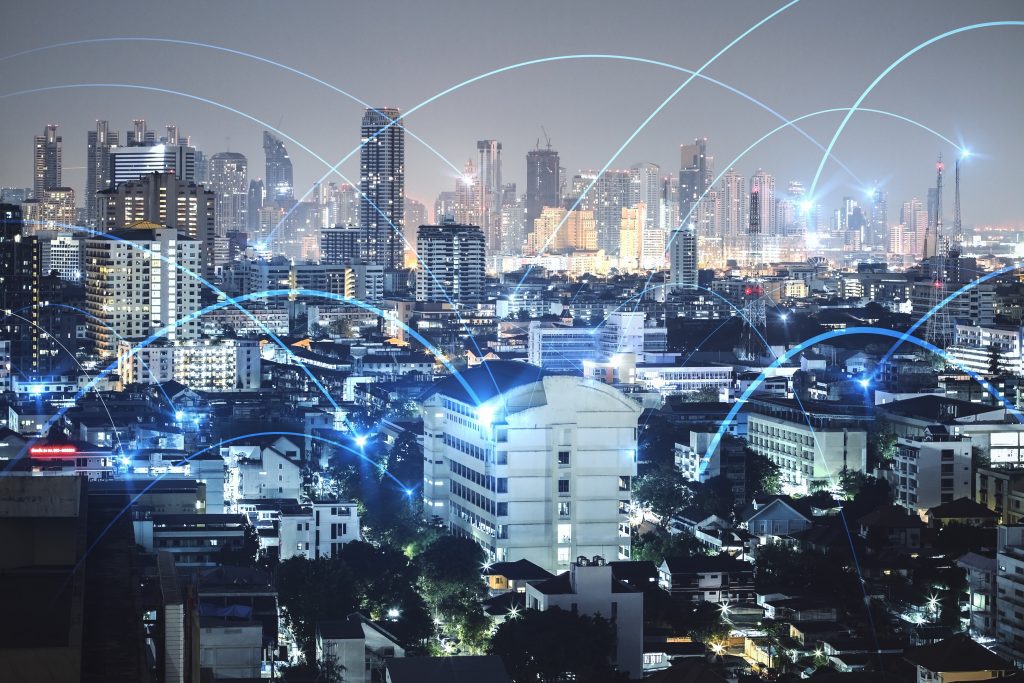
Large infrastructure projects often create ripple effects throughout the broader business ecosystem. Fiber expansion has opened new opportunities for entrepreneurs and smaller companies operating in adjacent industries.
Construction firms, engineering consultants, and equipment manufacturers all play roles in building fiber networks. Companies such as Corning, a major producer of fiber optic cable, have benefited significantly from the global broadband expansion.
Software providers have also entered the ecosystem by developing tools that help telecom operators manage network planning, installation logistics, and maintenance. Network management platforms allow providers to monitor fiber performance and identify service disruptions quickly.
Beyond the infrastructure itself, the availability of high speed connectivity supports entirely new categories of businesses. Remote work platforms, cloud based startups, and data intensive services rely heavily on fiber networks to operate efficiently.
Entrepreneurs building digital companies often take broadband access for granted, yet the infrastructure behind that connectivity is the result of massive capital investment and long term planning.
Government policy has also played a role in accelerating fiber investment. Many countries view broadband access as critical infrastructure, similar to transportation or energy systems.
In the United States, federal initiatives aimed at expanding broadband access have directed billions of dollars toward infrastructure development. The goal is to connect rural and underserved communities that historically lacked reliable high speed internet.
These programs create incentives for telecom providers to extend fiber networks beyond dense urban markets. Public funding can offset a portion of construction costs, making projects economically viable in areas where private investment alone might not justify the expense.
For telecom companies, public funding can significantly influence strategic decisions about where and when to expand networks. Entrepreneurs watching these developments often gain insights into how public policy shapes infrastructure investment across industries.
Looking ahead, the demand for fiber infrastructure appears likely to continue growing. Data consumption trends show little sign of slowing, and emerging technologies may accelerate the need for high capacity networks even further.
Artificial intelligence workloads, cloud computing services, and real time data applications require robust connectivity between data centers and end users. Companies such as Equinix operate global data center networks that depend heavily on fiber connectivity to move massive volumes of information across continents.
In addition, smart cities, autonomous transportation systems, and connected industrial equipment will all require reliable high bandwidth communication networks. Fiber provides the physical infrastructure that allows these technologies to operate efficiently.
While the economics of fiber deployment may fluctuate with interest rates and capital markets, the strategic importance of digital infrastructure remains clear. Telecom providers investing today are positioning themselves for decades of data driven economic activity.
The massive investment in fiber networks illustrates how large infrastructure projects shape the future of entire industries. Telecom providers are committing capital despite long payback timelines, shifting interest rate environments, and intense competition. Their confidence comes from a simple reality: the global economy runs on data, and fiber is the most efficient way to move that data.
For entrepreneurs and business leaders, the fiber expansion story highlights the importance of thinking beyond short term cycles. The most transformative infrastructure investments rarely produce immediate returns. Instead, they create the foundation upon which future innovation takes place. In many ways, the fiber cables being installed beneath streets today may become as essential to tomorrow’s economy as highways and power grids were to the last century.