Meetings are supposed to help businesses move forward. They bring people together, create opportunities to exchange information, resolve disagreements, and make decisions. Yet somewhere along the way, many organizations have…
Read More...


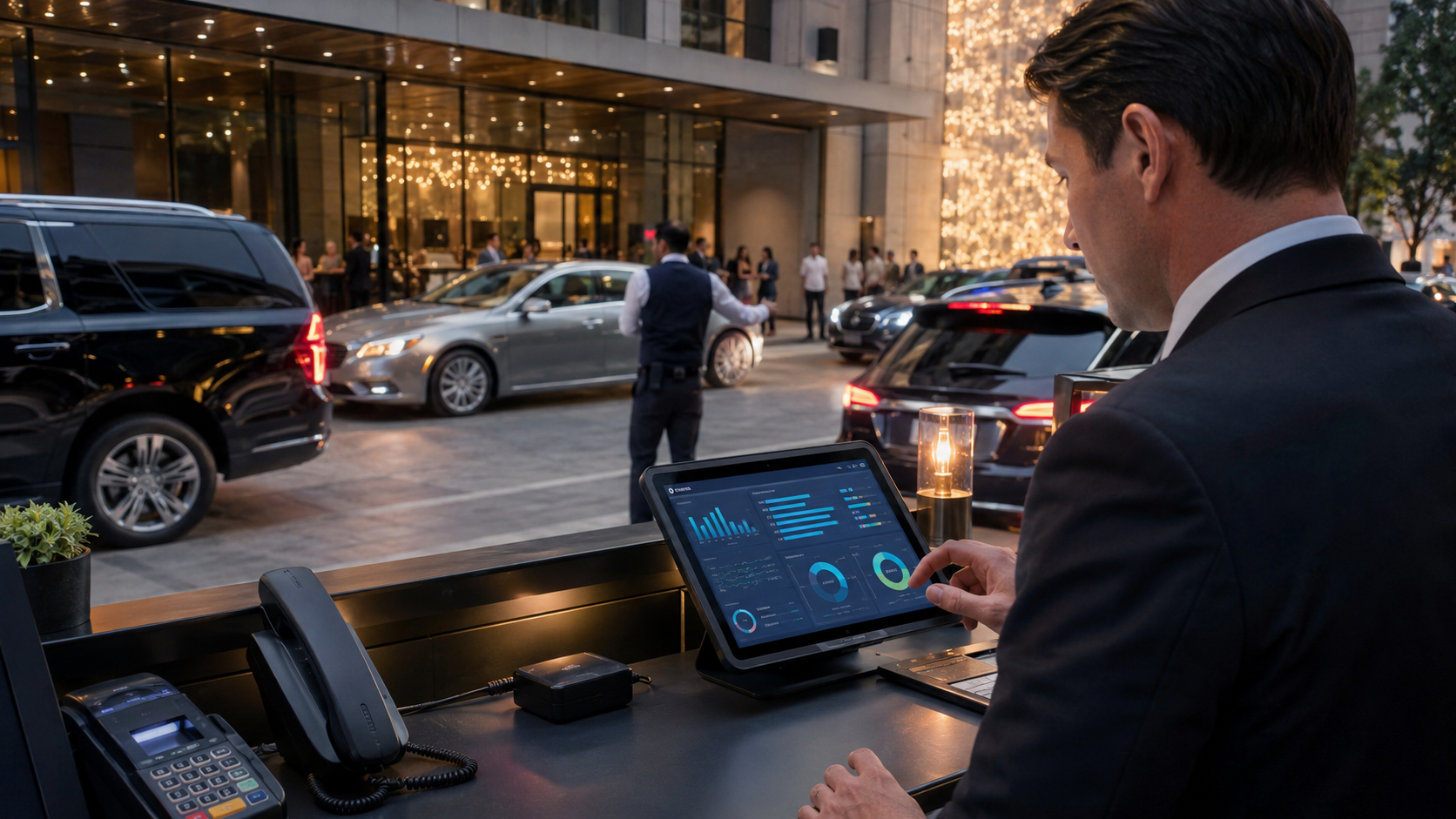


Valet Parking used to be viewed as a simple convenience service. A guest pulled up to a hotel, restaurant, hospital, casino, residential tower, or event venue, handed over the keys, received a paper ticket, and expected the vehicle to be returned quickly and safely. The service was mostly judged by speed, courtesy, appearance, and trust. If the car came back without damage and the guest did not wait too long, the operation was considered successful.
That basic customer expectation still exists, but the business behind valet parking has changed. Modern valet operators are no longer just moving vehicles from a curb to a parking space. They are collecting information about arrival times, departure patterns, guest behavior, staffing levels, wait times, vehicle flow, damage claims, payment activity, repeat visits, and property demand. Each vehicle creates a small data point. When those data points are gathered over time, they can become a meaningful business asset.
This shift matters because valet parking sits at the intersection of hospitality, real estate, transportation, customer experience, and technology. The curb is no longer just a place where a car stops. It is a high value operating point where service, revenue, risk, labor, and information all meet.
For decades, valet parking depended heavily on handwritten tickets, clipboards, cash drawers, key boxes, walkie talkies, and the instincts of an experienced manager. A strong valet manager could often feel when a rush was about to happen. They knew which events created heavy traffic, which restaurants caused late night pickup pressure, and which hotel check in windows required extra staff.
That kind of experience still has value, but the old model had obvious limits. Paper tickets could be lost. Handwriting could be hard to read. Vehicle damage disputes often depended on memory. Staffing decisions were sometimes based on habit rather than actual demand. Property owners had limited visibility into what was happening outside their front door unless there was a major complaint.
Modern valet systems are changing that. Companies such as TEZ Technology, O Valet, and FLASH have helped move parking and valet operations into a more digital environment. These systems can support digital tickets, mobile payments, vehicle photos, customer communication, reporting, and operational dashboards. The result is a business that looks simple to the guest but becomes much more measurable behind the scenes.
Each valet transaction tells a story. A guest arrives at a certain time, at a specific property, in a particular type of vehicle, for a specific purpose. The guest may be checking into a hotel, attending a wedding, visiting a doctor, dining at a restaurant, shopping at a luxury retail center, or arriving home at a residential building. The vehicle is checked in, parked, tracked, requested, retrieved, paid for, and released.
One transaction may not seem very important. Hundreds or thousands of transactions over time can reveal patterns that are extremely useful. A hotel can learn when guests actually arrive compared to when reservations suggest they might arrive. A restaurant can see which nights create the worst congestion at the front door. A hospital can identify appointment windows that create bottlenecks. A residential tower can learn when residents rely on valet service most often.
This is where valet parking becomes more than a convenience. It becomes a visibility tool. The operator can help the property owner understand real behavior, not just assumptions. When a business knows when vehicles arrive, how long they stay, how quickly they are returned, and where delays happen, it can make better decisions about labor, layout, pricing, customer service, and vendor performance.
Labor is one of the largest expenses in valet parking. If a location is understaffed, guests wait too long and the property experience suffers. If a location is overstaffed, margins shrink. That matters even more in a business environment where higher borrowing costs, wage pressure, insurance costs, and tighter operating budgets continue to affect owners and operators.
Data allows valet managers to staff based on actual demand rather than rough expectations. Instead of simply saying Friday nights are busy, an operator can review check in volume, vehicle retrieval volume, average wait times, event calendars, weather conditions, reservation patterns, and prior staffing performance. That information can help managers schedule more accurately.
A hotel may learn that the heaviest staffing need is between 4:30 p.m. and 7:00 p.m., not all evening. A restaurant may discover that Sunday brunch creates more retrieval pressure than Saturday dinner because guests leave in tighter clusters. A hospital may find that morning arrivals are predictable, but afternoon pickups create the real operational strain.
This type of information helps reduce waste without damaging service quality. For business owners, that is one of the most important lessons. Data does not have to be complicated to be useful. Sometimes the most valuable information is simply knowing when demand actually happens and matching labor to that reality.
The first and last interaction with a property often happens at the curb. A guest may forget the lobby music or the color of the walls, but they will remember waiting too long for the car in the rain. They will remember confusion at pickup. They will remember whether the attendant was professional, whether the payment process was easy, and whether the vehicle was returned in the same condition.
Companies such as LAZ Parking and SP Plus operate in a market where parking is increasingly connected to hospitality, property management, and mobility services. Their role is not only to manage vehicles. It is also to support the experience of the property they serve.
Digital valet tools can improve that experience in practical ways. Text based vehicle requests can reduce crowding at the stand. Digital payments can reduce cash handling and speed up departure. Photos taken at arrival can reduce disputes. Automated timestamps can create accountability. Real time status updates can make guests feel informed rather than ignored.
Customers do not always expect perfection. They do expect communication. When a guest knows the car has been requested, knows the valet team is working on it, and has a smoother payment process, the overall experience can improve even if the wait is not instant.
Traditional valet pricing was often simple. A property charged a flat rate, offered complimentary valet, or included the service as part of a broader hospitality experience. That model still exists, but pricing is becoming more strategic as operators collect more information.
Data can show which times generate the highest demand, which events create premium value, which guests are repeat users, which accounts require validation, and which locations may support VIP service or prepaid parking. This is similar to what has already happened in hotels, airlines, rideshare, and event ticketing. Once demand can be measured, pricing can become more informed.
That does not mean every valet operator should use aggressive variable pricing. In some settings, such as hospitals or residential buildings, that approach could feel inappropriate. However, business owners should still recognize that pricing decisions are stronger when they are supported by actual usage patterns.
A restaurant may learn that complimentary valet helps attract higher spending customers. A hotel may discover that its overnight valet rate is below market demand. An event venue may find that prepaid parking reduces arrival confusion. A luxury retail center may decide that valet should remain complimentary because the service supports a higher end customer experience inside the property.
The value is not always in charging more. Sometimes the value is understanding why the service exists, what it contributes to the larger business, and whether the current pricing model supports the property strategy.
Valet parking carries risk. Vehicles can be damaged. Keys can be misplaced. Guests can dispute scratches, dents, mileage, timing, or personal property concerns. Employees may be handling expensive vehicles during high pressure periods. Without documentation, a small disagreement can become expensive and time consuming.
Modern valet technology helps create a clearer record. Photos at arrival, employee assignments, timestamps, location tracking, claim notes, and retrieval logs can all help document what happened. That information can protect the guest, the operator, the property owner, and the insurance relationship.
This is especially important as vehicle values remain high and many cars include advanced sensors, cameras, specialty finishes, electric systems, and expensive replacement parts. A small incident can become a large claim. A clear digital record can make a major difference when the operator needs to review what actually occurred.
For entrepreneurs, the broader lesson is simple. A service business becomes stronger when operations are measurable. Good intentions are not enough. A company needs records, procedures, training, and systems that create accountability.
Parking is no longer separate from the rest of transportation. Consumers use apps to reserve parking, find spaces, pay digitally, request rides, charge electric vehicles, and navigate cities. Companies such as ParkMobile, Parking.com, and Passport show how parking has moved deeper into mobile payments, digital access, and transportation technology.
Valet parking is part of that same shift. A hotel guest may arrive in a personal vehicle, leave later in a rideshare, request the car the next morning, and need electric vehicle charging overnight. A restaurant may need to manage valet traffic, rideshare pickup, food delivery drivers, private events, and pedestrian traffic in the same curb area.
That makes curb management more complex. The valet stand now competes with delivery vehicles, rideshare drivers, shuttle buses, bike lanes, municipal restrictions, and pedestrian flow. Data helps properties understand how the curb is actually being used.
This is especially important in dense cities, entertainment districts, airports, hotels, medical campuses, and mixed use developments. The question is no longer only where the cars should be parked. A better question is how people, vehicles, payments, and time move through the property.
The valet parking industry offers a useful business lesson. Some industries look old fashioned until technology reveals hidden value. Valet parking may not seem as exciting as artificial intelligence, fintech, or software, but it has many of the ingredients entrepreneurs look for. It involves recurring demand, customer interaction, real estate, logistics, labor management, payments, risk control, and operational data.
That combination can create opportunity. A founder might build software for valet operators. A parking company might use analytics to win larger contracts. A hospitality group might use valet data to improve guest satisfaction. A real estate owner might review parking patterns before redesigning an entrance or repositioning a property.
Entrepreneurs should also notice how technology changes the sales conversation. A valet company that only says it parks cars is competing mostly on labor and price. A valet company that can show reduced wait times, better documentation, improved staffing, digital payments, customer communication, and monthly operating reports is selling a more valuable service.
That is a different business model. It changes the conversation from cost to value. The property owner is no longer only buying attendants. The property owner is buying a more organized front door, better customer flow, improved records, and information that can support better decisions.
Even with better software, valet parking remains a people business. A professional greeting, careful vehicle handling, clear communication, and calm service under pressure still matter. Technology does not replace hospitality. It supports it.
The best operators will likely be those that combine both sides. They will use data to plan staffing, track vehicles, reduce claims, and improve reporting. At the same time, they will train attendants to treat guests well, manage difficult moments, communicate clearly, and protect the property brand.
A bad valet experience still feels personal. A guest does not blame the software when the car takes too long. They blame the property. That is why business owners should view valet parking as part of brand management, not just an outsourced parking function.
Valet Parking has quietly become a data business because the simple act of parking a car now creates information that can improve operations, reduce risk, support pricing decisions, and shape the customer experience. The companies that understand this shift will treat valet service as more than a convenience. They will treat it as a business intelligence point at the front door. For entrepreneurs and business owners, the bigger lesson is clear. Any service that happens repeatedly, involves customers, and creates operational friction can become more valuable when the right data is captured and used well.