
Commercial landscaping was once viewed primarily as a maintenance service. Property owners hired contractors to mow lawns, trim hedges, remove weeds, and keep outdoor areas presentable. Although those responsibilities remain…
Read More...


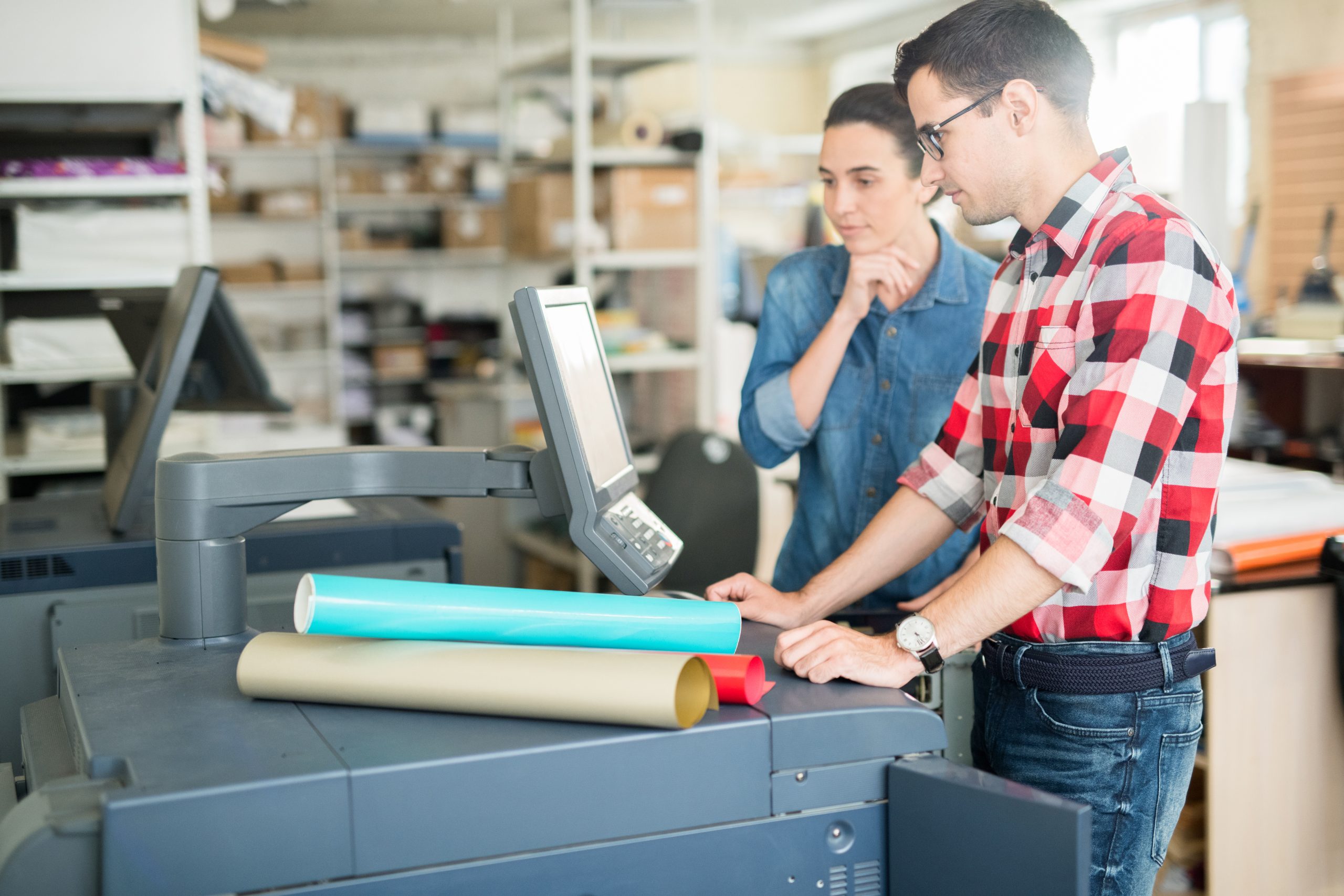


Local print shops used to be viewed as places where business owners went for business cards, flyers, menus, banners, postcards, brochures, and last minute event materials. That work still matters, but the role of the neighborhood printer has changed. Today, many local print shops are becoming marketing partners for small businesses that need practical, visible, and affordable ways to reach customers in a noisy digital world.
That shift is important for entrepreneurs and business owners because marketing has become more expensive, more fragmented, and more difficult to track. Digital ads can be effective, but they are also competitive. Email inboxes are crowded. Social media algorithms change constantly. Search advertising costs can rise quickly, especially in local service categories. At the same time, higher borrowing costs have made many companies more careful about how they spend money. When interest rates are elevated, business owners often hesitate before investing in large campaigns, hiring new staff, buying equipment, or signing long term contracts.
That environment has created an opening for print shops that understand modern marketing. A local printer that can combine design, physical production, direct mail, signage, branded materials, QR codes, landing pages, and campaign planning can become far more valuable than a vendor that simply takes orders. The modern print shop is not just selling paper. It is selling visibility, credibility, and customer attention.
Print did not disappear when digital marketing grew. It changed. The old model was based on large runs, generic messaging, and limited tracking. A business might order thousands of flyers, distribute them broadly, and hope people responded. That approach still exists, but it is no longer the only option.
Modern print campaigns can be more targeted. A business can send postcards to specific neighborhoods, create door hangers for selected communities, print event materials for a trade show, or prepare high quality leave behind packets for sales meetings. A restaurant can use printed inserts to promote catering. A real estate office can send market update postcards. A medical office can mail appointment reminders or service announcements. A private security company can distribute professional brochures to property managers, construction firms, retail centers, schools, and homeowner associations.
This is where the SEO phrase Local Print Private Security can fit naturally into the business conversation. Private security firms often need printed materials that communicate trust, professionalism, licensing, service areas, patrol options, emergency coverage, and industry experience. A local print shop that understands that market can help security companies build a physical marketing package that supports sales calls, networking, and local outreach.
Print also has a credibility advantage. A well designed brochure, proposal folder, or branded packet can feel more substantial than a digital ad. When a business owner hands something to a prospect, it creates a different type of interaction. The prospect can keep it, pass it along, place it on a desk, or review it later. That does not mean print is better than digital in every situation. It means print can support digital and make the overall campaign feel more complete.
The strongest print shops are no longer waiting for customers to upload a file and choose a quantity. They are asking better questions. Who is the customer trying to reach? What action should the recipient take? Is the campaign meant to generate calls, appointments, store visits, website traffic, or brand awareness? Should the piece include a QR code, coupon, unique landing page, or dedicated phone number?
This consultative approach gives local print shops a chance to compete against larger online platforms. Companies like Vistaprint, MOO, and Canva have made it easy for businesses to design and order printed materials online. That convenience is real, and many small businesses use those platforms. However, a local shop can offer something different: personal advice, faster local coordination, color checks, paper recommendations, local delivery, and campaign ideas based on the community.
A business owner may not know whether a matte postcard, glossy flyer, folded brochure, rack card, or oversized mailer is the best choice. A local print shop can explain the difference. It can also help the customer avoid mistakes such as using tiny text, weak calls to action, poor contrast, low resolution images, or generic messaging that does not speak to a real buyer.
This matters because many entrepreneurs are good at their trade but not trained in marketing. A plumber, law firm, gym owner, contractor, security company, restaurant, or medical practice may know its service well but struggle to turn that value into a campaign. A print shop that can bridge that gap becomes a marketing resource, not just a production facility.
Direct mail has also changed. It is no longer only a physical postcard arriving in a mailbox. Tools from USPS give business mailers ways to connect physical mail with digital impressions. USPS Informed Delivery, for instance, gives eligible users digital previews of mail and allows business mailers to add interactive campaign elements. That means a direct mail piece can appear in both the mailbox and the recipient’s digital mail preview.
Companies like Lob have also built technology around direct mail automation, helping businesses connect printed mail with data, personalization, and campaign workflows. Local print shops do not have to become software companies, but they do need to understand how print fits into a broader marketing system.
For a local business, this creates interesting possibilities. A dental practice can send a postcard with a QR code leading to an appointment page. A roofing company can mail storm season reminders to specific ZIP codes. A local gym can promote a limited membership offer. A private security firm can send property managers a professional mailer that links to a page about patrol services, fire watch, construction site security, or retail loss prevention.
The key is that the printed piece should not stand alone. It should guide the recipient toward the next step. That step might be calling, scanning, booking, visiting, requesting a quote, or downloading more information. A modern print shop can help design that journey.
Local print shops also have an advantage in signage. Online ads can disappear in seconds. A sign can sit in front of a building, on a vehicle, at a job site, inside a lobby, or at an event for weeks, months, or years. That makes signage one of the most practical forms of local marketing.
Companies like FASTSIGNS and AlphaGraphics show how print, signage, and marketing services can overlap. A local shop can learn from that model while still keeping the personal attention of a smaller business. Vehicle graphics, window decals, wall signs, trade show displays, yard signs, directional signage, and branded interiors all help businesses look more established.
This is especially useful for service businesses. A contractor with clean vehicle lettering looks more credible at a job site. A security patrol vehicle with professional graphics can strengthen brand recognition. A new restaurant with attractive window graphics can capture foot traffic. A medical office with polished interior signage can create a better patient experience.
The opportunity for print shops is to explain signage as part of a customer’s sales process. A sign is not just decoration. It tells people where to go, what the business does, whether the company is professional, and whether the brand feels trustworthy.
One of the biggest changes in print marketing is personalization. Customers are used to digital experiences that feel customized. Print can now move in that direction as well. Variable data printing allows businesses to personalize names, locations, offers, images, and messages across a campaign.
A local insurance agency can send different versions of a mailer to homeowners, renters, and business owners. A real estate agent can send neighborhood specific market updates. A school can create segmented enrollment materials for different grade levels. A private security business can use different messaging for retail centers, apartment communities, construction sites, and corporate offices.
Personalization does not have to be complicated. Even small changes can make a printed piece feel more relevant. A postcard that references a specific neighborhood can outperform a generic citywide message. A brochure that speaks directly to property managers will usually be stronger than one that tries to reach everyone.
Local print shops can guide customers through those decisions. They can help business owners think through audience segments, offer structure, messaging, and design. That advice is valuable because personalization done poorly can feel awkward, but personalization done well can make marketing feel more direct and useful.
Another area where print shops can grow is content support. Many business owners know they need better marketing materials but struggle with wording. They may have a logo, a phone number, and a basic website, but not a clear message. A modern print shop can help organize the content on brochures, menus, postcards, folders, sales sheets, and trade show materials.
This does not mean every print shop needs to hire a full creative agency. It does mean that shops can offer light copywriting, messaging templates, and campaign planning. They can help customers clarify the headline, offer, service descriptions, proof points, and call to action.
Consider a local private security firm. A weak brochure might say, “We provide security services. Call us today.” A stronger brochure might separate services by customer type: construction site security, retail security, fire watch, mobile patrol, event security, and commercial property coverage. It might include licensing information, response availability, service area, client types, and a clear request a quote call to action.
That type of improvement can make the printed material more useful for sales. It also helps the business owner feel more confident when meeting prospects.
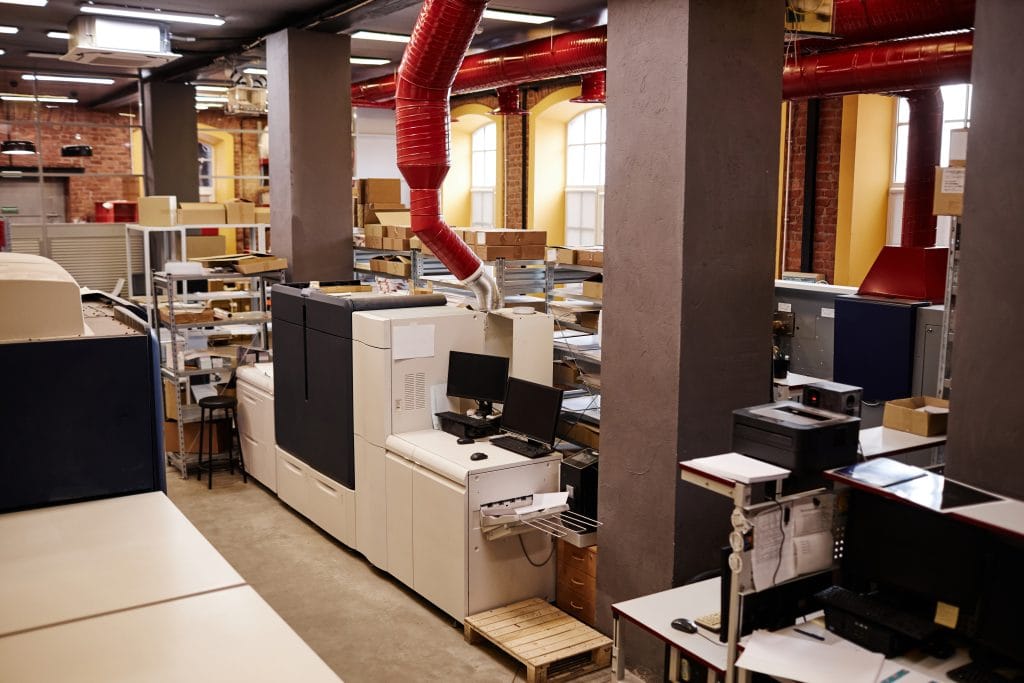
Print shops are also adopting more technology inside their own operations. Online proofing, digital storefronts, web to print systems, automated quoting, customer portals, and production management tools can make the business more efficient. Companies such as Printful and 4over have shown how print fulfillment and technology can work together at scale.
For local shops, the challenge is balancing technology with personal service. A small business customer may appreciate online ordering for repeat jobs, but still want a real person available for design questions or urgent needs. The best model may be a hybrid: make routine orders easy online, while offering consultative help for campaigns, branding, signage, and larger projects.
Technology also helps print shops manage margins. Paper, ink, labor, equipment, rent, and delivery costs can move quickly. If a shop is not tracking job costs carefully, it can win work and still lose money. Better estimating systems, digital workflows, and production planning can help protect profitability.
This is especially important in a higher rate economy. If financing new equipment is more expensive, print shops need to be careful about capital investments. Buying a new press, cutter, wide format printer, or finishing system may make sense, but only if there is enough demand and a clear payback path. Some shops may choose partnerships instead, outsourcing certain jobs while keeping customer relationships in house.
Many customers care about sustainability, but they also care about quality and cost. Print shops can respond by offering recycled paper options, responsible sourcing, lower waste production methods, right sized print runs, and print on demand options. The point is not to make every campaign sound like an environmental campaign. The point is to help customers avoid waste and order what they actually need.
Print on demand can be useful for businesses that do not want boxes of outdated brochures sitting in a storage room. Smaller runs also allow companies to update offers, pricing, staff names, photos, and service details more often. That flexibility makes print more attractive for businesses that move quickly.
Quality still matters. A poorly printed brochure can hurt a brand. A flimsy business card can send the wrong message. A blurry banner can make a company look careless. Local print shops can explain why paper weight, finish, color accuracy, trimming, and layout affect perception.
In competitive industries, perception matters. A high end restaurant, law office, medical practice, real estate firm, or private security company may lose credibility if its printed materials look cheap. Good print does not automatically create trust, but bad print can damage it quickly.
For entrepreneurs, the reinvention of local print shops creates several business opportunities. Someone entering this market does not have to compete only on commodity printing. They can focus on a niche, such as real estate marketing, restaurant materials, contractor signage, private security campaigns, medical office print packages, event materials, or local direct mail.
Niche positioning can make the business easier to market. A general print shop competes with everyone. A print and marketing partner for local service businesses has a clearer audience. A shop that specializes in grand openings, franchise locations, or property management materials can build repeatable packages.
There is also room for partnerships. A print shop can work with web designers, photographers, mailing list providers, promotional product vendors, event planners, and local chambers of commerce. It can become part of a broader business ecosystem. A startup may need a logo, website, signs, business cards, brochures, social graphics, and launch mailers. A local print shop that can coordinate several of those needs becomes a valuable partner at the exact moment the business is trying to look credible.
Entrepreneurs should also pay attention to service. Many business owners are tired of confusing online ordering, poor communication, missed deadlines, and inconsistent quality. A local print shop that answers quickly, explains options clearly, and delivers reliable work can stand out.
Local print shops are reinventing themselves because the market has changed. Business owners still need brochures, signs, postcards, business cards, banners, and branded materials, but they also need strategy, speed, personalization, and practical marketing support. In a period where interest rates can make companies more cautious with spending, print shops that offer clear campaign packages and measurable next steps can become more attractive to entrepreneurs and established businesses alike. The future of local print is not just ink on paper. It is the combination of physical marketing, digital connection, local knowledge, and business minded advice. For print shop owners, that is a chance to move up the value chain. For business owners, it is a reminder that modern marketing does not have to be only digital to be effective.