
For many entrepreneurs, starting a company requires years of sacrifice, long working hours, financial risk, and personal commitment. Building the business can become such a consuming priority that relatively little…
Read More...





Commercial landscaping was once viewed primarily as a maintenance service. Property owners hired contractors to mow lawns, trim hedges, remove weeds, and keep outdoor areas presentable. Although those responsibilities remain important, the industry is undergoing a significant transformation. Landscaping has become a broader business service involving property value, environmental management, technology, infrastructure maintenance, and customer experience.
For entrepreneurs and established landscaping companies, this evolution presents opportunities that extend far beyond traditional lawn care. Commercial clients increasingly expect contractors to understand the operational needs of their properties, recommend cost-effective improvements, and provide services that contribute to long-term asset management.
Office buildings, retail centers, industrial facilities, healthcare campuses, hotels, and multifamily communities all have different landscaping requirements. As property owners become more sophisticated about managing their outdoor environments, landscaping companies that can offer specialized expertise are finding additional ways to generate revenue and build lasting client relationships.
The industry is no longer simply competing over who can maintain a property at the lowest price. Increasingly, the more important question is which company can deliver measurable value throughout the life of the property.
One of the most important developments in commercial landscaping is its growing connection to overall property management. Landscaping contractors are being asked to consider how outdoor spaces affect building operations, tenant satisfaction, pedestrian movement, safety, and the appearance of commercial assets.
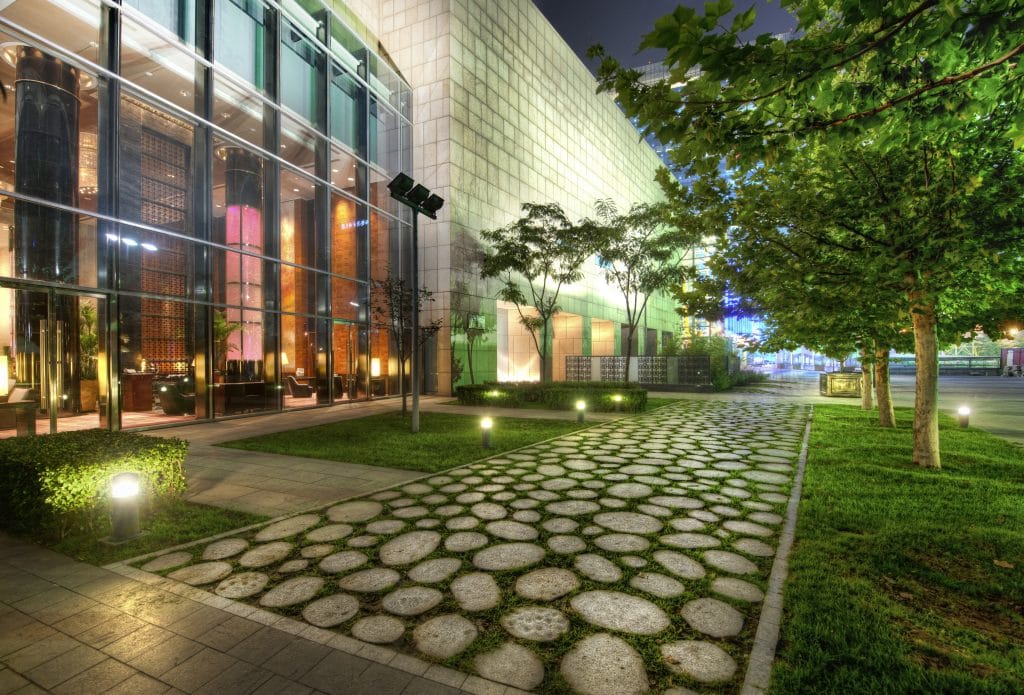
A well-maintained exterior can influence how customers perceive a retail establishment or how prospective tenants evaluate an office complex. Landscaping that appears neglected can create an unfavorable impression before someone enters a building. Conversely, attractive entrances, properly maintained walkways, healthy vegetation, and thoughtfully designed gathering areas contribute to a more professional environment.
Commercial landscaping companies are responding by broadening their service offerings. BrightView, a major commercial landscaping provider, offers services spanning landscape design, development, maintenance, and property enhancements. This approach reflects how landscaping services can be integrated throughout the ownership and operating life of a commercial property.
For landscaping entrepreneurs, the business implications are substantial. Rather than competing exclusively for routine maintenance contracts, providers can position themselves as ongoing property service partners. A contractor familiar with a property’s drainage issues, irrigation infrastructure, seasonal requirements, and landscape history may be better positioned to recommend improvements than a company hired for isolated maintenance visits.
This relationship also creates opportunities for recurring service agreements, additional projects, and longer customer retention. However, delivering that value requires more than equipment and a maintenance crew. Contractors need reliable scheduling, documented service procedures, knowledgeable employees, and consistent communication with property managers.
Environmental considerations are reshaping commercial landscaping decisions, particularly for properties with substantial outdoor areas. Commercial customers are paying closer attention to water consumption, soil conditions, plant selection, stormwater runoff, and the resources required to maintain attractive landscapes.
Traditional landscaping designs sometimes relied heavily on expansive lawns, ornamental plants requiring frequent irrigation, and maintenance practices that consumed considerable amounts of water and fuel. While these approaches remain common, property managers are increasingly evaluating alternatives that can reduce ongoing resource consumption without sacrificing appearance.
Drought-tolerant landscaping, native vegetation, efficient irrigation systems, improved soil management, and strategically placed shade trees can become part of a property’s long-term maintenance strategy. These improvements may also reduce the frequency of certain maintenance activities, depending on climate, plant selection, and site conditions.
The U.S. Environmental Protection Agency’s WaterSense program identifies landscape irrigation as a major component of outdoor water consumption at many commercial and institutional facilities. Its guidance highlights opportunities to improve irrigation practices and reduce unnecessary water use.
For landscaping businesses, sustainability can become a distinct service category rather than merely a marketing message. Contractors can offer irrigation assessments, landscape conversions, planting plans, water management recommendations, and ongoing monitoring.
There is also an important sales consideration. Commercial property owners may be more receptive when environmental improvements are presented alongside practical operating benefits. A proposal showing potential maintenance savings, estimated water reductions, installation costs, and a reasonable payback period can be more persuasive than one relying entirely on environmental terminology.
Technology is influencing both the work performed on commercial properties and the business systems used to manage landscaping operations. What was traditionally a labor-intensive industry is becoming more dependent on digital tools, automated equipment, and better information management.
Smart irrigation controllers can adjust watering schedules according to weather conditions and landscape requirements. Remote monitoring systems can help identify abnormal water usage or potential equipment failures. GPS-enabled fleet tracking, digital scheduling platforms, and mobile work order systems allow companies to monitor crews, organize assignments, and document completed services.
These capabilities are particularly valuable for contractors managing numerous commercial locations. A company responsible for several office parks or retail centers may need to coordinate crews across different service schedules, maintain detailed records, and respond quickly to property manager requests.
Technology can also improve accountability. Instead of relying exclusively on verbal updates, contractors can provide photographs, completed work reports, inspection findings, and maintenance recommendations. This documentation helps customers understand what they are purchasing and provides contractors with a clearer record of their performance.
Suppliers are participating in this transformation as well. SiteOne Landscape Supply provides professional landscaping products across categories that include irrigation, outdoor lighting, hardscapes, and landscape maintenance. Its digital resources and contractor services illustrate how the industry’s supporting infrastructure extends beyond traditional equipment purchasing.
Nevertheless, technology adoption should be guided by operational value. Investing in expensive systems without a clear business purpose can create additional overhead. Smaller landscaping companies may benefit more from improving scheduling, estimating, invoicing, and customer communications before purchasing sophisticated automated equipment.
The expansion of commercial landscaping has created opportunities for contractors to develop expertise in services that require more technical knowledge than routine lawn maintenance.
Stormwater management is one such area. Commercial properties often contain parking areas, paved surfaces, landscaped islands, and drainage infrastructure that influence how rainwater moves across a site. Poor drainage can damage vegetation, contribute to erosion, and create problems near walkways or buildings.
Landscaping contractors with appropriate training can participate in designing, installing, or maintaining rain gardens, bioswales, retention area vegetation, and other landscape features that help manage runoff. Depending on the work, specialized engineering, permits, or licensed professionals may be required.
Tree care represents another opportunity. Mature trees can be valuable property assets, but they require periodic inspections, pruning, disease management, and sometimes removal. Companies that develop qualified arboricultural capabilities, or establish relationships with certified specialists, may be able to offer property owners more coordinated services.
Outdoor lighting, landscape renovation, erosion control, seasonal planting programs, and hardscape maintenance can further expand a contractor’s offerings.
Ruppert Landscape illustrates this broader commercial service model through its landscape installation, maintenance, irrigation management, property enhancements, and snow and ice management services.
For entrepreneurs, specialization can be an effective competitive strategy. A smaller business may not have the resources to compete with large regional contractors across every service category. However, becoming known for irrigation performance, commercial tree management, or landscape renovation can create a valuable niche.
Despite technological advances, commercial landscaping remains highly dependent on people. Skilled crews, experienced supervisors, equipment operators, and knowledgeable account managers are central to delivering consistent results.
One challenge for landscaping companies is balancing labor availability with seasonal changes in workload. Spring planting, summer maintenance, autumn cleanup, and winter services can produce different staffing requirements depending on the region.
As landscaping services become more technical, training becomes increasingly important. Employees may need to understand irrigation systems, plant health, equipment safety, customer service, and digital reporting procedures in addition to conventional maintenance work.
Businesses that invest in developing supervisors and retaining experienced personnel may gain advantages in productivity and customer relationships. A property manager who regularly works with the same knowledgeable account representative is less likely to experience the frustration of repeatedly explaining site requirements.
There is also an operational benefit to building a stable workforce. Experienced employees often recognize developing problems before they become expensive repairs. They understand the property, know where equipment is located, and can identify conditions that differ from previous visits.
For business owners, workforce development should therefore be considered part of the company’s growth strategy rather than simply an administrative responsibility.
One of the most attractive characteristics of commercial landscaping is the potential for recurring revenue. Unlike businesses that depend entirely on individual transactions, landscaping contractors can establish maintenance agreements that produce predictable billing over extended periods.
However, recurring revenue does not automatically translate into profitability. Contracts must be priced carefully to reflect labor hours, equipment expenses, materials, transportation, insurance, supervision, and administrative costs.
Underpricing a commercial contract can create financial pressure throughout the agreement, particularly when service expectations are not clearly defined. Additional requests, unexpected site conditions, and increases in maintenance frequency can gradually erode margins.
Successful operators distinguish between routine contracted services and additional billable work. Seasonal landscape renovations, replacement plantings, irrigation repairs, and property enhancements may be separately quoted rather than absorbed into a basic maintenance fee.
Commercial landscaping provider Yellowstone Landscape demonstrates the importance of serving commercial properties through coordinated maintenance and improvement programs. Its business emphasizes the management of multiple landscape requirements for organizations and property owners.
For smaller contractors, the same underlying principle applies. A clearly structured agreement, dependable service, and proactive recommendations can create customer relationships that extend over many years.
From a business valuation perspective, a landscaping company with diversified recurring contracts, documented procedures, capable management, and consistent profitability may also be more attractive to prospective buyers than one dependent on irregular projects or a handful of customer relationships.
Another significant change involves the expectations of commercial customers. Property managers increasingly want evidence that landscaping expenditures are producing satisfactory results.
Appearance still matters, but contractors may also be evaluated on response times, consistency, safety practices, communication, budget management, and the condition of landscape infrastructure.
This creates an opportunity to introduce more structured reporting. A landscaping company might provide quarterly property reviews addressing plant health, irrigation performance, upcoming maintenance requirements, and recommended improvements.
Such reports can help customers plan expenditures while demonstrating the contractor’s understanding of the property. They can also reduce misunderstandings over which activities fall within the contract and which require separate authorization.
Accountability becomes especially important when serving commercial property portfolios. Owners and management companies responsible for multiple locations may prefer contractors capable of applying consistent service standards across different sites.
Rather than simply reporting that a crew completed its scheduled visit, a landscaping company can communicate what was accomplished, what needs attention, and which improvements should be considered next.
That shift from activity-based reporting to value-based communication can become a meaningful competitive distinction.
For entrepreneurs considering a landscaping business, the industry’s evolution offers several possible entry points. Launching a full-service commercial operation requires planning, equipment, employees, insurance, and sufficient working capital. However, a new business does not necessarily need to offer every service immediately.
An entrepreneur with irrigation experience might begin by serving commercial properties that need system inspections, repairs, and water efficiency improvements. Someone with horticultural expertise could specialize in landscape restoration, planting programs, or commercial garden maintenance.
The key is identifying a customer problem that existing providers are not addressing effectively.
New entrants should also recognize that commercial sales often differ from residential landscaping. Decision-makers may include property managers, facility directors, purchasing departments, association boards, or ownership representatives. Contracts can involve competitive bidding, insurance requirements, detailed scopes of work, and longer approval processes.
Building relationships with commercial real estate professionals, construction contractors, and property management organizations can help create access to potential customers.
At the same time, entrepreneurs must resist the temptation to accept every available project. Geographic concentration, profitable contract pricing, reliable staffing, and disciplined cash management are often more valuable than rapid expansion into distant markets.
A company that serves a manageable collection of commercial properties exceptionally well can build the operational foundation needed for sustainable growth.
Commercial landscaping is developing into a more sophisticated industry where business success depends on far more than maintaining attractive lawns. Property owners increasingly view their outdoor environments as operational assets requiring thoughtful management, technical expertise, and dependable service.
For established landscaping companies, the opportunity lies in expanding capabilities while maintaining the quality of their core operations. Irrigation management, landscape improvements, sustainability services, and property reporting can create additional revenue streams and stronger customer relationships.
Entrepreneurs entering the market have an opportunity to build businesses around specialized customer needs rather than competing exclusively on price. Technology, employee training, careful contract management, and strong communication can help smaller operators establish credibility in a competitive marketplace.
The companies most likely to benefit from this shift will be those that recognize commercial landscaping as an ongoing business relationship rather than a series of maintenance visits. As customer expectations continue to evolve, the ability to combine attractive outdoor spaces with practical property management solutions will become an increasingly important measure of success.