
Commercial landscaping was once viewed primarily as a maintenance service. Property owners hired contractors to mow lawns, trim hedges, remove weeds, and keep outdoor areas presentable. Although those responsibilities remain…
Read More...


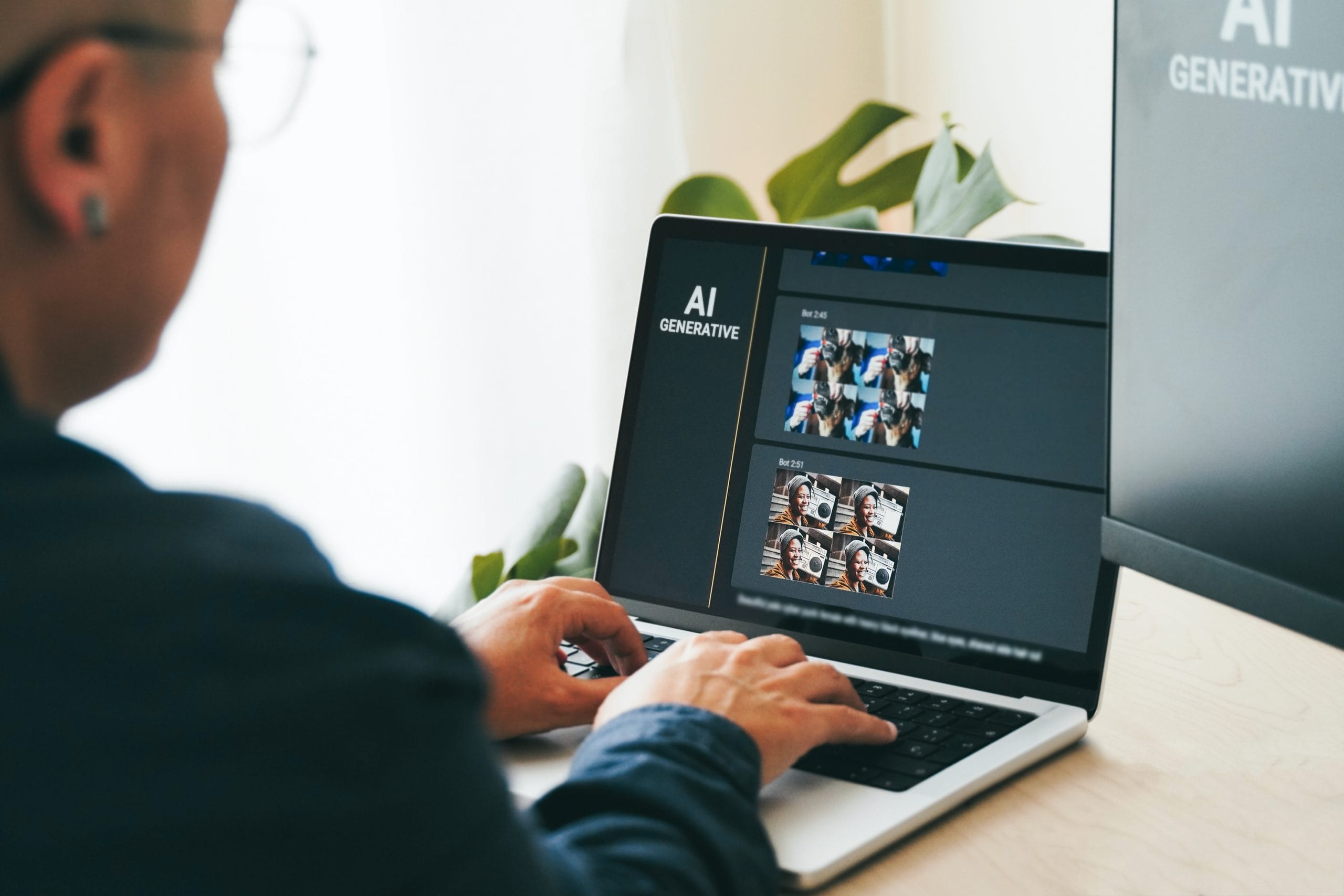


Artificial Intelligence has often been associated with industries like finance, healthcare, and logistics, but its influence on creative sectors has grown at a staggering pace. From graphic design and video editing to music composition and content creation, AI is redefining what it means to be creative in business. Entrepreneurs and established companies alike are discovering that AI can serve as both a collaborator and a tool that elevates human creativity rather than replacing it outright.
One of the most fascinating aspects of this transition is how quickly professionals are adopting AI as part of their daily workflows. Graphic designers are now integrating platforms like Canva, which uses AI-driven design suggestions, while filmmakers are experimenting with generative AI tools to speed up editing and visual effects. The expansion is no longer a matter of if but how and to what extent.
For business owners, this transformation offers both a challenge and an opportunity. The challenge lies in adapting quickly enough to remain competitive. The opportunity comes from leveraging AI to streamline processes, reduce costs, and push creative boundaries further than traditional methods allow.
Design has historically relied on human intuition, taste, and an eye for visual storytelling. AI is not replacing these qualities but enhancing them. Consider how Adobe has integrated AI through its Sensei platform, allowing users to automatically adjust lighting, replace backgrounds, or generate templates in seconds. For small businesses or startups with limited budgets, this reduces the barrier to producing professional-quality branding materials.
The use of AI-driven branding tools also means that entrepreneurs no longer need to wait weeks for agencies to produce visual content. A single founder can now develop logos, social media visuals, and promotional material within hours. While this has sparked debates about originality and authenticity, it has also given rise to faster experimentation. Businesses can test brand identities, color schemes, or packaging designs and quickly pivot based on customer feedback.
This shift does not eliminate the need for human designers but rather changes their role. Designers are becoming curators of AI output, refining what machines generate and injecting the emotional intelligence and cultural awareness that AI lacks. In this hybrid model, the human AI collaboration produces results that are often more innovative than either could achieve alone.
The entertainment industry has been one of the most visible arenas for AI innovation. Musicians are experimenting with AI platforms such as Aiva, which can generate music compositions based on user inputs. Similarly, filmmakers are beginning to use AI for pre-visualization, script analysis, and even deepfake technology in controlled, ethical contexts.
Streaming giants like Netflix rely heavily on AI algorithms to recommend content, but they are also exploring generative tools to optimize production. By analyzing script elements, audience preferences, and market trends, AI can help determine which projects are more likely to succeed. This could dramatically alter investment decisions in the entertainment sector.
For entrepreneurs in these spaces, AI lowers barriers to entry. Independent filmmakers can access editing tools that were once exclusive to large studios, while small music producers can compose professional tracks without expensive studio sessions. The playing field is leveling, allowing smaller players to compete with industry giants.

One of the most debated areas of AI expansion is written content. Platforms such as Jasper and Copy.ai allow businesses to generate marketing copy, product descriptions, and even long-form articles. While concerns about plagiarism, creativity, and over reliance on machines remain, these tools provide clear value in terms of efficiency and cost reduction.
For entrepreneurs running lean operations, AI-generated content can cover routine writing tasks, freeing human talent to focus on strategy, originality, and storytelling. A small e-commerce business might use AI to generate SEO-friendly product descriptions while reserving human input for brand voice and customer engagement.
The business model around AI content is also evolving. Agencies are beginning to offer hybrid services where AI generates drafts and human writers refine them. This mirrors what is happening in design and other creative fields: the human AI partnership is not about substitution but augmentation.
The rise of AI in creative industries presents enormous opportunities for new business models. Entrepreneurs can now build ventures that would have required massive upfront investment just a decade ago. Consider the growing field of AI-assisted marketing agencies, or the platforms that train AI to mimic a company brand voice. These services create scalable businesses that can serve global clients with limited staff.
Another opportunity lies in customization. Consumers increasingly expect personalized experiences, and AI is uniquely capable of delivering on that demand. Startups that specialize in personalized digital art, music, or clothing design are finding strong traction among younger audiences who value individuality. For instance, companies like Printful use AI-driven design recommendations for customized apparel, giving entrepreneurs tools to stand out in saturated markets.
Beyond consumer products, AI is also driving innovation in professional services. Law firms, consulting agencies, and advertising firms are beginning to experiment with AI-driven creative tools, opening the door for entrepreneurs to build supporting technologies tailored to these niches.
As with any technological shift, AI in creative industries raises important ethical questions. Copyright ownership, originality, and cultural sensitivity are at the forefront of the conversation. If an AI generates a piece of music, who owns the rights? The creator who input the data, the company that built the AI, or the AI itself? Current laws do not always provide clear answers.
Entrepreneurs and business owners must also consider brand integrity. While AI can generate endless streams of content, over reliance may dilute a brand authenticity. Consumers are quick to spot generic, machine-like content, and businesses risk damaging trust if they lean too heavily on automation. Companies like Nike have built reputations on creativity and authenticity, and their experimentation with AI has been measured and carefully aligned with their brand identity.
Ethics also intersect with inclusivity. AI tools are only as unbiased as the data they are trained on. Entrepreneurs adopting these tools need to be aware of potential biases and take steps to correct them. Transparent communication with customers about how AI is being used can also help maintain trust.
A common concern is that AI will eliminate jobs in creative industries. While automation does impact certain roles, the more nuanced reality is that it is shifting job descriptions rather than erasing them. Instead of eliminating designers, writers, or musicians, AI is changing how they work and what skills are most valuable.
Creative professionals who can adapt and integrate AI into their workflows are finding themselves in high demand. A designer who can use AI to generate mockups and then refine them according to client needs has a competitive edge over someone who resists these tools. Similarly, marketing teams that blend AI-driven insights with human storytelling are delivering campaigns with greater impact.
For entrepreneurs, this presents an opportunity to build teams that combine human creativity with technological fluency. The companies that thrive will be those that treat AI as a collaborator rather than a replacement.
Artificial Intelligence has moved far beyond the realm of science fiction and into the everyday workflows of creative industries. Its impact on design, entertainment, content, and branding is reshaping how businesses operate and how entrepreneurs approach innovation. The most successful companies will be those that balance efficiency with authenticity, using AI to expand possibilities without losing sight of human creativity.
For business owners and aspiring entrepreneurs, the rise of AI is both an invitation and a challenge. The invitation lies in harnessing tools that make creative expression more accessible than ever before. The challenge is to use them responsibly, maintaining the authenticity and originality that consumers still crave. In this balance, the future of creative industries is being written today.