
Commercial landscaping was once viewed primarily as a maintenance service. Property owners hired contractors to mow lawns, trim hedges, remove weeds, and keep outdoor areas presentable. Although those responsibilities remain…
Read More...





Virtual reality (VR) is no longer confined to the realms of gaming and entertainment. Businesses are adopting VR to transform the way employees are trained, making learning experiences more immersive and effective. Whether it’s onboarding new hires, teaching complex technical skills, or preparing employees for high-stakes situations, VR-based training programs offer a level of realism that traditional methods cannot match.
Companies across various industries are seeing the benefits of integrating VR into their training initiatives. The technology not only improves knowledge retention but also provides a safer and more engaging way for employees to develop crucial skills. As organizations continue to prioritize employee development, VR is emerging as a powerful tool to shape the future of training.
For decades, training programs have relied on a combination of classroom instruction, manuals, videos, and, in some cases, hands-on training. While these approaches provide necessary information, they often lack engagement, leading to lower retention rates. Employees may struggle to grasp complex concepts, and in industries requiring hands-on experience, mistakes can be costly.
Virtual reality eliminates many of these barriers by simulating real-world environments where employees can practice without real-world consequences. Unlike passive learning methods, VR-based training immerses users in interactive scenarios, allowing them to learn by doing. This shift from theoretical learning to experiential learning is what sets VR apart from conventional training approaches.
One of the primary advantages of VR training is its ability to enhance employee engagement. Traditional training methods often require employees to absorb large amounts of information in a short period, which can lead to cognitive overload. In contrast, VR provides an interactive experience that allows employees to learn at their own pace while actively participating in realistic scenarios.
Research indicates that people retain more information when they are actively engaged in a learning process rather than passively consuming content. By immersing employees in a VR-based environment, businesses can reinforce learning through hands-on practice, repetition, and real-time feedback. This results in better retention and a higher level of preparedness when employees transition to real-world tasks.
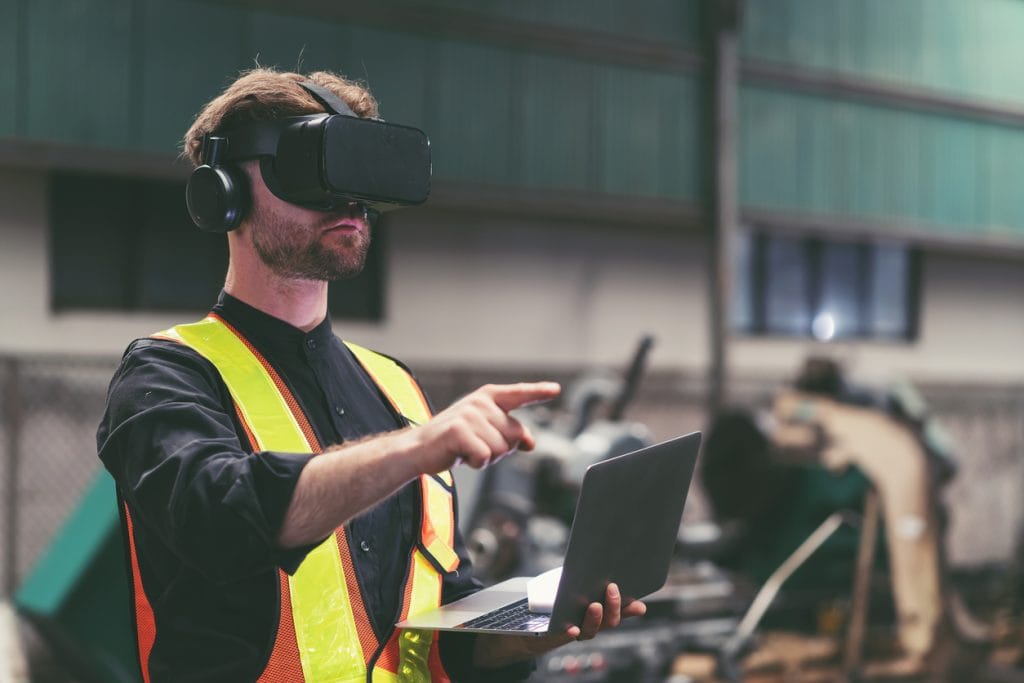
Many industries have recognized the value of VR training programs and have already begun implementing them to enhance workforce development.
The healthcare industry has embraced VR training to provide hands-on experience for medical professionals. Companies like Osso VR offer surgical training simulations that allow doctors to practice complex procedures in a risk-free environment. This type of training enhances skill acquisition and ensures medical professionals are prepared before treating real patients.
Similarly, emergency response teams use VR to simulate high-pressure situations, such as trauma cases or mass casualty incidents, to improve decision-making and efficiency under stress. By training in a virtual environment, healthcare professionals can refine their skills without jeopardizing patient safety.
In manufacturing, employees often need hands-on experience to operate heavy machinery or complex equipment. Companies like Siemens have incorporated VR into their training programs to allow employees to practice assembling components, troubleshooting machinery, and following safety protocols in a virtual space.
This approach minimizes workplace accidents by allowing workers to familiarize themselves with equipment before physically interacting with it. VR also reduces downtime, as employees can be trained without taking machinery out of production.
Retail companies are using VR to improve customer service skills and sales techniques. Walmart has integrated VR into its employee training programs to simulate real-world customer interactions. Employees can practice handling difficult customer situations, perfecting product recommendations, and learning store procedures—all within a controlled virtual environment.
VR-based training in retail helps employees feel more confident when dealing with customers and improves their ability to deliver high-quality service. It also provides a standardized training experience across multiple store locations, ensuring consistency in employee performance.
Soft skills, such as leadership, communication, and conflict resolution, are essential in corporate environments. VR is now being used to help employees refine these skills through role-playing scenarios. Companies like Strivr offer VR-based training programs that place employees in realistic workplace scenarios, allowing them to practice public speaking, negotiations, and team management in a risk-free setting.
This type of training is particularly valuable for leadership development programs, as it provides employees with firsthand experience in making strategic decisions and handling workplace challenges. VR enables organizations to build confident leaders who are well-prepared for real-world responsibilities.
While VR training may seem like a significant investment, it often results in long-term cost savings. Traditional training methods can be expensive, requiring physical training materials, instructor fees, travel costs, and downtime for in-person sessions. VR eliminates many of these costs by providing a scalable, repeatable training experience that can be accessed from anywhere.
Moreover, VR training can be customized to meet specific business needs. Organizations can develop tailored simulations that reflect real-life workplace situations, making the training experience highly relevant and effective. With advancements in VR technology, the cost of hardware and software has also become more affordable, making it accessible to businesses of all sizes.
Despite its advantages, adopting VR training programs comes with certain challenges. Some employees may be unfamiliar with the technology and require time to adapt. Additionally, businesses must invest in the right VR content and platforms to align with their training objectives.
Technical limitations, such as motion sickness or hardware constraints, can also be barriers to adoption. However, as VR technology continues to evolve, these challenges are gradually being addressed. Companies considering VR training should conduct pilot programs to assess its effectiveness before scaling up implementation.
Virtual reality is redefining how businesses approach employee training, offering immersive, engaging, and highly effective learning experiences. From technical skill development to leadership training, VR provides employees with an opportunity to practice in realistic environments without the risks associated with real-world training.
As more businesses recognize the advantages of VR-based training programs, its adoption will continue to grow, transforming workforce development across multiple industries. Companies that invest in VR training today will gain a competitive edge by equipping their employees with the skills and confidence needed to succeed in an ever-evolving business landscape.