
In the rush to grow revenue, expand teams, and capture market share, many founders focus almost exclusively on scale. Growth metrics dominate conversations. Funding rounds become milestones. Headcount increases are…
Read More...


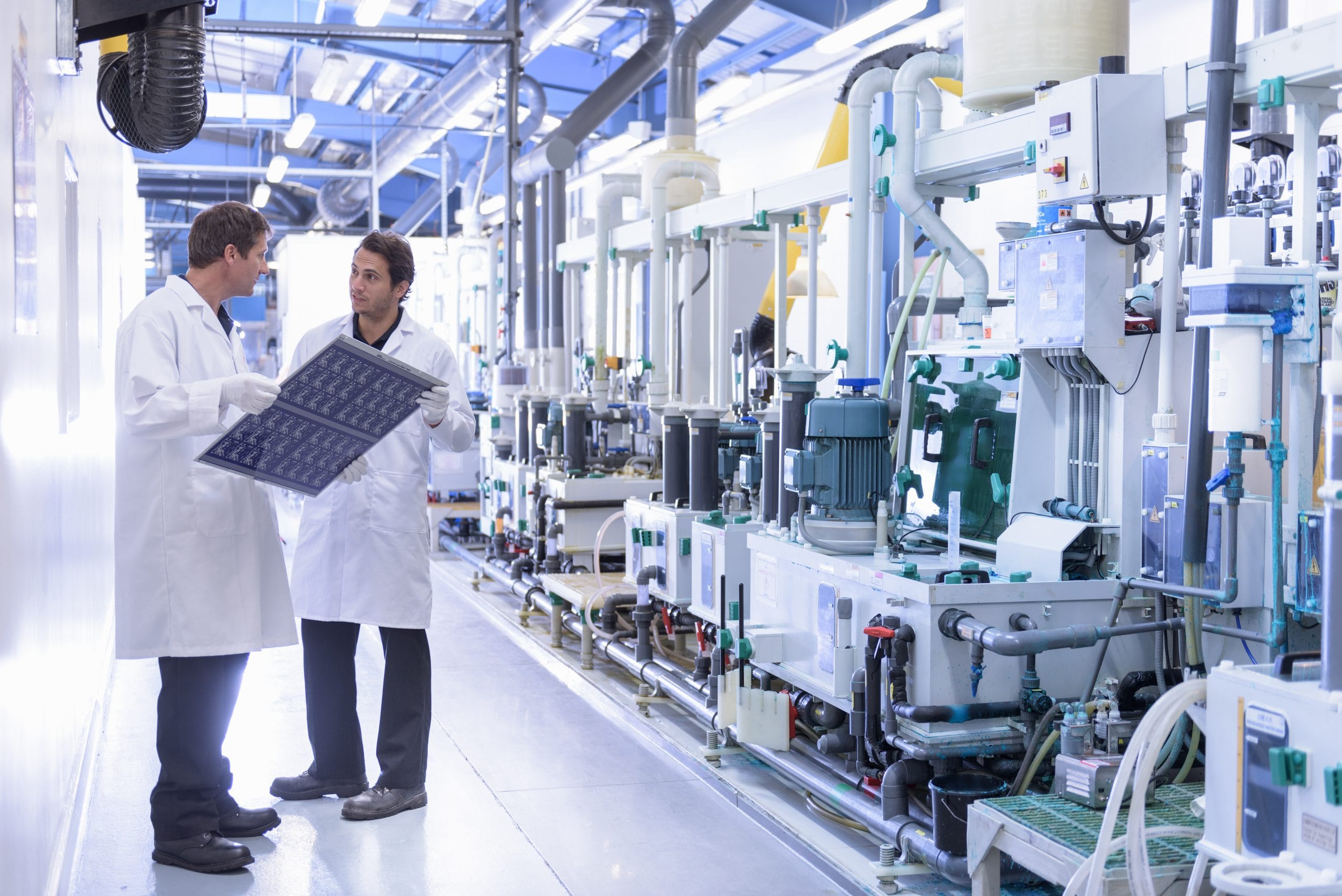


Manufacturing has long been a cornerstone of economic growth. From the first industrial revolution powered by steam to the age of assembly lines, each wave of progress has brought a new level of efficiency and scale. The latest transformation, however, is more subtle yet far-reaching. Smart factories, digitally connected, data-driven, and often autonomous, are quietly redefining what it means to produce goods.
Smart factories merge advanced robotics, sensors, machine learning, and cloud computing into cohesive ecosystems. Rather than relying solely on human intuition or manual adjustments, these environments operate through real-time data exchange between machines, systems, and operators. The result is manufacturing that is not only more efficient but also adaptive and predictive.
For decades, automation meant replacing repetitive tasks with machines. Today, the shift is toward autonomy, where machines not only execute but also analyze and adapt. This is the defining characteristic of the smart factory.
Companies like Siemens have pioneered digital twins, virtual models that replicate real-world factory operations. By running simulations, engineers can predict maintenance issues, optimize energy use, and improve throughput without disrupting production. Similarly, Bosch employs AI-based systems that monitor machine performance and automatically adjust parameters to maintain quality standards.
This type of connected intelligence is not science fiction. It is a response to global pressures such as supply chain disruptions, labor shortages, and fluctuating demand that require flexibility rather than rigidity. A smart factory can shift production runs, reroute materials, or recalibrate robotic arms in real time based on incoming data.
In smart factories, data is as valuable as steel or plastic. Every machine, sensor, and conveyor produces streams of information such as temperatures, vibration patterns, and output rates. That data becomes the foundation for predictive analytics and performance optimization.
Through integrated platforms such as Rockwell Automation‘s FactoryTalk suite, manufacturers can visualize and analyze data across facilities. These insights allow them to identify inefficiencies before they become costly. Predictive maintenance algorithms can detect subtle variations in motor performance and schedule service before breakdowns occur, reducing downtime.
The volume of information can be staggering, which is why cloud computing and AI have become indispensable. Machine learning models continually refine themselves, learning from past patterns to forecast outcomes more accurately. Over time, factories evolve into self-optimizing systems capable of making micro-adjustments faster than any human operator could.
Despite popular fears of robots replacing people, the reality is more collaborative than competitive. Smart factories thrive on human oversight, creativity, and problem-solving. Automation handles the repetitive work, while humans manage the decision-making and strategy.
Companies such as ABB are designing collaborative robots, or cobots, that work safely alongside humans. These cobots handle precision tasks such as welding, assembly, and inspection while freeing workers to focus on tasks requiring critical thinking. The goal is not elimination of labor but elevation of roles, creating a more engaged and tech-literate workforce.
As digital tools become more integrated, training and reskilling will define the next era of workforce development. Programs in mechatronics, data analytics, and AI systems are increasingly being introduced in partnership with educational institutions. The smart factory movement is thus not only a technological transformation but a human one.

Sustainability has become inseparable from modern manufacturing. Smart factories play a crucial role by minimizing waste, optimizing resource use, and tracking carbon emissions with precision. Through real-time monitoring, they can identify inefficiencies in energy consumption and material handling, making it possible to achieve greener operations without sacrificing profitability.
Schneider Electric exemplifies this shift with its Green Factory initiatives, where connected devices and AI-driven analytics monitor energy and emissions across production lines. The company reports significant reductions in energy intensity and material waste, proving that sustainability and efficiency can advance hand in hand.
Similarly, Toyota is expanding its smart factory initiatives to include zero-emission production goals. By connecting every piece of equipment through IoT platforms, Toyota can measure its carbon footprint in real time and implement targeted improvements.
Recent global disruptions have exposed the fragility of traditional manufacturing supply chains. Smart factories are helping businesses regain control by decentralizing production and enhancing visibility.
Instead of relying on distant facilities, companies can use smart factory technologies to enable localized, responsive manufacturing closer to consumers. This glocal model reduces shipping costs and delays while boosting agility. Flex, a global manufacturing solutions provider, uses advanced analytics to dynamically allocate production capacity across its network based on real-time data about demand and logistics constraints.
Blockchain is also emerging as a valuable component of supply chain transparency. By recording every material transaction on a secure ledger, manufacturers can trace products from origin to end use, adding trust and accountability across the ecosystem.
The economic potential of smart factories is immense. Studies by consulting firms such as McKinsey suggest that Industry 4.0 could generate trillions of dollars in value by improving productivity, reducing waste, and accelerating product development.
Smaller enterprises are also starting to participate in this transformation. The availability of cloud-based manufacturing software and modular robotics means that even mid-sized firms can integrate smart technologies without massive upfront costs. Tulip, a Massachusetts-based startup, offers no-code platforms that allow manufacturers to digitize operations without replacing existing infrastructure.
This democratization of technology is accelerating competitiveness. Businesses that once lacked access to advanced manufacturing systems can now compete on speed, quality, and customization.
Despite its promise, the path to full smart factory integration is not without obstacles. Cybersecurity risks are among the most pressing. As factories become more connected, they also become more vulnerable to digital threats. Protecting proprietary data and operational systems requires advanced encryption, access control, and constant vigilance.
Another challenge is integration. Many manufacturers operate with legacy systems that were never designed to communicate with modern digital tools. Bridging these systems takes time, expertise, and investment.
Finally, the cultural shift can be as difficult as the technological one. Smart factories require new ways of thinking about production, management, and even job roles. Leadership must commit to continuous learning and experimentation to fully capture the benefits.
The next phase of smart factory evolution may include the convergence of technologies like edge computing, 5G connectivity, and generative AI. Edge computing will process data closer to the source, enabling near-instant reactions to machine performance issues. Meanwhile, 5G will allow seamless communication among thousands of connected devices, dramatically increasing operational speed.
Generative AI could revolutionize design and maintenance. Imagine AI models automatically generating optimized production workflows or creating blueprints for parts that maximize material efficiency. These developments will extend the capabilities of smart factories even further, pushing them toward full autonomy.
Companies such as GE Digital are already experimenting with such integrations, using AI to design predictive maintenance schedules that prevent system failures before they occur. Over time, these systems will learn from global data networks, refining best practices and distributing them across multiple facilities.
Manufacturing’s quiet revolution is already underway. Smart factories are not futuristic concepts, they are operating across industries, redefining productivity, sustainability, and global competitiveness. They represent a fusion of digital intelligence and human ingenuity, one that allows manufacturers to adapt to shifting markets and environmental demands with unprecedented speed.
The businesses that embrace this transformation will gain not just efficiency but resilience. They will be able to pivot in response to disruption, personalize products at scale, and build more sustainable operations. For entrepreneurs and business leaders, smart factories offer a glimpse into the next great chapter of industrial progress, one written not in noise and smoke, but in silent, intelligent precision.

