
Commercial landscaping was once viewed primarily as a maintenance service. Property owners hired contractors to mow lawns, trim hedges, remove weeds, and keep outdoor areas presentable. Although those responsibilities remain…
Read More...





The public debut of SpaceX is not just a financial event. It is a business story about ambition becoming a market force. Rockets may be the most visible part of the company, but the deeper lesson is about how a company can turn a difficult mission into a powerful economic engine. Entrepreneurs and business owners do not need to be building spacecraft to learn from it. The real lesson is how big thinking, disciplined execution, technical focus, and capital strategy can change the way a company is valued.
SpaceX has spent years doing something many people once considered unrealistic. It lowered launch costs, built reusable rockets, expanded satellite internet through Starlink, and became a serious contractor in commercial and government space work. That matters because the company did not build value through one single product. It built value by connecting multiple markets into one larger business model. Launch services, satellite connectivity, national security work, and future space infrastructure all sit under one brand story.
For entrepreneurs, that is the part worth studying. The SpaceX IPO is bigger than rockets because it shows how the market rewards companies that can make a large vision feel real. It also shows how dangerous that can be when excitement runs ahead of fundamentals. In a period when interest rates remain a major business concern, investors are still willing to back companies that appear capable of defining the future. That does not mean every ambitious business deserves a premium valuation. It means ambition becomes valuable when it is backed by progress, credibility, and a market large enough to support the story.
Every major IPO attracts attention, but SpaceX is different because it sits at the intersection of technology, infrastructure, defense, communications, and public imagination. Most companies go public with a fairly simple business description. They sell software, run stores, finance loans, manufacture products, or provide services. SpaceX is harder to place in one clean category. It is part aerospace company, part communications company, part defense contractor, and part long term infrastructure bet.
That complexity is one reason the market is paying attention. Investors are not only looking at what SpaceX does today. They are trying to price what it could become. Starlink has turned satellite internet into a major growth story. Government contracts add credibility and revenue visibility. The rocket business creates a technical moat that few competitors can match. The brand itself carries enormous cultural weight. That combination is rare.
Business owners can take a practical lesson from that. The strongest companies are often not built around one isolated transaction. They are built around a position in the market. A local service business, a digital agency, a manufacturer, or a professional firm can apply the same thinking at a smaller scale. The question is not only, what do we sell? The better question is, what position are we trying to own?
SpaceX has positioned itself as the company that makes space commercially useful. That is much bigger than selling rocket launches. In the same way, a business that sells websites may really be selling customer acquisition. A logistics company may really be selling reliability. A construction firm may really be selling risk reduction. The companies that understand their larger role usually have a stronger story to tell customers, investors, lenders, and partners.
Big ambition is easy to talk about. Execution is what makes people believe it. Plenty of companies claim they are changing an industry. Fewer can point to years of progress, technical wins, customer adoption, and operational capacity. That is where SpaceX stands apart. The company has made reusable rockets part of the normal business conversation, not a futuristic slogan.
That is a major point for entrepreneurs. Vision without execution becomes noise. Execution without vision can become routine. The real power comes from combining both. A company needs a reason for people to care, but it also needs proof that the reason is not just marketing language.
Consider Rocket Lab, another space company that has built a reputation around launch services and space systems. It may not have the same public profile as SpaceX, but it shows how focus and execution can build credibility in a difficult sector. Planet Labs offers another angle, using satellites to provide Earth observation data for businesses, governments, and organizations. These companies remind us that space is no longer only about exploration. It is becoming a commercial layer for data, communication, mapping, security, and logistics.
That shift matters because it reflects a broader business trend. Some of the most interesting companies today are not just improving existing categories. They are creating new operating systems for industries. Anduril is doing that in defense technology. Shield AI is doing it with autonomous aircraft systems. Cerebras is doing it in AI hardware. The common thread is that these companies are attacking difficult problems with technical depth and a business model aimed at large institutional demand.
Small business owners can still apply this thinking. The goal is not to copy a space company. The goal is to stop thinking too narrowly. A company that serves homeowners, restaurants, attorneys, contractors, doctors, or local businesses can still build a bigger market position. The difference comes from asking what problem the customer is really trying to solve and then building the business around that deeper need.
The timing of the SpaceX IPO is especially interesting because interest rates remain a major factor in business decision making. Higher rates change how investors think. They make debt more expensive. They make future profits less valuable in today’s dollars. They push companies to prove that growth is not just possible, but durable.
In a low rate environment, capital often flows more freely into long term stories. Companies can raise money on potential because investors have fewer attractive alternatives. In a higher rate environment, the bar usually rises. Investors become more selective. Lenders become more cautious. Business owners feel it when lines of credit, equipment loans, real estate financing, and expansion capital cost more than they did a few years ago.
That is why a major IPO like SpaceX stands out. It suggests that even when money is more expensive, capital is still available for companies that investors believe can dominate large markets. The market may be cautious, but it is not closed. It is simply more demanding.
Entrepreneurs should pay close attention to that distinction. The lesson is not that every company should chase venture capital or public markets. Most businesses never need to. The lesson is that capital follows confidence. A lender, investor, buyer, or strategic partner wants to see a clear business model, a realistic path to growth, and signs that management knows how to operate under pressure.
A business owner seeking financing today needs to be sharper than before. Strong revenue is helpful, but it may not be enough. Margins matter. Customer retention matters. Cash flow matters. A clear use of funds matters. In a high rate environment, vague expansion plans are harder to sell. A practical plan with measurable outcomes carries more weight.
The SpaceX IPO also raises an important question: where does confidence end and hype begin? That is not a negative question. It is a necessary one. Every major business story has both. Investors are drawn to the size of the opportunity, but they also have to weigh risk.
SpaceX has real achievements, but it also operates in capital intensive markets. Rockets are expensive. Satellites are expensive. Manufacturing, engineering, testing, launches, regulatory issues, and government relationships all require enormous resources. The company has a brand advantage, but brand alone does not eliminate business risk.
This is useful for entrepreneurs because smaller companies deal with their own version of the same issue. A business owner may get excited about a new market, new product, new location, or new campaign. The opportunity may be real, but the numbers still need to work. Ambition should push a company forward, not blind it to cash flow, customer acquisition costs, staffing limits, or operational strain.
There is a simple business discipline here. A company should be able to explain both the dream and the downside. The dream attracts attention. The downside analysis builds trust. Investors, lenders, employees, and customers usually respect leaders who can speak plainly about risk. It shows maturity.
That is one reason companies like Stripe, Databricks, Canva, and Figma became such important private market stories before any public market step. Each built a strong growth narrative, but the strongest part of their reputation came from solving real problems for large groups of users. Payments, data, design, and collaboration are not abstract ideas. They are daily business needs.
SpaceX has a more dramatic story, but the principle is similar. Big valuations become more believable when the company is tied to real demand.
It is easy to look at SpaceX and focus only on the size of the IPO. That makes sense because the numbers are enormous. But entrepreneurs should spend more time studying the structure behind the story.
The company has multiple sources of value. It has launch capabilities. It has Starlink. It has government and commercial relationships. It has technical talent. It has manufacturing knowledge. It has brand power. It has a long term vision that keeps people watching. That kind of layered business model is difficult to build, but it is powerful because the company is not dependent on one narrow revenue stream.
A smaller company can use the same concept in a realistic way. A marketing agency may begin with website design, then add search optimization, paid advertising, content, hosting, and conversion strategy. A home services company may begin with one service, then add maintenance plans, inspections, emergency work, and commercial accounts. A consulting firm may begin with project work, then add retainers, training, templates, and advisory services.
The goal is not to become complicated for the sake of it. The goal is to build a business where each part supports the others. When done right, a company becomes more valuable because customers have more reasons to stay.
This is also where leadership matters. Ambitious companies often require long periods of doubt. People question the market. Competitors dismiss the idea. Costs rise. Timelines slip. The companies that survive are usually led by people who can keep the mission clear while still making practical adjustments.
The current interest rate environment gives business owners another reason to think carefully about ambition. Growth is still possible, but careless growth is more expensive. When debt costs more, mistakes become harder to absorb. When investors have more options for return, they can be less patient with weak business models.
That does not mean entrepreneurs should become timid. It means they should become more disciplined. A high rate economy rewards businesses that know their numbers. It rewards companies that can explain why expansion makes sense. It rewards leaders who understand the difference between revenue growth and profitable growth.
SpaceX can raise massive capital because investors believe the opportunity is large enough to justify the risk. Most businesses will not operate at that scale, but the same logic applies. If a business wants money, attention, employees, or strategic partners, it needs a convincing case. That case should include more than enthusiasm. It should include market demand, competitive advantage, operational ability, and a financial plan that can survive pressure.
In practical terms, a business owner should be asking: What would happen if borrowing costs stayed elevated longer than expected? What would happen if sales slowed for six months? What would happen if a supplier raised prices? What would happen if hiring became more expensive? These are not pessimistic questions. They are leadership questions.
Ambition and caution are not opposites. The best businesses use caution to make ambition stronger.
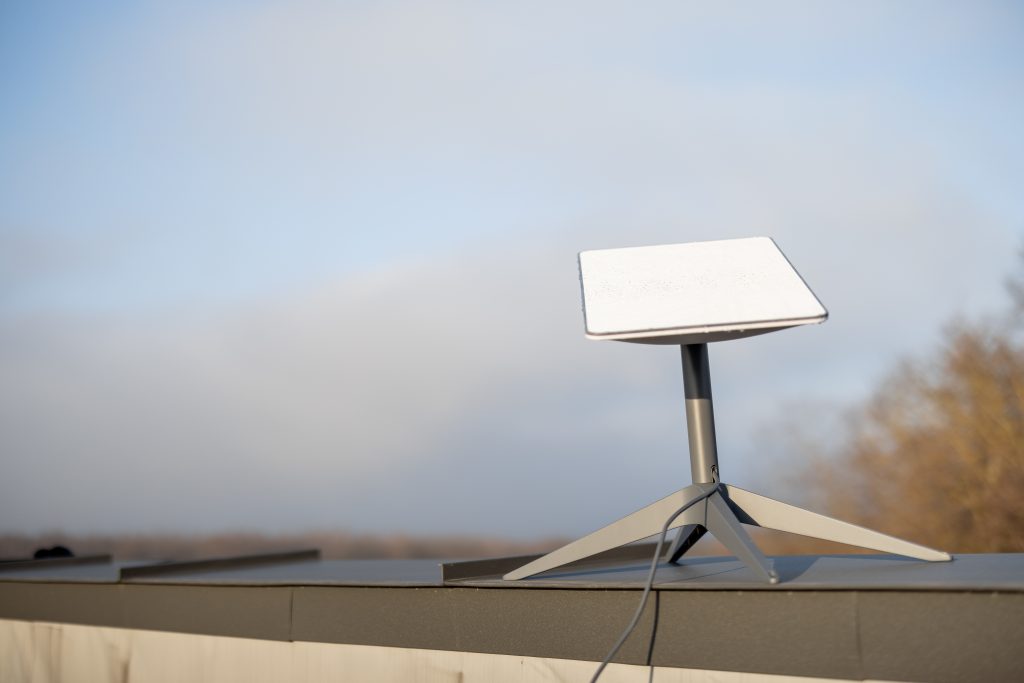
SpaceX also shows the power of a brand that stands for something specific. The name is tied to movement, invention, risk, and possibility. People understand the company’s mission even if they do not understand the engineering. That kind of clarity is extremely valuable.
Many businesses underestimate how important this is. They describe themselves by listing services instead of communicating a larger promise. A company might say it offers consulting, project management, and implementation. That is information, but it may not be memorable. A stronger brand makes the customer understand what changes after working with the company.
Look at Samsara, which built a brand around connected operations for physical businesses. Look at Toast, which became known for restaurant technology. Look at ServiceTitan, which focuses on software for trades businesses. These companies are not just selling tools. They are trying to own a category in the customer’s mind.
That is one of the most practical lessons from SpaceX. A business does not need a billion dollar valuation to have a clear market identity. It needs discipline in how it presents itself. The more crowded the market, the more important positioning becomes.
The SpaceX IPO is bigger than rockets because it captures the business moment we are living in. Capital is more selective, interest rates still matter, technology is moving fast, and investors are looking for companies that can define large markets. SpaceX represents the upside of bold ambition backed by years of execution, but it also reminds business owners that big stories carry big expectations. For entrepreneurs, the lesson is not to chase hype. The lesson is to build something with a clear position, real demand, disciplined operations, and a vision large enough to keep people paying attention. Ambition still matters, but in today’s economy, ambition has to be supported by proof.