
Commercial landscaping was once viewed primarily as a maintenance service. Property owners hired contractors to mow lawns, trim hedges, remove weeds, and keep outdoor areas presentable. Although those responsibilities remain…
Read More...


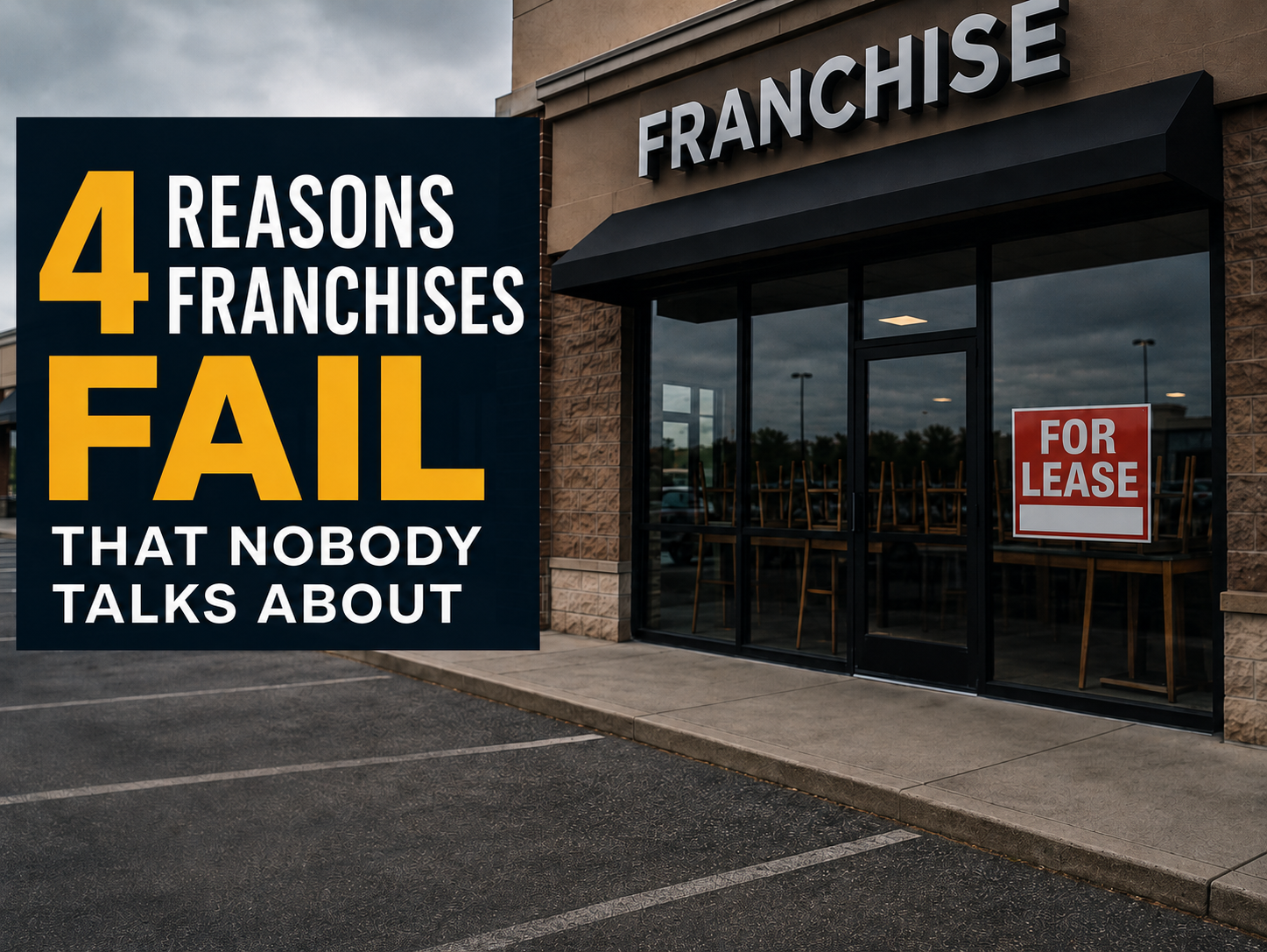


Franchises are often marketed as a safer path into business ownership. The brand already exists. The systems are already built. The product or service has already been tested. The logos, menus, uniforms, supplier relationships, training manuals, and customer experience may already be established. For many entrepreneurs, that sounds far less risky than starting from scratch.
There is truth in that thinking, but it can also create a dangerous false sense of security. A franchise can reduce certain risks, yet it does not remove the hard realities of business ownership. Rent still has to be paid. Employees still have to be hired, trained, and managed. Customers still have to show up. Financing still has to make sense. The owner still has to make good decisions every day.
The franchise sector remains a large part of the American economy. That growth shows the strength of the model, but it does not mean every franchise location is positioned to succeed. A strong brand can help attract attention, but it cannot overcome every bad lease, weak operator, poor market, or unrealistic financial assumption.
The problem is that many conversations about failed franchises stay at the surface. People say the owner picked the wrong brand, chose a bad location, or did not work hard enough. Those things matter, but they do not tell the full story. Some franchises fail because the economic assumptions were too optimistic from the start. Others fail because the owner misunderstood what they were really buying. Some fail because the brand looked strong nationally but did not translate locally.
With interest rates still affecting borrowing costs, franchise buyers need to be more careful than ever. Higher financing costs can turn a thin profit model into a monthly cash drain. For a franchise owner, the difference between a manageable loan payment and an expensive one can affect hiring, advertising, inventory, repairs, and the owner’s ability to stay patient during the early months.
Many new franchise buyers focus heavily on the initial franchise fee. That number is usually easy to see in the franchise disclosure materials, and it becomes one of the first figures discussed during the sales process. The mistake is thinking that the franchise fee represents the real cost of entering the business.
The actual financial burden can be much larger. Buildout costs, lease deposits, equipment, signage, technology systems, initial inventory, insurance, payroll, training travel, local marketing, professional fees, and working capital all come into play before the business has a chance to stabilize. In some industries, the business may need several months of losses before revenue becomes predictable.
This is where many franchise owners get into trouble. They technically have enough money to open, but not enough money to survive the opening period. A restaurant franchise, fitness franchise, retail franchise, or service franchise may look affordable based on the initial investment range, but the real question is whether the owner has enough capital after opening day.
That is especially important in a higher rate environment. If a buyer borrows heavily to open the location, the loan payment becomes part of the monthly pressure. A franchise that might have worked with lower debt costs can become much harder when the owner is paying more for borrowed capital. Higher interest rates do not just affect large corporations. They affect the local franchisee trying to cover payroll on Friday while waiting for the weekend sales rush.
Some brands have become powerful because their systems are disciplined and their operators understand the numbers. Jersey Mike’s, for instance, has grown into a major sandwich franchise brand partly because its model is focused and repeatable. But even a strong concept still depends on the owner opening with the right capital structure. A popular brand name does not pay the rent by itself.
A franchise buyer should spend less time asking, “Can I afford to open this?” and more time asking, “Can I afford to operate this for 12 to 18 months if sales are slower than projected?” That second question is where the truth usually appears. If the answer depends on everything going perfectly from the first month, the buyer may not be investing in a business. They may be buying a financial trap wrapped in attractive branding.
Some franchise buyers imagine they are buying a business that runs largely by itself. They assume the franchisor has already figured out the hard parts, so their role will be more like managing an investment than running an operating company. That mindset can be costly.
A franchise is not passive. Even with training and systems, the owner is still responsible for execution. The franchisor may provide the playbook, but the franchisee has to run the plays. That means hiring the right people, keeping employees motivated, handling customer complaints, watching margins, controlling waste, managing schedules, maintaining standards, and responding quickly when something is not working.
A franchise can fail even when the concept is excellent because the local operator is not built for the daily grind. The owner may like the idea of the brand but dislike the reality of the business. A food franchise may require long hours, employee supervision, health inspections, supplier coordination, and constant attention to customer service. A home services franchise may require sales discipline, technician oversight, routing efficiency, and follow up with customers. A fitness franchise may require membership sales, retention strategies, community outreach, and constant energy from the staff.
Brands like Ace Hardware show how important local operating quality can be. The brand has national recognition, but much of the customer experience depends on the people inside each store. A customer who walks in looking for help with a repair project is not judging the franchise model in theory. That customer is judging whether the person in front of them is helpful, knowledgeable, and engaged.
The same is true across many franchise categories. Buffalo Wild Wings may have strong name recognition, but one poorly run location can still disappoint customers if service is slow, staffing is weak, or food quality is inconsistent. The brand brings people in once. The local experience determines whether they return.
Many failures begin when the franchisee does not truly understand the job they bought. They wanted ownership, but they did not want the operational intensity. They wanted a known name, but they were not prepared to manage people. They wanted a business, but they were not ready for the daily decisions that make a business work.
That mismatch can become more serious as the business grows. A franchisee may start with one location and assume expansion will solve the profit problem. In reality, opening additional units can multiply operational weaknesses. If the first location has poor management habits, weak controls, or inconsistent customer service, a second location may spread those problems rather than solve them. Growth does not fix a bad operating foundation. It usually exposes it.
A franchise brand can be famous nationwide and still struggle in a specific location. This is one of the most overlooked reasons franchises fail. Buyers often assume that if a brand works in one state, one city, or one shopping center, it should work almost anywhere. That is not how markets behave.
Local demographics matter. Traffic patterns matter. Parking matters. Visibility matters. Competition matters. Local income levels matter. Culture matters. Weather, seasonality, office occupancy, school schedules, tourism patterns, and nearby anchor tenants can all affect performance.
A dessert franchise may be popular on social media but still struggle in a market that cannot support enough repeat purchases. A quick service restaurant may look perfect on paper but fail because drivers cannot easily enter or exit the property. A fitness franchise may open in an area that looks affluent but already has too many competing studios, gyms, and wellness options. A children focused franchise may struggle if the surrounding household demographics do not match the target customer.
Crumbl is a useful example of a company that grew rapidly by combining product appeal, social media visibility, and local store presence. But any franchisee evaluating a sweet treat concept still has to ask hard questions about frequency. How often will local customers buy? Is demand driven by novelty, or is there enough repeat behavior to support rent, labor, royalties, and marketing fees?
Location analysis also cannot stop at traffic counts. A high traffic road does not always mean customers can access the business easily. A shopping center with national tenants may still have weak visibility for a particular unit. A site near office buildings may suffer if remote or hybrid work has reduced weekday lunch traffic. A franchise buyer who relies too much on the brand’s general reputation may miss local warning signs.
This is where ego can become expensive. Some owners fall in love with the brand before they fall in love with the numbers. They picture the grand opening, the signage, and the customers lining up. They do not spend enough time watching the site at different times of day, studying local competitors, speaking with nearby business owners, or stress testing the sales assumptions.
A national brand can help with credibility. It can provide recognition, systems, and marketing power. But customers are local. Rent is local. Labor availability is local. Competition is local. A franchise succeeds or fails in a real market, not in a national sales presentation.
One reason entrepreneurs like franchises is that the system is already built. One reason franchises can become difficult is that the system may not leave much room to maneuver.
Franchise agreements often contain detailed rules about products, suppliers, pricing guidelines, territory, advertising, design standards, technology platforms, operating hours, transfer rights, renewal conditions, and approved vendors. Those rules may protect the brand, but they can also limit the franchisee when conditions change.
If food costs rise, the franchisee may not be free to change suppliers. If labor costs increase, the owner may still have to maintain certain service levels or operating hours. If local customers want a different product mix, the franchisee may not be allowed to modify the offering. If rent becomes too expensive, relocating may not be simple. If the owner wants to sell, transfer approval and buyer qualifications may complicate the process.
This can be especially hard during periods of economic pressure. When interest rates are high, consumers may become more careful with discretionary spending. At the same time, franchise owners may be dealing with higher loan payments, increased wages, insurance costs, and supplier price increases. The owner needs flexibility, but the franchise system may require consistency.
Consistency is not bad. It is part of what makes a franchise valuable. Customers visit McDonald’s because they expect a familiar experience across locations. That consistency is a major strength. But from the franchisee’s perspective, the same consistency can create pressure if local economics become difficult and the owner has limited control over key cost drivers.
The issue is not that franchise agreements are unfair by nature. The issue is that many buyers do not fully appreciate how much control they are giving up. They may be leaving a corporate job because they want independence, only to discover that franchise ownership comes with significant rules, reporting obligations, fees, and restrictions.
A franchise buyer should read the agreement with a practical mindset. What happens if sales are 25 percent lower than projected? What happens if the landlord raises rent? What happens if the owner wants to sell after three years? What happens if the franchisor changes required technology or design standards? What happens if local advertising does not produce results? These questions matter before the agreement is signed, not after the business is already struggling.
The most dangerous franchise buyer is not always the person with too little enthusiasm. It is often the person with too much confidence and not enough skepticism. They believe the brand will solve problems that only strong management, sufficient capital, and careful planning can solve.
Optimism is necessary in business, but optimism cannot replace due diligence. A franchise buyer should speak with current and former franchisees. They should ask direct questions about profitability, cash flow, labor issues, franchisor support, marketing performance, renewal costs, and the real timeline to break even. They should review the Franchise Disclosure Document carefully with qualified advisors. They should create conservative projections rather than relying only on best case scenarios.
They should also pay close attention to debt. A franchise that requires heavy borrowing may still be worth pursuing, but the buyer needs to understand how loan payments affect survival. When financing costs are elevated, the margin for error gets smaller. A slow opening, delayed construction, staffing problem, or weak first quarter can create pressure quickly.
A strong franchise system can be a valuable opportunity. Dutch Bros, for instance, has shown how powerful a focused concept and strong customer culture can become in the beverage space. But the larger lesson is not that every operator should chase a popular category. The lesson is that growth concepts still require disciplined local execution and realistic financial planning.
The same principle applies to less visible service franchises. A cleaning franchise, restoration franchise, tutoring franchise, senior care franchise, or mobile repair franchise may not have the same national consumer visibility as a food or beverage concept, but the owner still has to understand margins, staffing, lead generation, customer retention, and local demand. Some of the best franchise opportunities may be less glamorous, while some of the most exciting looking brands may be financially fragile at the unit level.
A serious buyer should also understand the difference between revenue and profit. High sales can look impressive, but if rent, labor, royalties, required advertising contributions, debt payments, and operating costs consume the margin, the owner may be left with far less than expected. The business can look busy and still produce weak cash flow.
Franchises fail for reasons that are often more complicated than the usual explanations. It is not always about a bad brand or a lazy owner. Many failures come from undercapitalization, weak operating discipline, poor local market fit, and limited flexibility when the business needs room to adjust. The franchise model can be powerful, but it is not a shortcut around the realities of ownership. Entrepreneurs who study the numbers carefully, question the assumptions, understand the agreement, and prepare for economic pressure have a much better chance of turning a franchise opportunity into a durable business.