
Commercial landscaping was once viewed primarily as a maintenance service. Property owners hired contractors to mow lawns, trim hedges, remove weeds, and keep outdoor areas presentable. Although those responsibilities remain…
Read More...


Airports were once viewed primarily as transportation hubs, places designed to move travelers efficiently from one location to another. Over the past two decades, however, airports have quietly evolved into complex commercial ecosystems. Retail and dining inside terminals have grown into a massive economic engine, one that increasingly resembles a distinct business model rather than a supporting feature of air travel.
The change is visible in major airports around the world. Retail corridors now resemble high end shopping districts, featuring global luxury brands, premium dining, and curated shopping experiences. Travelers walking through terminals today may encounter boutiques, electronics stores, wellness spas, bookstores, and locally themed restaurants. In many cases the retail areas rival those found in traditional malls or city shopping districts.
This transformation has not happened by accident. Airports, retailers, and concession operators have discovered that air travel produces a unique type of consumer behavior. Passengers often arrive early, pass through security, and then find themselves with time to spare. Unlike a city shopping environment where people are rushing to complete errands, airport passengers are frequently in a waiting mode. That psychological shift creates a retail environment where browsing becomes natural.
For entrepreneurs and business professionals, airport retail offers a fascinating example of how a location driven concept can evolve into a powerful and self sustaining business model.
Few retail environments provide the built in customer traffic that airports generate. Millions of travelers pass through major airports every year, many carrying discretionary spending budgets that are tied to vacations, business travel, or international trips. The audience is diverse, global, and often willing to spend.
Large airport operators have recognized this opportunity and have invested heavily in upgrading terminal retail areas. Airports such as Heathrow Airport and Changi Airport have turned retail into a central component of their business strategies. Luxury boutiques, technology stores, and curated dining spaces are carefully positioned throughout terminals to maximize visibility and passenger engagement.
Travelers often exhibit spending patterns that differ from typical retail customers. Duty free stores remain a major component of airport retail because international travelers can purchase goods without certain taxes. Operators such as Dufry have built global businesses around airport retail concessions, managing stores in hundreds of airports worldwide.
In many cases, airports receive a percentage of sales from concession operators. That revenue model transforms retail activity into a major income stream for airport authorities. Instead of relying only on landing fees and airline partnerships, airports increasingly generate revenue from commercial activity inside terminals.
The airport concession sector has grown into a specialized industry with its own operating strategies, supply chains, and investment models. Retailers that succeed in airports often operate under unique conditions that differ from standard storefront locations.
Airport stores must adapt to fluctuating passenger volumes, international customer bases, and security constraints that affect logistics and staffing. These challenges require experienced concession operators who understand the complexities of operating inside secure terminals.
Companies such as Hudson Group have built their entire corporate identity around airport retail. Hudson operates travel convenience stores and bookstores in airports across North America. Their business model centers on high visibility retail positioned near gates and security checkpoints where passenger traffic naturally converges.
Food and beverage operators have followed a similar path. Restaurant groups now view airport concessions as major growth channels. Businesses such as HMSHost specialize in operating airport restaurants, bringing recognizable brands into terminals while adapting menus and service models to match the fast paced airport environment.
For many hospitality companies, airport locations provide access to a steady stream of international travelers without the cost of building standalone restaurants in every city.
One of the most interesting developments in airport retail is the growing presence of luxury brands. High end fashion houses and premium cosmetics companies increasingly view airport retail as a strategic channel rather than a secondary outlet.
Luxury brands recognize that international travelers often make purchasing decisions while in transit. A passenger traveling through an international terminal may be passing through multiple countries in a single trip, and the airport environment provides a convenient place to shop.
Companies such as Louis Vuitton and Chanel operate boutique stores inside major airports where travelers can browse handbags, fragrances, and accessories while waiting for flights. The presence of these brands has elevated airport retail from basic convenience shopping into a premium retail experience.
In several global airports, luxury boutiques are arranged in corridors that resemble high end shopping districts. The architecture, lighting, and store layouts are designed to mirror the atmosphere of luxury malls found in cities like Paris, Milan, and Dubai.
Recent discussions around interest rates have created new dynamics in the airport retail sector. Infrastructure projects, including airport terminal expansions, often rely on large amounts of capital financing. When interest rates rise, the cost of building new terminals and commercial spaces increases.
Airport authorities must carefully evaluate development projects when borrowing costs move upward. That financial reality can influence how quickly new retail spaces are constructed or renovated. At the same time, retail operators may reassess expansion strategies if financing becomes more expensive.
Despite these pressures, the underlying demand for air travel continues to support airport retail growth. According to data from organizations such as International Air Transport Association, passenger volumes have steadily recovered following the disruptions experienced earlier in the decade. As passenger traffic grows, airport retail remains closely tied to that momentum.
Investors also view airport concessions as relatively resilient because passenger traffic provides a consistent customer base. Unlike a traditional shopping center that depends on local consumer spending, airport retail benefits from travelers moving through the facility regardless of local economic conditions.
Technology has begun reshaping how passengers interact with airport retail environments. Mobile ordering, digital payment systems, and location based services are becoming increasingly common inside terminals.
Some airports now offer mobile apps that allow travelers to browse retail options before arriving at the gate. Passengers can order meals, reserve products, or schedule pickup times. Companies such as OTG have introduced technology driven dining concepts in airports where tablets and digital ordering systems are integrated into the restaurant experience.
Another emerging trend is the use of data analytics to understand passenger movement patterns inside terminals. Retail operators analyze foot traffic, dwell times, and purchasing behavior to determine where stores should be placed. That information helps operators optimize store locations and product selections.
The airport environment offers a level of consumer data that traditional retail environments often struggle to capture. Passengers move through defined security checkpoints and boarding areas, which creates predictable traffic flows. Retailers can use this information to design layouts that capture attention at the right moment during a traveler’s journey.
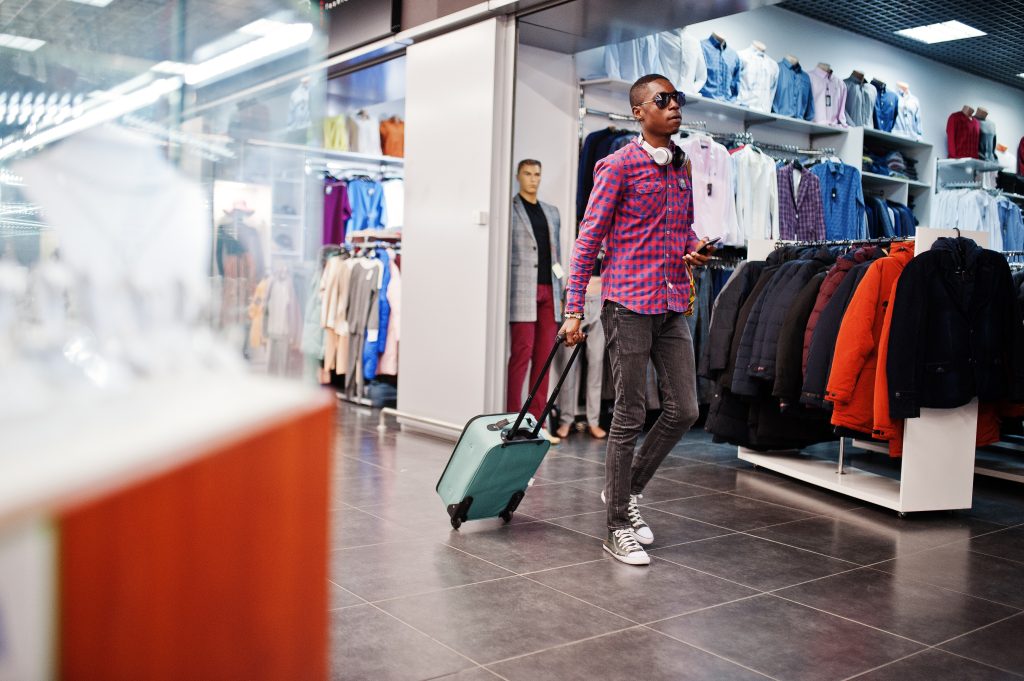
While global brands dominate many airport retail spaces, another trend has gained momentum in recent years. Airports are increasingly showcasing local businesses to create a sense of regional identity for travelers.
A traveler arriving in a new city often experiences the airport as their first point of contact with that destination. Airport authorities have recognized that local restaurants, specialty food producers, and regional retailers can create a memorable first impression.
In several U.S. airports, local coffee roasters, craft breweries, and regional restaurant concepts now appear alongside national brands. Operators such as Areas partner with airports to bring local food concepts into terminals while maintaining operational consistency.
This combination of global brands and regional businesses creates a retail environment that feels both international and local at the same time. For travelers, the experience often feels more authentic than the traditional chain dominated airport food court.
Airport retail may appear to be dominated by large concession operators, yet opportunities still exist for entrepreneurs and emerging brands. Many airports periodically open concession bidding processes where operators can propose new concepts.
These opportunities can allow smaller brands to gain exposure to millions of travelers. A regional restaurant concept that succeeds in an airport location may experience rapid brand recognition. In some cases, airport locations serve as testing grounds for concepts that later expand into city locations.
Entrepreneurs entering airport retail must navigate complex lease structures and operational requirements. Security rules, staffing protocols, and delivery logistics create a level of complexity that differs from traditional storefront locations. Yet for businesses willing to adapt, the payoff can be significant.
Some startups now design retail concepts specifically for travel environments. Compact store layouts, simplified menus, and fast service models are tailored to passengers who have limited time before boarding flights.
Airport retail has moved far beyond the days of souvenir stands and basic snack kiosks. Terminals around the world now function as dynamic commercial centers where retail, hospitality, and travel intersect. The combination of captive audiences, global customer bases, and sophisticated concession management has transformed airport retail into a powerful business model.
For entrepreneurs and business professionals watching shifts in consumer behavior, airport retail provides a valuable case study in how location driven commerce can evolve into an entire industry. As passenger traffic continues to grow and airports invest in larger, more modern terminals, the role of retail inside those spaces will likely expand even further. The next generation of airport development may look less like transportation infrastructure and more like fully integrated commercial districts built around the movement of people across the globe.