
Commercial landscaping was once viewed primarily as a maintenance service. Property owners hired contractors to mow lawns, trim hedges, remove weeds, and keep outdoor areas presentable. Although those responsibilities remain…
Read More...


The beauty industry has always thrived on transformation—style, trends, technology. Now, that transformation includes a sweeping shift toward sustainability. In recent years, a growing number of salon chains have committed to eco-friendly practices, and it is not a niche trend anymore. These businesses are scaling quickly, attracting investment, gaining loyal customer bases, and redefining what it means to run a responsible beauty brand.
Today’s consumers are more informed and selective about the companies they support. Environmental impact, ingredient transparency, and ethical sourcing all weigh heavily in decision-making. Salon chains that understand this shift are not just surviving—they are thriving.
Sustainable salon chains are built on a foundation of low-impact operations. They reduce waste, limit water usage, source renewable energy where possible, and prioritize non-toxic or biodegradable products. But what is truly driving their expansion is how effectively these values are being incorporated into their business models.
Green Circle Salons, for instance, has positioned itself as both a certification network and a sustainability solution for salons looking to divert waste from landfills. They partner with independent salons and large chains alike to recycle everything from hair clippings and foils to used color tubes. The company’s infrastructure enables salon owners to participate in a broader sustainability ecosystem, regardless of size, creating both environmental and marketing value.
On a larger scale, chains like Phenix Salon Suites and Sola Salon Studios have adopted a flexible franchising model that empowers independent stylists to run their own eco-conscious businesses within shared spaces. By offering LEED-certified locations and options for sustainable product lines, these companies are making sustainability part of the value proposition from the start.
The push toward clean beauty and eco-responsibility is not just coming from within the industry. Consumers are actively seeking alternatives to traditional salon products that contain harsh chemicals, artificial fragrances, and packaging that cannot be recycled.
Chains that cater to this growing segment are seeing returns not only in customer loyalty but also in social media exposure and referral traffic. A clean salon experience has become share-worthy. Customers take pride in supporting businesses that reflect their values.
Aveda has long been a pioneer in this space. While now part of the Estée Lauder Companies, Aveda continues to emphasize naturally derived ingredients, cruelty-free formulations, and responsible manufacturing. Its salon network is global, yet many locations operate with a local touch, drawing in clientele who want high-quality services with an ethical backbone.
More recently, North Authentic, while not a chain in the traditional sense, has started to gain traction as a curated online platform and salon concept that champions low-tox hair care. It represents a broader shift in the industry—away from one-size-fits-all salon brands and toward authenticity, sustainability, and transparency.

Eco-friendly salon chains are proving that sustainability is not incompatible with growth. In fact, some are using sustainability as the very reason for expansion.
Take Green Trends, a salon chain based in India that has made waves by combining environmentally conscious practices with aggressive franchise growth. Their focus on water conservation, organic product use, and energy efficiency has helped the brand appeal to health-conscious middle-class consumers and franchisees looking for values-driven business models.
One of the biggest operational challenges facing eco-friendly salons is the availability of sustainable products and equipment at scale. Supply chains are still catching up to demand. However, many salon chains are now partnering directly with green product manufacturers to create custom formulations or bulk ordering programs that reduce packaging waste and carbon footprint.
Sourcing locally is another growing trend. Instead of relying solely on global distributors, some salons are building relationships with regional makers of clean products—both to reduce transportation emissions and to support local economies.
Franchising has emerged as a key growth driver for eco-focused salons. The model offers an appealing blend of structure and independence. Franchisors provide the sustainability framework—approved products, energy-efficient buildouts, green certifications—while franchisees operate with local ownership and client relationships.
Organic Salon Systems and Salon Lofts are examples of companies blending green philosophies with scalable salon models. They empower stylists and entrepreneurs to build businesses aligned with ethical and environmental standards while providing centralized support, training, and product sourcing.
Franchising also allows for faster adaptation to local regulations and preferences. For instance, salons opening in California or Washington state may have different water usage policies or clean product standards than those in other regions. A decentralized yet guided growth model enables eco-salon chains to adapt more nimbly.
Marketing plays a big role in how these salon chains differentiate themselves. Gone are the days when a plant on the counter and a vague “natural” label were enough. Today’s brands are crafting narratives that go deeper—talking about carbon offsets, ingredient traceability, ethical labor, and zero-waste packaging.
This authenticity is resonating with Gen Z and millennial consumers, who are more likely to research a company’s values before booking a service or making a purchase. It also sets the stage for meaningful partnerships with influencers, product brands, and even hotel or retail chains interested in offering green salon services on-site.
One such example is HAIRitage Salon in Canada, which has scaled through a combination of community involvement and strong brand positioning. By highlighting cruelty-free practices, eco-conscious interiors, and waste-diversion metrics, they appeal to a new wave of customers who want to look good without compromise.
An often-overlooked benefit of running an eco-conscious salon business is its appeal to stylists and technicians. The industry struggles with high turnover and burnout, but sustainability-minded salons tend to attract professionals who are in it for more than just the paycheck. They want to work for companies that align with their values.
Providing safe working environments, chemical-free air, and reusable tools not only improves retention but also boosts morale. That morale often translates into better customer experiences, stronger team culture, and a greater sense of ownership across franchise locations.
With increased focus on wellness and work-life balance in the post-pandemic world, salon chains offering a cleaner, healthier workspace have a competitive advantage.
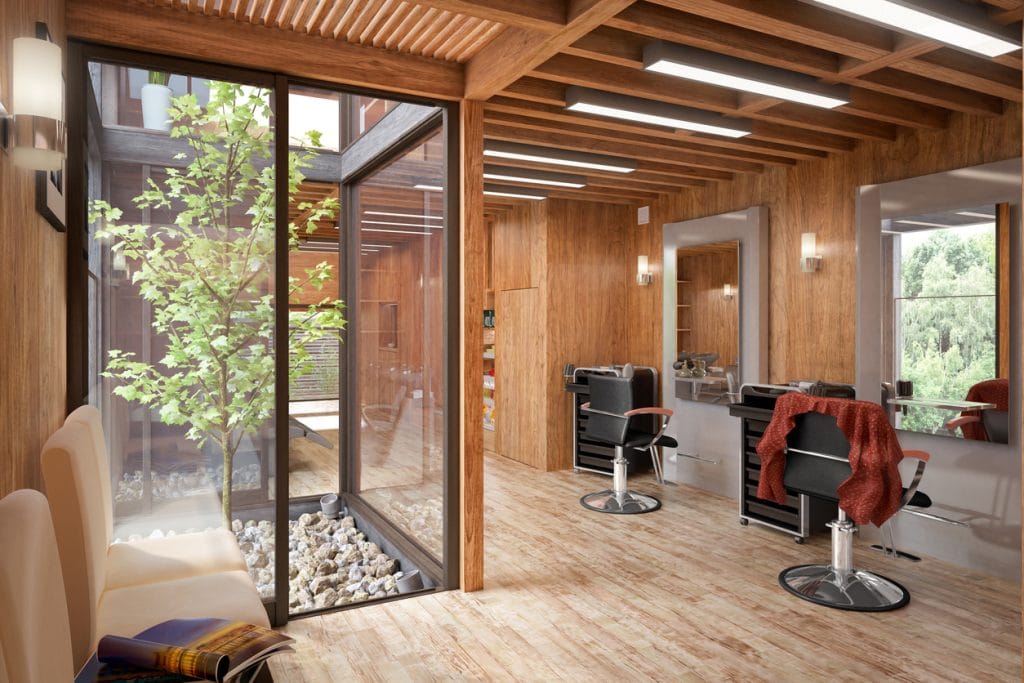
Scaling sustainably is still a work in progress. Eco-salons face many of the same growing pains as any other business: sourcing consistency, managing labor costs, training staff, and keeping up with technology. But there are additional hurdles as well.
Regulatory landscapes differ across states and countries. What qualifies as “clean” in one jurisdiction may not be acceptable elsewhere. Additionally, marketing claims around sustainability are now being scrutinized more closely. Chains must back up their environmental messaging with third-party validation or risk accusations of greenwashing.
Cost is another barrier. While many sustainable practices can reduce long-term expenses, the upfront investment in eco-friendly furniture, water-saving systems, and clean product lines is higher. Salon owners have to be strategic in balancing their mission with their margins.
Eco-friendly salon chains are not just gaining ground—they are changing the ground rules. By making sustainability part of their core identity rather than a promotional afterthought, these businesses are finding growth opportunities in places others have overlooked.
The convergence of customer values, regulatory pressure, and innovation in clean products has created the perfect climate for eco-salon chains to scale. From franchising models to private-label products and AI-powered appointment systems, these brands are proving that sustainable beauty is good business.
As this category matures, expect to see more partnerships between salons and product manufacturers, more transparency in environmental claims, and continued expansion into suburban and secondary markets. The chains leading this movement are not just cutting hair—they are cutting waste, cutting toxins, and cutting a new path for the beauty industry at large.