Business owners sometimes assume employee turnover is primarily a problem for struggling companies. A business with declining revenue, weak leadership, poor products, or financial instability certainly gives employees reasons to…
Read More...





Independent hardware stores have always had to fight for attention. They compete against big box retailers, online marketplaces, national chains, warehouse pricing, and customers who can compare prices from their phones before leaving the driveway. On the surface, that sounds like a difficult position. A small store may not have the advertising budget of The Home Depot, the national footprint of Lowe’s, or the endless online aisle of Amazon. Yet many independent hardware stores continue to survive, adapt, and in some cases grow.
The reason is simple: hardware is not just about products. It is about problems. A customer walking into a hardware store often has a leak, a broken handle, a stuck window, a lawn issue, a paint question, a missing fastener, a weekend project, or an urgent repair. They may not know the name of the part they need. They may not even know what question to ask. That is where independent operators can still win.
For entrepreneurs and business owners, the hardware store industry offers a useful lesson. Competing with larger companies does not always mean becoming larger. Sometimes the better move is becoming more useful, more focused, more trusted, and more relevant to the customer standing right in front of you.
Independent hardware stores hold a special place in local business. They are practical, neighborhood based, and often built around repeat relationships. A customer may visit a local store for a few screws one week, a gallon of paint the next, and a snow shovel, grill part, garden hose, or plumbing fitting later in the year. The individual purchases may seem small, but the relationship can become valuable over time.
That repeat traffic is one reason independent hardware stores have not disappeared. Many shoppers do not want to walk through a massive warehouse for a five dollar item. They want to park close, ask someone who knows the store, buy the right part, and get back home. Convenience is not always about having the largest selection. It can also mean saving the customer time, confusion, and frustration.
This is especially important in communities where the local store knows the housing stock, weather patterns, common repair issues, and customer habits. A store in an older New England town may know which boiler parts, door hardware, and masonry supplies move quickly. A store in Florida may lean more heavily into hurricane preparation, outdoor living, irrigation, pest control, and humidity related maintenance. A rural store may carry fencing, feed, workwear, and equipment parts. That local knowledge is difficult for a national chain to duplicate at the same level of detail.
The rise of cooperative networks has also helped many independent retailers stay competitive. Ace Hardware has built its brand around locally owned stores with national buying support. Do it Best gives independent operators access to distribution, purchasing power, and retail programs that would be difficult to build alone. True Value also remains a recognized name in the independent hardware space. These networks show that small business owners do not always need to stand alone. They can keep local ownership while gaining some of the advantages of scale.
The biggest opportunity for independent hardware stores is service. Big retailers can offer scale, but scale can also become impersonal. Customers may have to search for an employee, explain a problem to someone without deep experience, or sort through dozens of product options without guidance. Independent stores can turn that weakness into an opening.
A well run local hardware store can become the place where customers go when they want the right answer. That means training employees to ask better questions, listen carefully, and recommend practical solutions. It also means being honest when a customer does not need the most expensive product. Trust builds when a store saves the customer money, prevents a mistake, or explains how to complete a job properly.
This kind of service can be especially powerful with homeowners, landlords, small contractors, property managers, and do it yourself customers. A landlord may care more about fast access to reliable parts than saving a few cents per item. A small contractor may value a store that can set aside supplies, order specialty products, or recommend alternatives when inventory is tight. A homeowner may return again and again because someone took five minutes to explain how to fix a toilet valve or match a paint finish.
Service also creates pricing power. Independent hardware stores usually cannot win every price comparison against national chains. They do not need to. If the store saves the customer a second trip, helps avoid buying the wrong item, or solves the problem faster, the total value is higher than the sticker price alone. Entrepreneurs in any industry should pay attention to that point. When a business becomes genuinely useful, it is not forced to compete only on price.
One of the most important ways independent hardware stores are competing is by becoming more specialized. A general hardware store can still succeed, but the strongest operators often build authority in specific categories. That might include paint, outdoor power equipment, grilling, gardening, plumbing repair, fasteners, key cutting, screen repair, rental equipment, workwear, or contractor supplies.
Specialization allows a store to become known for something. A store that carries premium paint lines from Benjamin Moore can attract homeowners, designers, and contractors looking for color advice and better finishes. A store that sells and services equipment from STIHL can create a recurring relationship with landscapers, property owners, and serious do it yourself customers. A store with a strong grilling department featuring brands like Weber or YETI can turn seasonal retail into a destination experience.
This matters because customers remember specialists. They may not remember every store that sells tools, but they remember the place that knows paint. They remember the place that repairs screens. They remember the place that can sharpen chainsaw blades, cut keys accurately, mix paint correctly, or help identify an odd plumbing part from an older home.
Specialization also helps with marketing. A store that tries to promote everything often says nothing memorable. A store that becomes known for backyard living, professional grade tools, local repair knowledge, or contractor support has a clearer story. That story can be used on Google Business Profile posts, local ads, email campaigns, social media, community sponsorships, and in store signage.
The current interest rate environment is a major issue for hardware stores and small retailers in general. Higher borrowing costs affect expansion, inventory purchases, credit lines, building improvements, equipment financing, and customer demand. When mortgage rates and financing costs stay elevated, homeowners may delay large remodeling projects. Instead of replacing a kitchen, they may repaint cabinets. Instead of building an addition, they may repair what they already have. Instead of hiring out every job, they may take on smaller projects themselves.
That shift can be challenging, but it can also create openings for independent hardware stores. When consumers pull back from large projects, repair and maintenance often become more important. People still need to fix leaks, patch walls, maintain lawns, replace hardware, weatherproof homes, and keep properties functioning. A store that understands this shift can adjust inventory and messaging around practical, budget conscious projects.
For business owners, higher rates also require tighter financial discipline. Inventory is expensive when financed through credit lines. Slow moving products tie up cash. Store renovations may need to be phased instead of completed all at once. Hiring decisions need to match real demand. Marketing has to be measured more carefully. The operators who succeed are often the ones who know their numbers, watch margins by category, and avoid letting inventory decisions become emotional.
Independent hardware stores can also use rate sensitive messaging in a smart way. Rather than pushing only major upgrades, they can promote maintenance, repair, preservation, and smaller improvements. A customer may not be ready for a $25,000 renovation, but they may be ready for a $250 weekend project. That is not a small opportunity when multiplied across hundreds or thousands of local customers.
Technology is no longer optional for independent retailers. A hardware store does not need to become a tech company, but it does need to make shopping easier. Customers expect accurate hours, updated contact information, online product visibility, fast answers, and simple ways to engage with the store before they visit.
A strong Google Business Profile is one of the most important tools. Customers searching for Hardware Stores nearby are often ready to buy. Photos, reviews, product categories, holiday hours, and regular updates can influence where they go. Local search visibility can be just as valuable as a newspaper ad used to be.
Ecommerce can also play a role, even if the store is not trying to ship nationally. Many independent stores can benefit from buy online pickup in store options, local delivery, online quote requests, or inventory lookup tools. Platforms like Shopify and payment systems like Square have made it easier for smaller retailers to add digital capabilities without building everything from scratch.
The key is not to copy Amazon. The better strategy is to use digital tools to support the local relationship. A customer may want to check whether the store carries a certain product, reserve it, and pick it up after work. A contractor may want to text an order ahead of time. A homeowner may want to send a photo of a broken part. These small conveniences can make a local store feel modern without losing its personal character.
Technology can also improve operations behind the scenes. Better point of sale systems, inventory tracking, customer purchase history, email lists, and loyalty programs help stores make better decisions. If a store knows which products move before storm season, which contractors buy regularly, and which customers respond to seasonal promotions, it can compete with more precision.
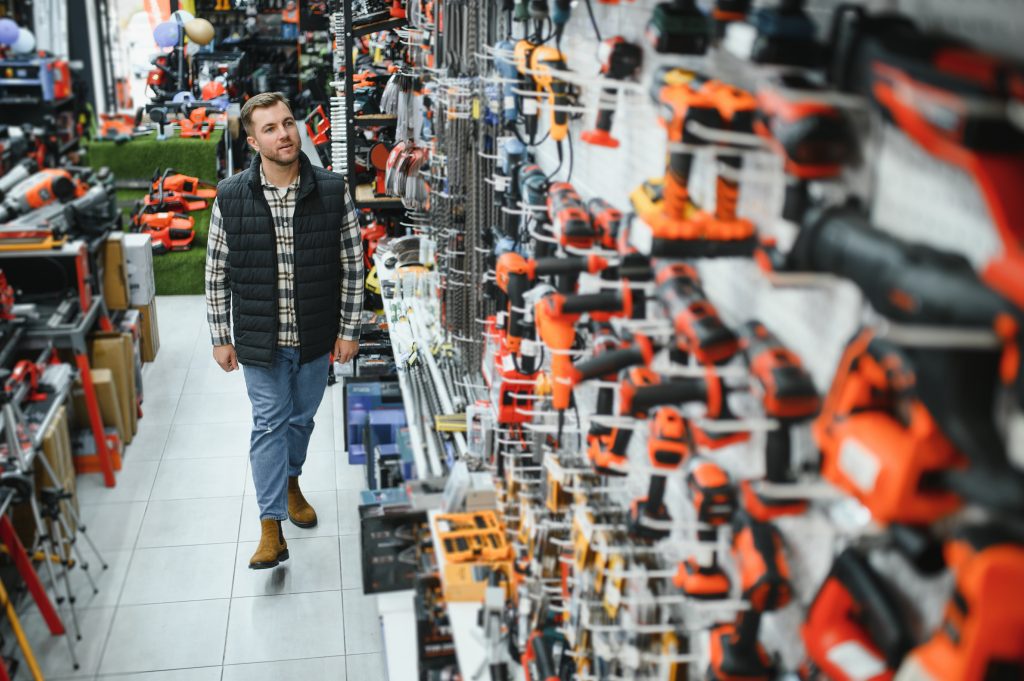
Community connection is one of the strongest advantages independent hardware stores have. A national retailer can sponsor events, but a local owner often knows the school principal, the fire department, the Little League coach, the local contractors, the town officials, and the longtime residents. That matters.
Community involvement should not be treated as charity alone. It is part of brand building. When a hardware store supports local events, donates supplies, hosts workshops, or helps after storms, it becomes more than a place to buy products. It becomes part of the local infrastructure.
Workshops can be especially effective. A store might host sessions on painting basics, lawn care, hurricane preparation, winterizing a home, tool safety, raised garden beds, or basic plumbing repairs. These events bring customers into the store, create trust, and position employees as helpful experts. They also generate content for social media, email newsletters, and local press.
There is also a business to business side to community. Independent stores can build relationships with small contractors, real estate agents, property managers, maintenance companies, house flippers, and local institutions. A small property management company may need reliable supplies every week. A real estate agent may recommend the store to new homeowners. A school or church may need maintenance products, paint, cleaning supplies, and seasonal items. These relationships can create repeat revenue that is less dependent on casual foot traffic.
Product mix has always mattered, but it matters even more now. Independent hardware stores cannot afford to carry everything. The winning approach is to carry what the local market actually needs, then add enough unique or premium products to make the store worth visiting.
This may include national tool brands like Milwaukee Tool or DEWALT, specialty fasteners, local garden products, premium grilling accessories, professional cleaning supplies, rental equipment, or hard to find replacement parts. In many cases, the right inventory strategy is a blend of everyday essentials and higher margin specialty categories.
Seasonality should also guide the product mix. Stores in storm prone areas can build strong categories around generators, tarps, batteries, flashlights, fuel cans, plywood, tie downs, and cleanup supplies. Stores in cold weather regions may focus on ice melt, shovels, pipe insulation, heaters, and weatherstripping. Stores near vacation homes may stock maintenance and security products for part time residents. The more closely the inventory matches local life, the more useful the store becomes.
A smarter product mix also means saying no. Some items are not worth the shelf space. Some categories are too price sensitive. Some products move slowly but look impressive on display. A disciplined operator studies sales data, gross margins, turns, and customer requests. The goal is not to have the most inventory. The goal is to have the right inventory.
The story of independent hardware stores applies to many industries. Small businesses often worry that larger competitors have every advantage. Larger companies usually have more capital, broader reach, stronger vendor terms, and larger marketing teams. But smaller businesses can move faster, build deeper relationships, and serve narrower customer needs with more care.
The independent hardware model shows that local knowledge has value. It shows that service can protect margins. It shows that specialization can beat generic selection. It shows that technology should support the customer relationship, not replace it. It also shows that economic pressure can reveal which operators truly understand their numbers.
Entrepreneurs should also notice how many independent hardware stores use partnerships to compete. They may be locally owned, but they are not isolated. Cooperative buying groups, vendor programs, software platforms, local contractor relationships, and community networks all help level the playing field. Independence does not have to mean doing everything alone.
This is a valuable lesson for anyone starting a business. The goal is not always to build the biggest company in the market. The better goal may be to become the most trusted option for a specific customer with a specific need. That is a much more realistic path for many entrepreneurs.
Independent hardware stores are finding new ways to compete because they understand something that applies across business: customers want more than access to products. They want confidence, convenience, guidance, and trust. Big companies will continue to dominate many parts of retail, but local operators still have room to win when they focus on service, specialization, community, smart inventory, and financial discipline. In a higher rate environment, that discipline becomes even more important. Hardware Stores that know their customers, manage cash carefully, and use technology without losing the personal touch can remain relevant in a market that keeps changing.