
Commercial landscaping was once viewed primarily as a maintenance service. Property owners hired contractors to mow lawns, trim hedges, remove weeds, and keep outdoor areas presentable. Although those responsibilities remain…
Read More...


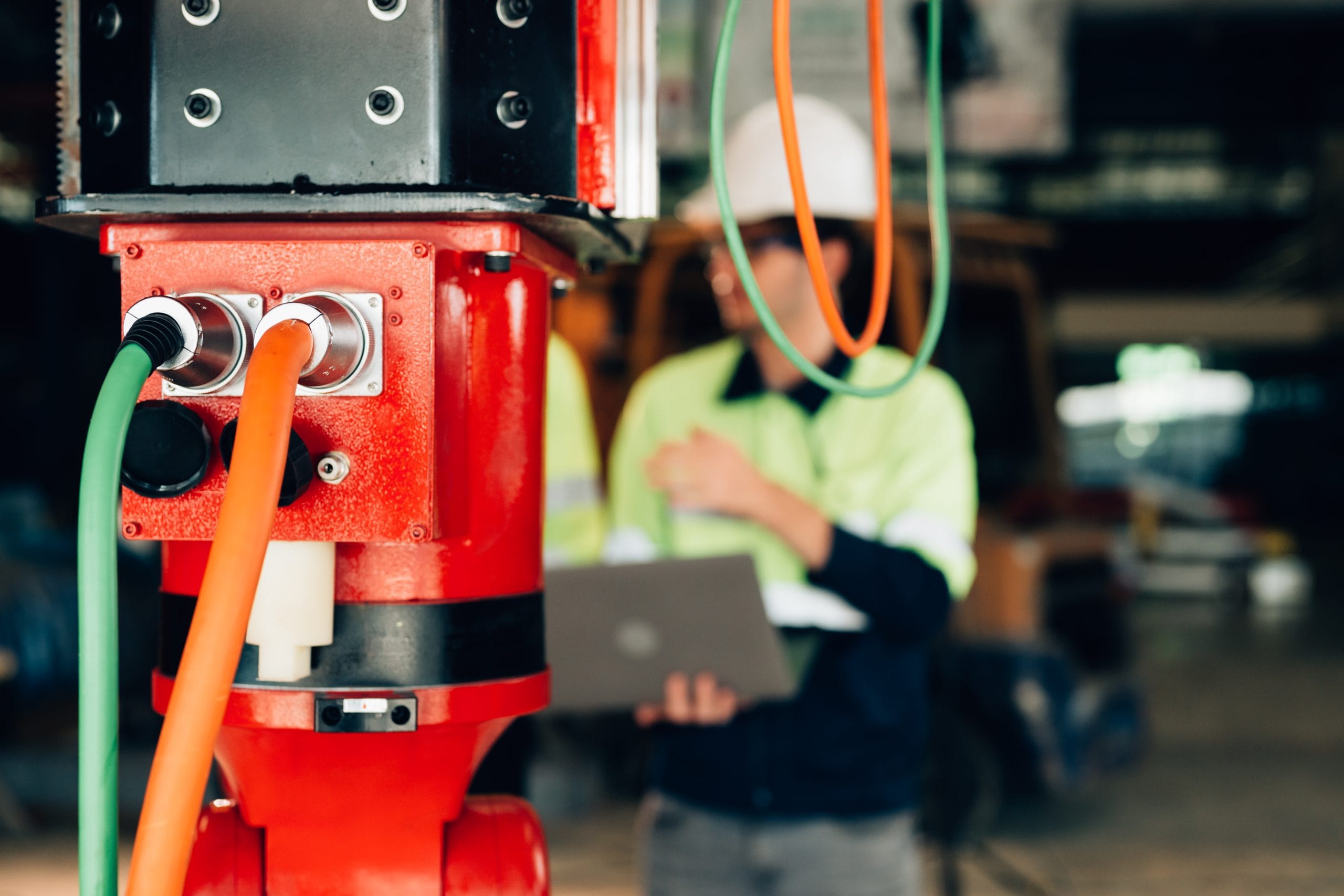


Across the construction industry, a fundamental shift is underway. For decades, job sites depended on human precision, muscle, and manual coordination. Now, machines equipped with intelligence and automation are redefining how buildings rise, how materials move, and how projects stay on schedule. What was once viewed as a traditional, slow-moving sector is evolving into one of the most advanced ecosystems in business innovation.
Entrepreneurs, investors, and construction professionals are watching this transition closely. Robotics is not simply about replacing labor; it is about rewriting what efficiency means. The fusion of hardware, artificial intelligence, and analytics is creating a new generation of construction businesses that operate smarter, faster, and safer than ever before.
For generations, the success of a construction project was tied to manpower and experience. Timelines stretched as weather, labor shortages, and human error took their toll. In the past decade, however, new technologies have entered the field, challenging long-held assumptions about productivity. Automation is no longer confined to factory floors; it has moved onto construction sites, cranes, and even underground tunnels.
Companies like Built Robotics have introduced autonomous heavy equipment capable of digging trenches, grading land, and operating 24 hours a day. Construction Robotics developed SAM, the Semi-Automated Mason, which works alongside masons to lay bricks with unmatched consistency. These are not prototypes anymore. They are deployed systems, proving that automation can merge with craftsmanship to raise both productivity and safety standards.
For business owners and investors, this signals a deeper transformation: the creation of a scalable, data-driven model for an industry once defined by unpredictability.
Construction has always been about coordination. Dozens of moving parts—materials, contractors, engineers, and safety teams—have to align. What automation adds is not just speed but precision and reliability. A robotic system does not get tired, distracted, or inconsistent. It repeats tasks flawlessly, feeding real-time data back to project managers who can adjust plans on the fly.
At ABB, robotics teams are working to bring manufacturing-style automation to construction environments, using sensors and advanced motion technology to handle repetitive or dangerous tasks. Startups like Civ Robotics are tackling site layout automation, turning what used to take crews days into work completed in hours. These innovations are creating ripple effects throughout the value chain—from architecture to supply logistics to on-site maintenance.
For entrepreneurs, that ripple represents opportunity. The more integrated construction becomes with robotics and data systems, the greater the demand for software platforms, training programs, predictive analytics, and specialized service providers that can support this transformation.
The push toward robotics is not driven by novelty—it is driven by necessity. Labor shortages are at historic levels across the construction world. Skilled trades are aging out faster than replacements can enter the field. Meanwhile, the complexity of modern buildings has never been higher, requiring precision that manual processes cannot consistently achieve.
Automation helps fill that gap. Robots can pour concrete, tie rebar, and inspect sites with millimeter accuracy. They reduce waste by cutting materials precisely to design specifications. They capture live data, helping companies predict delays and allocate resources more effectively. In an industry where margins are thin, every hour and every unit of material counts.
Beyond efficiency, safety is a major factor. Construction remains one of the most hazardous professions. Automating high-risk activities—like demolition, welding, or work at heights—protects human workers while maintaining output. This dual advantage of productivity and protection has made automation a cornerstone of the industry’s next phase.
Innovation in construction robotics is creating an entire new business ecosystem. Hardware companies develop the machines, software firms manage the data, and service providers handle integration and maintenance. Entrepreneurs are entering the space not only as builders of robots but as facilitators—bridging traditional contractors with the tools of tomorrow.
Some firms are developing leasing models that make robotics accessible to smaller construction companies that cannot afford the upfront cost. Others are creating subscription-based platforms for automated site management. For example, Boston Dynamics has demonstrated how robotic inspection and mapping tools like Spot can perform regular site walks, capturing visual and spatial data that feeds into digital models. These tools are reshaping workflows and creating measurable value for contractors who once depended solely on human supervision.
Investors are taking notice as well. Venture funding into construction technology has increased significantly, with robotics and AI systems attracting the largest share. The appeal is clear: scalable automation offers predictable returns in a sector historically viewed as volatile.

Despite the technological advances, robotics does not eliminate human skill. Instead, it redefines roles. Skilled operators become supervisors, managing fleets of machines rather than handling tools. Data analysts join job sites to interpret performance metrics. Engineers refine robotic behavior through real-time feedback loops.
This evolution is changing what it means to work in construction. The future workforce will require hybrid skill sets—part technical, part operational. Training programs are emerging to meet this demand, combining construction fundamentals with robotics control and digital management systems. For companies that embrace this blend, the payoff is stronger performance, reduced turnover, and long-term scalability.
Entrepreneurs who recognize this human-machine synergy have the chance to build businesses that thrive in both worlds: preserving the craftsmanship and experience that define construction, while introducing the precision and predictability that define modern technology.
Even with all the promise, automation in construction faces real hurdles. High costs of equipment, uncertain regulations, and integration challenges remain significant barriers. Many contractors still rely on traditional workflows and are hesitant to change. The perception that robotics is only for large firms or high-budget projects persists, even as smaller systems become more accessible.
Another obstacle lies in the fragmented nature of the construction industry. Each project is unique, with site conditions, materials, and designs that differ from one job to another. Building a robot flexible enough to adapt to all these variations takes time and testing. However, innovation rarely thrives on simplicity. The companies that figure out modular and adaptive robotics will hold a distinct competitive edge.
In the long term, these challenges will likely fade as costs decline and use cases expand. Just as automation transformed manufacturing decades ago, the same trajectory is beginning to unfold in construction.
The adoption of robotics in construction is not just a technological milestone—it is a business transformation. Automation shifts project economics, reduces variability, and creates data visibility that can guide executive decisions. Contractors who adopt these tools early will not only improve margins but also position themselves as innovation leaders in a traditionally conservative market.
Real estate developers and investors are also adapting their strategies. Projects designed with automation in mind can be completed faster and with fewer change orders, accelerating return on capital. Governments and municipalities are beginning to recognize the potential, supporting pilot programs and offering grants for technology-based workforce development. Every part of the ecosystem, from suppliers to insurers, is being touched by this movement.
In the next decade, automation will likely move beyond individual machines and into fully integrated systems. Drones will map terrain, autonomous excavators will prepare foundations, and robotic arms will assemble modular units on-site. Each piece of data gathered will feed into digital twins—virtual replicas of construction sites that track progress and predict outcomes. The result will be an industry that operates with the precision of manufacturing and the adaptability of human intelligence.
For business professionals and entrepreneurs, this shift represents both opportunity and responsibility. The businesses that succeed will be those that view robotics not as a gadget, but as a strategy—one that combines vision, data, and design to reinvent an industry that literally builds our world.
Construction has always reflected the spirit of human progress. Today, robotics and automation are bringing that progress into sharper focus. The companies embracing this transformation are not simply building faster; they are building smarter. For entrepreneurs and innovators, this is not just a new market—it is a movement. And those who step into it now will help define the next era of how we create, construct, and grow.