
Every business has employees who consistently exceed expectations, others who reliably meet them, and some who struggle to deliver the results their positions require. Managing different levels of performance is…
Read More...





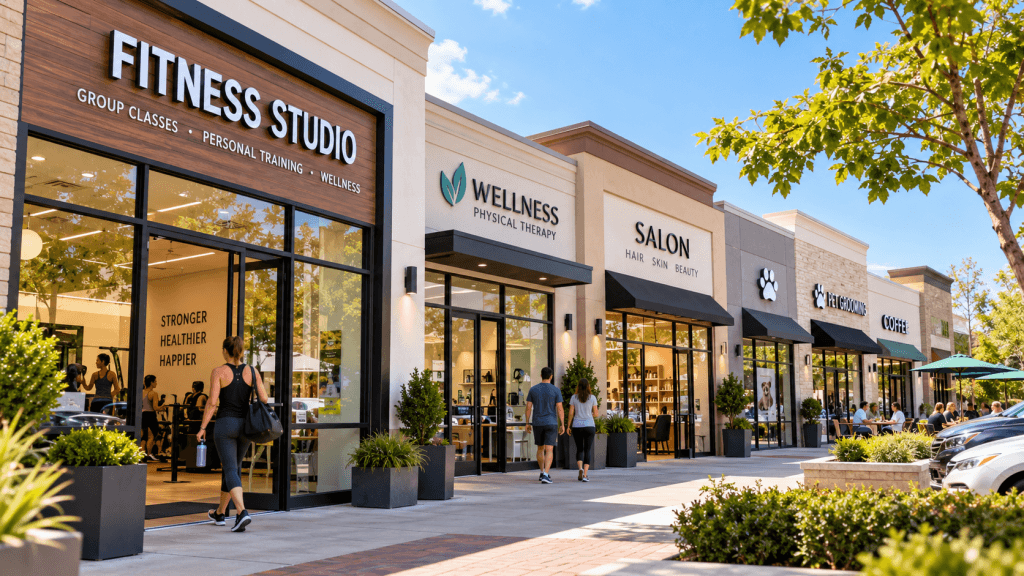
The American retail landscape is undergoing a significant transformation, and the businesses bringing new life to shopping centers are not necessarily traditional retailers. Increasingly, service businesses are occupying storefronts once dominated by clothing stores, electronics retailers, and other merchandise-focused operations. From fitness studios and medical practices to beauty salons, tutoring centers, and specialized repair services, these businesses are changing how commercial retail properties operate and how consumers interact with them.
For decades, retail centers depended heavily on stores selling physical products. However, online shopping has changed purchasing habits, creating challenges for certain traditional retailers while opening opportunities for businesses that provide services requiring personal interaction. Consumers may purchase clothing, electronics, or household merchandise online, but they still need somewhere to get a haircut, receive physical therapy, attend a fitness class, or have their pets groomed.
This shift is helping reshape neighborhood shopping centers, suburban commercial properties, and even larger retail developments. Rather than functioning primarily as shopping destinations, many centers are becoming convenient locations where customers can take care of everyday needs, access professional services, and participate in activities that cannot be replicated through an online transaction.
The growing influence of service businesses is increasingly visible in commercial real estate leasing activity. According to research published by CBRE, service tenants accounted for more than 50% of total U.S. retail leasing activity in 2025, compared with approximately 40% in 2015. This represents a meaningful change in the types of businesses occupying retail space.
The categories attracting attention extend well beyond traditional hair salons and dry cleaners. Fitness operators, healthcare providers, wellness studios, educational services, and specialty personal care businesses are expanding into locations that previously would have been marketed primarily to merchandise retailers.
A separate retail market analysis published by Cushman & Wakefield in October 2026 reported that U.S. shopping centers recorded 3.5 million square feet of net absorption during the third quarter, with fitness, wellness, and value retailers leading leasing activity.
These developments suggest that retail centers are not simply losing relevance because of online shopping. Instead, the purpose of many physical retail locations is changing. Consumers still value accessible commercial destinations, but the reasons for visiting them are becoming more diverse.
For property owners, the growing demand from service oriented tenants presents opportunities to reposition properties, fill suitable vacancies, and develop tenant combinations that reflect the needs of surrounding communities.
One of the most important advantages of many service businesses is that their core offerings cannot easily be delivered through an online platform. Technology can simplify scheduling, payments, marketing, and customer communications, but it cannot replace every aspect of a service that requires physical presence.
A customer can order skincare products online, but a facial treatment requires an appointment. Someone can purchase fitness equipment for home use, but group exercise classes provide instruction, accountability, and social interaction. Likewise, veterinary examinations, chiropractic treatments, and many professional beauty services depend on specialized facilities and direct customer contact.
This distinction matters because it gives certain service businesses a competitive characteristic that traditional merchandise retailers may lack. Their customers visit for the actual service rather than merely to inspect products that can be purchased elsewhere.
Many service operations also benefit from recurring customer relationships. A fitness studio may collect monthly memberships, a grooming business may receive appointments every several weeks, and a tutoring center may establish ongoing relationships throughout the school year.
Recurring demand does not automatically make a business profitable, but it can provide greater visibility into future revenue and create more predictable customer traffic. For shopping center owners, tenants with established appointment schedules or membership based businesses can also contribute to consistent property activity.
Health and wellness businesses are among the most visible participants in this retail transformation. Operators offering Pilates, assisted stretching, chiropractic care, physical therapy, and specialized fitness programs are occupying spaces that might once have housed small merchandise stores.
Companies such as StretchLab, which specializes in assisted stretching, and The Joint Chiropractic, which offers chiropractic services, illustrate how service oriented concepts can operate within accessible neighborhood retail settings.
Fitness studios can be particularly attractive tenants because their customers often visit several times per week. These visits may occur during morning, afternoon, and evening hours, creating activity throughout periods when some traditional retailers experience slower traffic.
Healthcare providers can offer another dimension of stability. Dental practices, physical therapy clinics, medical offices, and diagnostic facilities frequently serve residents within a defined geographic area. Convenient parking, recognizable locations, and proximity to residential neighborhoods can make shopping centers appealing alternatives to conventional office buildings.
However, these businesses also have specialized requirements. Medical facilities may need plumbing modifications, patient privacy measures, accessibility improvements, and additional electrical capacity. Fitness studios may require soundproofing, reinforced flooring, or ventilation upgrades.
For landlords, accommodating these uses requires more than filling an empty storefront. The property’s physical characteristics, permitted uses, and compatibility with neighboring tenants must be evaluated carefully.
One of the most interesting aspects of service oriented retail is its potential to benefit neighboring businesses. A customer visiting a fitness studio might stop for coffee afterward. Someone bringing a pet to a grooming appointment may purchase groceries while waiting. Parents dropping children off at tutoring sessions might visit a restaurant or nearby store before returning.
These interactions create opportunities for businesses to benefit from customers who originally came to the shopping center for another purpose.
Research published in 2026 by Cushman & Wakefield in collaboration with Placer.ai found that visits to fitness businesses increased approximately 23% between 2019 and 2025, while visits to medical spas and wellness businesses increased roughly 31%. Over the same period, apparel visits declined approximately 25%.
The findings highlight how the relationship between shopping centers and their customers is evolving. Instead of relying exclusively on destination retailers, property owners can build tenant mixes around businesses that bring visitors back regularly.
A well planned neighborhood center might combine a grocery store, fitness studio, salon, veterinary practice, restaurant, and specialty retailer. Each serves a different purpose, yet collectively they create reasons for residents to visit throughout the week.
Not every service appointment generates additional purchases, and the benefits depend heavily on tenant compatibility. Nevertheless, businesses that attract frequent visits can contribute to a more active commercial environment.
The changing retail environment is also creating opportunities for entrepreneurs interested in establishing service based businesses. Former merchandise stores can sometimes provide attractive locations for personal services, educational businesses, specialty clinics, and other customer facing operations.
Existing retail properties may offer advantages over constructing or leasing space in a newly developed building. Established centers often have parking facilities, road access, signage opportunities, and neighboring businesses that already attract customers.
In some properties, landlords may also be motivated to consider different tenant categories when traditional retail demand is limited. This can create opportunities to negotiate lease provisions, improvement allowances, or other terms that make opening a business more practical.
However, entrepreneurs should not assume that vacant retail space automatically represents a bargain. A lower advertised rental rate may be offset by significant construction expenses, common area maintenance charges, property taxes, insurance obligations, or restrictions on permitted business activities.
A business requiring extensive plumbing, specialized equipment, or significant interior modifications may face startup costs far beyond the initial rent.
Before committing to a location, entrepreneurs should evaluate the surrounding population, customer demographics, visibility, accessibility, competition, and the property’s compatibility with their intended operations.
The objective should be finding a location that supports sustainable customer demand rather than simply securing an inexpensive storefront.
For commercial property owners, the expansion of service businesses represents an opportunity to reconsider how shopping centers are positioned and marketed.
Historically, landlords often prioritized merchandise retailers capable of producing significant sales volume and attracting shoppers interested in making purchases. While those tenants remain important, service oriented businesses introduce different considerations into leasing decisions.
A Pilates studio may attract customers several times per week, while a dental practice may generate consistent weekday appointments. Restaurants may produce substantial evening traffic, whereas tutoring centers can attract families during afternoon hours.
Combining these businesses thoughtfully can distribute customer activity across more hours of the day.
This approach requires attention to operational compatibility. A business offering quiet therapeutic treatments may not be an ideal neighbor for a noisy fitness facility. A busy medical practice may require more convenient parking than an appointment only consulting business.
Landlords must also evaluate tenant financial strength, lease obligations, expected improvement costs, and the long term suitability of each operation.
The strongest tenant mix is not necessarily the one with the greatest number of service businesses. It is the combination that responds to local demand while supporting the commercial and operational requirements of the entire property.
The success of service businesses depends heavily on understanding the communities they serve. A retail center surrounded by young families may be well suited for tutoring services, pediatric healthcare, children’s enrichment programs, and family oriented fitness operations.
A center located near retirement communities may find stronger demand for medical services, physical therapy, hearing care, and other businesses serving older adults.
Meanwhile, commercial properties near office developments may benefit from quick service personal care, fitness facilities, and businesses accommodating customers before work, during lunch breaks, or after business hours.
Convenience is frequently a significant factor in customer decisions. Many consumers prefer visiting a reliable provider close to home rather than traveling across town, particularly when appointments occur repeatedly.
This creates opportunities for smaller independent operators that understand the local market and establish strong customer relationships.
Entrepreneurs do not necessarily need a nationally recognized franchise to compete effectively. An independently owned salon, tutoring center, repair shop, or specialty wellness practice can attract loyal customers through consistent service, accessible scheduling, and a strong community reputation.
Local familiarity can become a meaningful competitive advantage when combined with professional operations and a clearly defined service offering.
For entrepreneurs considering their next venture, the growth of service oriented retail highlights the importance of evaluating businesses based on customer needs rather than temporary consumer trends.
Businesses providing specialized services, recurring appointments, and strong customer relationships may offer attractive opportunities. However, their operational models also introduce challenges that deserve careful consideration.
Unlike merchandise retailers, service businesses often depend heavily on qualified employees, professional licensing, scheduling efficiency, and customer retention. A salon cannot serve unlimited customers without sufficient staff, and a medical practice must satisfy applicable professional and regulatory requirements.
Owners should understand how many appointments or memberships are needed to cover operating expenses, how staffing affects capacity, and whether customers are likely to return regularly.
The growth of franchised service businesses also provides entrepreneurs with alternatives to developing an independent concept. Established brands may offer training, marketing support, operating systems, and recognizable service offerings, although franchise fees and contractual obligations can affect profitability.
Regardless of the business model, long term success depends on maintaining service quality, controlling expenses, building customer loyalty, and selecting a location that matches the intended customer base.
The revival of retail centers through service businesses reflects a larger change in how consumers use commercial spaces. Shopping centers are increasingly becoming destinations for everyday activities, personal care, healthcare, fitness, education, and other services that require direct interaction.
This transformation does not mean traditional retail is disappearing. Grocery stores, discount retailers, restaurants, and merchandise businesses continue to play important roles. The difference is that service providers are becoming equally significant participants in the commercial retail environment.
For entrepreneurs, the shift creates opportunities to establish businesses in accessible neighborhood locations and develop long term customer relationships. For landlords, it offers additional ways to attract tenants, improve occupancy, and make properties more relevant to surrounding communities.
Ultimately, the future of many retail centers may depend less on how many products customers can purchase there and more on how many practical reasons they have to return. Service businesses are helping provide those reasons, making them an increasingly important part of the next generation of American retail.